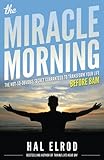
Hal Elrod is an American motivational speaker and author of The Miracle Morning, a morning routine framework built around six practices he credits with transforming his own life after crisis.
Hal Elrod’s personal story — a near-fatal car accident at twenty, a full physical recovery, a subsequent financial collapse during the 2008 recession, and a second recovery through disciplined morning routines — forms the backstory for The Miracle Morning, self-published in 2012 and later conventionally published as it found a large audience. The book’s framework, which Elrod calls SAVERS (Silence, Affirmations, Visualisation, Exercise, Reading, Scribing), presents six practices to perform each morning as the foundation of a transformed daily life.
The book is energetically and sincerely written, and Elrod’s personal credibility comes from the fact that he developed these practices under genuine duress rather than from a comfortable position. The morning routine concept has proved extremely durable in self-improvement culture, and The Miracle Morning was early enough to the trend to have influenced a generation of productivity writing that followed. The SAVERS framework is simple and flexible, and the book encourages readers to adapt it rather than follow it rigidly.
The limitations are those shared by much morning-routine literature: the assumption that the primary obstacle to a better life is the structure of the first ninety minutes, which can feel reductive when the real obstacles are systemic. The affirmations and visualisation components are not well supported by the strongest current research in behavioural psychology. The book is also considerably shorter than its length suggests — much of it is testimonial and encouragement rather than new content. But as motivational literature for readers at genuine inflection points, Elrod’s sincerity carries real weight.
A Story of Resilience
Much of the power and credibility of Elrod’s message derives from the extraordinary personal adversity from which it emerged. At twenty, he was struck head-on by a drunk driver, an accident so severe that he was clinically dead for several minutes, suffered serious brain damage, broke numerous bones, and was told he might never walk again; against the odds, he made a remarkable physical recovery. Years later, having built a successful career, he was financially devastated by the 2008 economic crisis, plunged into debt and depression, and it was in the depths of that second crisis that he developed the morning practices that became The Miracle Morning. This twice-tested resilience gives Elrod a moral authority that distinguishes him from motivational authors writing from positions of comfort; he developed his methods not as abstract theory but as survival tools forged under genuine duress. Later, his public battle with a rare and aggressive cancer added yet another chapter to a life repeatedly marked by confronting mortality and adversity with determination and optimism. This lived experience of hardship and recovery is the emotional foundation of his work, and it explains why readers facing their own crises often find in his sincerity and example a source of genuine hope and motivation that transcends the specifics of any routine.
The SAVERS Framework
Elrod’s central and most enduring contribution is the SAVERS framework, a memorable acronym organising six practices into a structured morning routine: Silence (meditation or prayer), Affirmations, Visualisation, Exercise, Reading, and Scribing (journaling). The genius of the system lies less in the novelty of any individual practice, since each is drawn from established personal-development traditions, than in their consolidation into a single, simple, repeatable sequence that anyone can perform upon waking. By packaging these disparate self-improvement activities into one easy-to-remember formula and presenting the early morning as the optimal, undisturbed time to perform them, Elrod created an accessible on-ramp to habits that many people aspire to but struggle to establish. The framework is deliberately flexible: Elrod encourages readers to adapt the duration and emphasis of each component to their own needs rather than following it rigidly, and even offers abbreviated versions for those short on time. This adaptability and simplicity are key to the system’s durability and wide adoption. While critics rightly note that the scientific support for some components, particularly affirmations and visualisation, is weak, the framework’s real value may lie in its function as a structure for consistency, giving people a concrete, achievable way to begin each day with intention rather than reactivity.
Founder of a Movement
Beyond the original book, Elrod has built The Miracle Morning into a substantial personal-development brand and community, extending its reach far beyond a single volume. He has authored or co-authored a series of follow-up titles tailoring the framework to specific audiences and goals, including versions for entrepreneurs, salespeople, writers, parents, and college students, and the concept has spawned an active online community, a documentary film, journals, and other supporting products. His timing was significant: The Miracle Morning arrived relatively early in the wave of contemporary interest in morning routines and productivity rituals, and it helped popularise and shape a genre that many subsequent authors and influencers would explore. The idea that how one structures the first hour of the day sets the tone for everything that follows became, in part through Elrod’s influence, a widely held tenet of modern self-improvement culture. As a speaker, podcaster, and coach, he has continued to spread his message of intentional living and personal transformation. While the depth and originality of his content are modest compared with more rigorous works, his impact as a popularizer and community-builder within the self-improvement space has been considerable, and his framework remains one of the more recognisable in the field.
Where to Start with Elrod
The clear starting point is The Miracle Morning, the original book that introduced the SAVERS framework and remains the essential statement of his approach; it is the natural first read for anyone interested in building a structured, intentional morning routine. New readers should approach it as motivational literature grounded in Elrod’s remarkable personal story of resilience rather than as a rigorous, research-driven manual, and should feel free to adapt the framework, as Elrod himself encourages, rather than following it slavishly. Those who find the core method helpful and want guidance tailored to their particular circumstances can explore the many follow-up titles applying the Miracle Morning concept to specific audiences, such as entrepreneurs, writers, or families. Readers drawn to his story of overcoming adversity may also find his talks, interviews, and podcast inspiring, as his sincerity and lived experience of hardship come through powerfully in person. Whatever the format, Elrod offers encouragement and a simple, actionable structure rather than deep theory. But The Miracle Morning is the indispensable place to begin, the book that launched both his career and a broader cultural enthusiasm for the transformative potential of how we choose to start our days.
Other Titles Worth Seeking Out
Hal Elrod’s lesser-known titles repay attention too, The Miracle Morning chief among them.