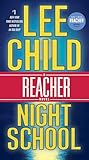
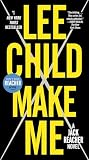
Lee Child is a British-American thriller author whose Jack Reacher series — launched with Killing Floor — has sold over 100 million copies and defined the modern lone-hero action thriller.
Lee Child was 40 years old, recently unemployed from a television production job in England, and reportedly confident of his ability to write a bestselling thriller when he created Jack Reacher in 1997. He was right. Killing Floor, the first Reacher novel, introduced the former military policeman as a drifter without a home or possessions who stumbles into a small Georgia town and discovers a counterfeiting conspiracy. The novel won the Anthony Award and launched a series that has not slowed in thirty years.
Reacher is a fantasy figure: physically enormous, supremely competent, morally uncomplicated, and completely free of the obligations — mortgage, family, social ties — that constrain ordinary life. Child knows exactly what he is selling, and he sells it with considerable skill. Killing Floor moves at a relentless pace, the violence is choreographed with geometric precision, and Child’s flat, declarative prose style has been widely imitated. The books are not asking to be taken seriously as literature; they are asking to be read in one sitting, and they usually succeed.
The criticisms write themselves — Reacher strains credulity, the plots recycle familiar thriller mechanics, and the moral universe is simple to the point of adolescence. Child freely acknowledges that the books are wish fulfillment, and readers who engage with them on those terms generally find exactly what they came for. As genre entertainment engineered to a high standard, the Reacher series is hard to fault.
The Creator of Jack Reacher
Lee Child ranks among the most successful thriller writers in the world, and his fame rests on a single, irresistible creation: Jack Reacher, the wandering ex-military policeman who drifts across America righting wrongs with his fists, his wits, and an unshakeable moral code. Across a long series of bestsellers, Reacher has become one of the most recognisable heroes in contemporary popular fiction, a modern incarnation of the lone gunslinger who arrives in town, confronts injustice, and moves on. Child’s books are precision-engineered entertainment, and their global popularity has made him a defining figure of the action-thriller genre.
The Appeal of Reacher
The enduring appeal of Jack Reacher lies in his combination of competence and freedom. He carries no possessions, owns no home, and answers to no one, travelling light with only a folding toothbrush and a sense of justice. Physically formidable and mentally relentless, he is the fantasy of the man who cannot be intimidated and always knows what to do, and readers return again and again for the deep satisfaction of watching him dismantle bullies, criminals, and corrupt institutions. Reacher’s blend of brains and brawn, righteousness and detachment, has made him an aspirational figure for millions.
A Master of Pace
Child is, above all, a master craftsman of pace and tension. His prose is lean, propulsive, and ruthlessly efficient, stripped of anything that might slow the reader down, and he has spoken openly about the deliberate techniques he uses to create suspense and keep the pages turning. His plots are tightly engineered machines built for momentum, and his skill at managing rhythm — when to accelerate, when to withhold, when to deliver the payoff — is the secret engine of his success. The result is fiction of remarkable readability, designed to be devoured in a sitting.
A Flexible Series
One of the strengths of the Reacher series is its accessibility. Because Reacher carries no ongoing baggage and each novel presents a self-contained case, readers can begin almost anywhere without feeling lost, picking up any volume and being immediately immersed. Child has varied the formula with different settings, structures, and threats over the years, keeping the series fresh while never abandoning the core promise of a capable hero confronting overwhelming odds. In recent years he has collaborated with his brother Andrew on continuing the series, ensuring Reacher’s adventures carry on.
Where to Begin and Why He Matters
For newcomers, Killing Floor, the first Reacher novel, is a natural starting point, while standout entries such as Persuader and One Shot showcase the series at its best; One Shot also inspired the first major film adaptation. Child’s influence on the modern thriller is substantial, and the screen adaptations of Reacher have only broadened his enormous audience. He represents the action thriller at its most polished and addictive, and for readers seeking pure, expertly constructed suspense built around an unforgettable hero, Lee Child stands as one of the most reliable and satisfying writers working in the genre.
The Modern Lone Hero
Part of Reacher’s enduring resonance is the way he taps into a deep and durable archetype: the wandering stranger with no ties and an unbending sense of right, a figure descended from the gunslingers of the Western and the knights of older legend. By stripping his hero of home, possessions, and obligations, Child created a character free to act purely on principle, and that freedom is central to the fantasy. In an age of constant connection and obligation, Reacher’s total independence — his ability to walk away from anything and answer only to his own conscience — strikes a powerful chord with readers.
A Reliable Pleasure
Lee Child’s consistency is itself a major part of his appeal. Readers know exactly what they are getting when they open one of his novels — a capable hero, a worthy adversary, a tightly wound plot, and a satisfying resolution — and he delivers that experience with remarkable reliability book after book. This dependability has built an extraordinary level of trust with his audience, who return to each new release confident of being entertained. Few authors have so perfectly understood and served the appetites of their readership, and that mastery of the form is why the Reacher novels remain a benchmark for the action thriller.
Reading Guides