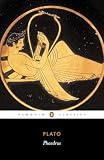
Plato was a classical Greek philosopher, student of Socrates and teacher of Aristotle, whose dialogues — including The Republic, Symposium, and Phaedrus — are foundational to Western philosophy and among the most influential texts ever written.
Plato (c. 428–348 BCE) founded the Academy in Athens, often called the first institution of higher learning in the Western world, and wrote the dialogues that have shaped philosophy ever since. Using his teacher Socrates as the central voice, Plato explored justice, beauty, love, knowledge, the soul, and the ideal state, developing his celebrated theory of Forms — the doctrine that the everyday world is a shadow of a higher realm of eternal, perfect ideas.
His major works range from the political philosophy of The Republic to the meditations on love in the Symposium and Phaedrus, the account of Socrates’ trial and death in the Apology and Phaedo, and the metaphysics of the later dialogues. Written with literary brilliance as well as philosophical depth, they remain accessible and endlessly debated.
Whitehead’s famous remark that the European philosophical tradition is “a series of footnotes to Plato” captures his foundational importance. Plato is read, taught, and argued over today as urgently as ever.