Bernardine Evaristo Books in Order: Complete Reading Guide
All Bernardine Evaristo books in order — from her debut poetry to Girl, Woman, Other. Reading guide for the Booker Prize-winning author's complete works.
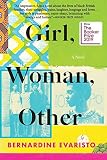
Bernardine Evaristo is a British author whose nine books span verse-novels, satire, and conventional prose fiction. She won the 2019 Booker Prize for Girl, Woman, Other — the first Black woman to win the prize.
Bernardine Evaristo Books in Publication Order
| # | Title | Year |
|---|---|---|
| 1 | Lara | 1997 |
| 2 | The Emperor’s Babe | 2001 |
| 3 | Soul Tourists | 2005 |
| 4 | Blonde Roots | 2008 |
| 5 | Hello Mum | 2010 |
| 6 | Mr. Loverman | 2013 |
| 7 | Girl, Woman, Other | 2019 |
| 8 | Manifesto | 2021 |
1. Island of Abraham (1994)
Evaristo’s debut poetry collection. Specialist interest.
2. Lara — 1997
A verse-novel tracing Evaristo’s own mixed-heritage family history from Nigeria, Brazil, and England. Formally inventive and deeply personal.
3. The Emperor’s Babe — 2001
A verse-novel set in Roman London — a sixteen-year-old Sudanese girl married to a Roman nobleman has an affair with the Emperor Septimius Severus. One of Evaristo’s most formally audacious works and her first major critical success.
4. Soul Tourists — 2005
A verse-novel following a couple driving across Europe, encountering the Black figures history has forgotten.
5. Blonde Roots — 2008
A satirical counterfactual in which Africans enslaved Europeans — a white woman narrates her life in bondage in a world where the Atlantic slave trade ran in reverse.
➡ Full review → | Buy on Amazon →
6. Hello Mum — 2010
A short verse-novel about a young Black man’s relationship with his mother. Brief and affecting.
7. Mr. Loverman — 2013
Barrington Jedidiah Walker — a 74-year-old Antiguan-British man — has maintained a secret homosexual relationship since his Caribbean childhood while being publicly married. A novel of voice and deception, identity and community.
➡ Full review → | Buy on Amazon →
8. Girl, Woman, Other — 2019
Start here. Twelve characters — mostly Black British women — whose lives intersect in London across decades. Told in verse-fiction that flows like prose. 2019 Booker Prize winner (joint with The Testaments). Her most celebrated and accessible work.
➡ Full review → | Buy on Amazon →
9. Manifesto — 2021
Part memoir, part artistic manifesto — Evaristo reflects on her development as a writer and person. Essential context for readers who want to understand her whole project.
A Breakthrough Decades in the Making
Bernardine Evaristo achieved a landmark breakthrough when she won the Booker Prize for Girl, Woman, Other, becoming the first Black woman to win the prize, but this breakthrough came after decades of dedicated work, a long career of writing and creative experiment that preceded her sudden wider recognition. Evaristo had been writing and publishing for many years before Girl, Woman, Other brought her the Booker Prize and a vast new readership, building a substantial and varied body of work, developing her distinctive style, and committing herself to the representation of Black British experience long before she achieved wide recognition. Her Booker win was a landmark, making her the first Black woman to win the prize and bringing overdue recognition to a writer of long dedication and considerable achievement, but it is important to understand that this breakthrough came after decades of committed work rather than as a sudden debut. This long apprenticeship and dedication inform her achievement, for the assurance, originality, and accomplishment of her Booker-winning novel reflect the many years of work and development that preceded it. Evaristo’s story is one of long dedication finally rewarded with landmark recognition, and it illuminates both her achievement and the obstacles that long delayed the wider recognition of a Black British woman writer. For readers, Evaristo’s breakthrough offers the achievement of a writer of long dedication, whose landmark Booker win brought overdue recognition to decades of committed work. A breakthrough decades in the making, Evaristo’s Booker Prize for Girl, Woman, Other made her the first Black woman to win the prize, but came after a long career of dedicated work and creative experiment, and reflects the assurance and accomplishment that decades of development had cultivated.
Fusion Fiction and Formal Experiment
A defining feature of Bernardine Evaristo’s work is her formal experimentation, her development of what she has called “fusion fiction,” a distinctive blending of poetry and prose, of forms and styles, that gives her writing its originality and energy. Evaristo is a formally adventurous writer, unwilling to confine herself to conventional narrative prose, and her work is marked by experiment and innovation, by the blending of poetry and prose, the mixing of forms and styles, and the creation of a distinctive hybrid she has called fusion fiction. Her Booker-winning Girl, Woman, Other, for instance, is written in a distinctive style that blends the rhythms and freedoms of poetry with the substance of prose narrative, creating a flowing, energetic, and original form that suits her purposes and gives her writing its distinctive character. This formal experimentation is central to Evaristo’s achievement, for she has pursued throughout her career an innovative and adventurous approach to form, blending genres, mixing poetry and prose, and developing distinctive hybrid styles that distinguish her work and give it its originality and energy. Her formal innovation is not experiment for its own sake but a means of finding the forms suited to her subjects and voices, and her fusion fiction allows her to render the diverse experiences and voices that are her subject with energy, freedom, and originality. For readers, Evaristo’s formal experimentation offers a distinctive and original reading experience, the energetic and innovative blending of poetry and prose that gives her work its character. Fusion fiction and formal experiment distinguish Evaristo’s work, her distinctive blending of poetry and prose, of forms and styles, which gives her writing its originality and energy and which she has developed across a career of formal innovation and adventure.
Voices of Black Britain
At the heart of Bernardine Evaristo’s work is her commitment to representing the diverse experiences and voices of Black Britain, to bringing into literature the lives, histories, and perspectives of Black British people in their full variety and complexity. Evaristo has dedicated her career to the representation of Black British experience, to giving voice to the diverse lives, histories, and perspectives of Black British people, and this commitment is central to her work and its significance. Her fiction explores the experiences of Black British people in their full diversity, encompassing different generations, backgrounds, sexualities, and circumstances, and refusing any single or simplified representation in favor of a rich and various portrait of Black British life. Her Booker-winning Girl, Woman, Other, for instance, presents a multitude of characters, mostly Black British women, whose diverse lives and voices together compose a rich and varied portrait of Black British experience. This commitment to the diverse voices of Black Britain is central to Evaristo’s achievement and significance, for she has brought into literature the lives and perspectives of Black British people in their full variety and complexity, expanding the representation of Black British experience and giving voice to those too often marginalized or ignored. Her work celebrates the diversity of Black British life, refusing simplification and stereotype in favor of a rich and various portrait, and it occupies an important place in the literature of Black British experience. For readers, Evaristo offers a rich and various portrait of Black British life, the diverse voices and experiences that are her abiding subject. Voices of Black Britain are at the heart of Evaristo’s work, her commitment to representing the diverse experiences and perspectives of Black British people in their full variety and complexity, expanding the representation of Black British life and giving voice to those too often marginalized.
Where to Start with Bernardine Evaristo
Girl, Woman, Other — then Mr. Loverman — then Blonde Roots for her most formally demanding satire. Committed readers should then work backwards through the verse-novels.
Affiliate disclosure: Links to Amazon on this page are affiliate links. We earn a small commission at no extra cost to you.
Frequently Asked Questions
What order should I read Bernardine Evaristo books in?
Start with Girl, Woman, Other (2019 Booker Prize winner) — it is her most accessible and celebrated work. Mr. Loverman is the natural second read. Blonde Roots is excellent but more demanding. Her earlier verse-novels reward dedicated readers.
What style does Bernardine Evaristo write in?
Evaristo writes in what she calls verse-fiction or novel-verse — prose that fragments across the page, abandons conventional punctuation, and moves between perspectives. It looks challenging on the page but reads fluidly once you adapt to the rhythm.
What is Girl, Woman, Other about?
Girl, Woman, Other follows twelve characters — mostly Black British women — whose lives intersect across London and its history. It won the 2019 Booker Prize jointly with The Testaments by Margaret Atwood.


