Best Indian Literature: Essential Novels from India
The best Indian literature in English — from The God of Small Things and Midnight's Children to A Fine Balance and The White Tiger. Essential Indian fiction.
Indian literature in English — from Salman Rushdie’s magic realism to Arundhati Roy’s lyrical precision to Rohinton Mistry’s devastating social realism — is one of the most vital bodies of fiction in the world. The novels below span caste and class, colonial history and its aftermath, partition and emergency, and the lives of those whom official Indian history has excluded.
The Foundational Works
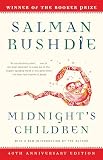
Midnight’s Children — Salman Rushdie (1981)
The novel that established Indian writing in English as a major world literature — Rushdie’s magic realist account of India from independence to the Emergency, narrated by Saleem Sinai (born at the stroke of midnight on 15 August 1947), is the most ambitious Indian novel in English. Its technique — a narrator whose history is the nation’s history, whose body literally registers the country’s political convulsions — is both a formal argument (individual lives and national history are inseparable) and a vehicle for the most exuberant prose in postcolonial fiction. Won the Booker Prize and the Booker of Bookers.
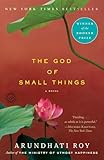
The God of Small Things — Arundhati Roy (1997)
The most formally beautiful novel in Indian literature in English — set in Kerala, about twin siblings whose childhood is shattered by a forbidden love and its consequences. Roy’s prose is the most lyrical in Indian fiction, and her novel’s subject — the Love Laws, the unspoken rules of caste and class that determine who is allowed to love whom — is the most direct confrontation with caste discrimination in Indian literary fiction. Won the Booker Prize on first publication.
Social Realism
A Fine Balance — Rohinton Mistry (1995)
The most morally serious Indian novel in English — set during the Emergency (1975–77), when Indira Gandhi suspended civil liberties and enforced compulsory sterilisation. Four characters from different classes and castes (a Parsi widow, her student nephew, two low-caste tailors) share a Bombay flat, and their histories of discrimination, displacement, and survival converge. Mistry’s Dickensian realism, his patient accumulation of social detail and personal history, produces a novel of overwhelming power about what ordinary people endure and how they find ways to continue. Not an easy read — but the most important Indian novel about poverty and caste.
The White Tiger — Aravind Adiga (2008)
The most accessible Indian novel about class and corruption — Balram Halwai, a servant from a poor village who murders his employer and uses the money to start a business, narrates his story as a letter to the Premier of China. Adiga’s dark comedy about the “Darkness” (rural India) and the “Light” (urban wealth) is a ruthless account of what the Indian economic boom looks like from below. Won the Booker Prize; the most immediately readable novel in this list.
Short Stories and the Diaspora
Interpreter of Maladies — Jhumpa Lahiri (1999)
The Pulitzer Prize-winning short story collection — nine stories about Indian and Indian-American experience, most of them about the difficulty of communication between people who love each other: between immigrants and their American-born children, between spouses who have grown distant, between a tour guide and his passengers. Lahiri’s prose is spare and precise; her stories are the most accessible entry point to Indian diasporic fiction.
The English-Language Tradition and Its Tensions
One feature worth understanding about this list is that all its books were written in English, which is both their great strength as a global literature and the source of a genuine and ongoing tension within Indian letters. India is one of the most linguistically diverse nations on earth, home to dozens of major literary languages — Hindi, Bengali, Tamil, Urdu, Malayalam, Marathi, and many more — each with its own rich and ancient literary tradition. The Indian writing in English celebrated here, sometimes called Indian Writing in English or by the slightly contested label “Indo-Anglian” literature, is therefore only one stream within a vast river. Its emergence as the face of Indian literature for international readers raises real questions: English was the language of the colonizer, spoken fluently by a relatively privileged, educated, often urban minority, and critics have long debated whether a literature written in the master’s tongue and aimed partly at Western audiences can fully represent the experience of a nation in which most people do not read English at all. Yet the writers on this list have answered the charge through the work itself. Rushdie famously “chutnified” English, bending and spicing it with Indian rhythms, words, and sensibilities until it became something genuinely Indian; Roy forged a Kerala-inflected lyricism entirely her own. They demonstrated that English could be claimed, transformed, and made to carry Indian realities. Still, readers should hold in mind that this brilliant tradition sits alongside, and sometimes in tension with, the immense literatures in India’s many other languages.
History as the Inescapable Subject
What gives the major works of modern Indian fiction their weight is a sustained reckoning with the convulsive history of the subcontinent, which presses upon these novels as an inescapable force. The shadow of the colonial encounter, the trauma of Partition in 1947 — when independence came accompanied by the bloody division of the subcontinent and the displacement and death of millions — and the political upheavals of the postcolonial decades all run through this literature. Rushdie’s Midnight’s Children makes the connection explicit and total: its narrator is born at the exact moment of independence, his life and even his body registering the nation’s history, so that the personal and the national become literally inseparable. Mistry’s A Fine Balance sets its devastating human drama against the Emergency of 1975–77, when civil liberties were suspended and the poor subjected to forced sterilization and slum clearance, insisting that political history be felt in the bodies of ordinary people. Adiga’s The White Tiger turns to the present, anatomizing the savage inequalities of the economic boom. Even the diasporic stories of Lahiri carry the history of migration and displacement that the colonial and postcolonial eras set in motion. This profound historical consciousness is not a limitation but a source of power: these are novels in which private lives are never merely private, in which to tell the story of a family or a village is necessarily to tell the story of a nation remaking itself through enormous upheaval.
Caste, Class, and Who Gets to Speak
A defining and distinctive concern of Indian literature, evident across this list, is its unflinching engagement with caste and class — the deep, often brutal hierarchies that structure Indian society and determine, in the words of Roy’s novel, “who should be loved, and how, and how much.” This is territory that much polite or official Indian discourse has historically preferred to avoid, and the moral seriousness of these novels lies partly in their refusal to look away. Roy’s The God of Small Things makes the transgression of caste boundaries — a love affair across the line dividing touchable from untouchable — the very engine of its tragedy, exposing the violence with which the social order defends itself. Mistry gives his low-caste tailors the full dignity of complex inner lives while documenting the systematic cruelties they endure. Adiga writes from the perspective of the servant class, letting a man from the “Darkness” narrate the rage and cunning that the comfortable rarely hear. This attention to the excluded — to those whom official history and conventional fiction have rendered invisible — is among the tradition’s greatest contributions. Yet it also raises the question the literature is increasingly asking of itself: who gets to tell these stories? Much canonical Indian writing in English has been produced by writers from relatively privileged backgrounds, and a vital, growing body of Dalit literature, written by members of the communities most oppressed by caste, now insists on the irreplaceable authority of firsthand testimony. The books here are the essential foundation; the fuller picture includes the voices now speaking for themselves.
Reading Order
New to Indian literature: The God of Small Things → The White Tiger → Interpreter of Maladies.
Social realism: A Fine Balance → The God of Small Things → Midnight’s Children.
The full scope: Interpreter of Maladies → The White Tiger → The God of Small Things → A Fine Balance → Midnight’s Children.
Frequently Asked Questions
What is the best Indian novel to start with?
The God of Small Things (1997) by Arundhati Roy is the essential starting point — a Booker Prize-winning novel about twin siblings in Kerala whose lives are shaped by the rigid structures of caste, history, and forbidden love. It is formally beautiful, emotionally powerful, and introduces the characteristic preoccupations of contemporary Indian fiction: caste, colonialism, family, and the gap between official history and the lives of individuals. The White Tiger (2008) by Aravind Adiga is the most immediately accessible — a darkly comic account of class mobility and corruption narrated by a man who murdered his employer.
What is The God of Small Things about?
The God of Small Things (1997) by Arundhati Roy follows fraternal twins Rahel and Estha growing up in Kerala in the 1960s and 1970s, and the single catastrophic event — the drowning death of their English cousin Sophie Mol, and what it reveals about a forbidden love — that defines their lives. Roy's novel moves between the twins' childhood and their reunion as adults, gradually revealing what happened and why it was impossible. The novel is about the 'Love Laws' — the rules that dictate who can be loved, how much, and in what way — and what happens when they are broken.
What is A Fine Balance about?
A Fine Balance (1995) by Rohinton Mistry is set during Indira Gandhi's Emergency (1975–77), when the Indian government suspended civil liberties and instituted forced sterilisation programs. Four characters — a Parsi widow, her student nephew, and two low-caste tailors — are brought together in a Bombay apartment, and their histories (of caste discrimination, partition, poverty, political violence) gradually converge. The novel is the most comprehensive account of mid-century Indian social history in fiction, and one of the most powerful novels about suffering and endurance in world literature.
What is Midnight's Children about?
Midnight's Children (1981) by Salman Rushdie follows Saleem Sinai, born at the exact moment of Indian independence, whose fate is magically linked to the fate of the nation. Every child born in the first hour of Indian independence has a special power; Saleem can hear their thoughts. The novel uses magic realism to tell the history of India from independence to the Emergency — the most ambitious fictional account of modern India. It won the Booker Prize and the Booker of Bookers (best Booker winner of 25 years).