Charles Dickens Books in Order: Complete Bibliography & Best Starting Points
Charles Dickens's complete bibliography in order — from The Pickwick Papers and Oliver Twist to Great Expectations and A Tale of Two Cities. Best starting points and why Dickens still matters.

Charles Dickens was the most widely read novelist of the Victorian age, and he remains — by sales and cultural penetration — the most durable. He published fifteen novels (one unfinished at his death), five novellas, a body of journalism and short fiction, and contributed to the reshaping of Christmas itself into the form English-speaking culture now celebrates.
The novels were written against conditions that would have defeated most writers: serialisation deadlines, financial pressure, a large family, a deteriorating marriage, and the sheer labour of maintaining multiple narrative threads across years of monthly or weekly publication. That any of them are great novels is remarkable. That several are among the greatest novels in the language is inexplicable by anything other than genius.
Where to Start
Great Expectations (1861)
The standard recommendation, and rightly so. Pip, a blacksmith’s orphaned apprentice on the Kent marshes, acquires a mysterious benefactor and is educated into the life of a gentleman — which means being educated out of his gratitude, his affections, and his understanding of who he actually is. The novel’s central irony (the benefactor is not who Pip assumes) drives a plot that is also a study of class, self-deception, and the social machinery by which England reproduced its hierarchies.
Great Expectations is Dickens’s most economical major novel — its plot has fewer digressions and coincidences than his earlier work, and its psychology is correspondingly more direct. Pip’s shame about Joe Gargery, his loyalty and his disloyalty, his eventual understanding — these are rendered with a clarity unusual for Dickens.
A Christmas Carol (1843)
The best entry point for readers who want to understand Dickens’s moral world in a single afternoon. Ebenezer Scrooge’s transformation from a man who has made money his only value to a man who understands what he has sacrificed is Dickens’s social argument in concentrated form: the wealthy are not simply stingy — they are spiritually diminished by their refusal to acknowledge their obligations to others. The Carol invented or crystallised many features of the modern English Christmas, including the idea that Christmas is primarily about family warmth and generosity rather than religious observance.
The Major Novels
Oliver Twist (1837–39)
Dickens’s first social novel and the one that established him as a writer with a purpose beyond entertainment. Oliver, a workhouse orphan, falls in with Fagin’s gang of pickpockets and is subsequently fought over by the criminal underworld and a network of benevolent middle-class characters who want to rescue him. The novel is melodramatic by modern standards — the plotting is coincidental and the moral categories are stark — but its anger at the treatment of the poor by the Victorian system of workhouses and parish relief is real and remains readable.
David Copperfield (1849–50)
Dickens’s most autobiographical novel and his own favourite of his work (“of all my books, I like this the best”). David Copperfield’s experiences — the stepfather, the school, the bottle-washing factory (drawn directly from Dickens’s own experience as a child), the articled clerking, the bad first marriage, the writing — are barely disguised autobiography. The novel is also his richest in characterisation: Mr. Micawber, Uriah Heep, Agnes, Dora, Steerforth — these are among his most memorable creations.
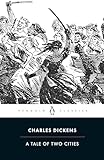
A Tale of Two Cities (1859)
Set during the French Revolution, A Tale of Two Cities is the most plot-driven of Dickens’s major novels and the most widely read globally (it has sold an estimated 200 million copies). Sydney Carton — brilliant, self-destructive, in love with the wife of a man who looks exactly like him — is the most Romantic of Dickens’s protagonists, and his final act is the novel’s defining image. “It is a far, far better thing that I do, than I have ever done” remains one of the most quoted closing lines in English fiction.
Complete Bibliography in Order
Novels
| # | Title | Years Published | Note |
|---|---|---|---|
| 1 | The Pickwick Papers | 1836–37 | First novel; episodic; minor |
| 2 | Oliver Twist | 1837–39 | First major social novel |
| 3 | Nicholas Nickleby | 1838–39 | Schools satire; very long |
| 4 | The Old Curiosity Shop | 1840–41 | Little Nell; sentimental |
| 5 | Barnaby Rudge | 1841 | Historical; Gordon Riots |
| 6 | Martin Chuzzlewit | 1843–44 | American satire |
| 7 | Dombey and Son | 1846–48 | Underrated; railways and capitalism |
| 8 | David Copperfield | 1849–50 | Autobiographical; essential |
| 9 | Bleak House | 1852–53 | Greatest achievement; long |
| 10 | Hard Times | 1854 | Shortest major novel; industrial England |
| 11 | Little Dorrit | 1855–57 | Debtors’ prison; society |
| 12 | A Tale of Two Cities | 1859 | French Revolution; essential |
| 13 | Great Expectations | 1860–61 | Essential; best starting point |
| 14 | Our Mutual Friend | 1864–65 | Last completed novel; underrated |
| 15 | The Mystery of Edwin Drood | 1870 | Unfinished at his death |
Novellas and Short Works
| Title | Year | Note |
|---|---|---|
| A Christmas Carol | 1843 | Essential; best entry point |
| The Cricket on the Hearth | 1845 | Christmas book |
| The Haunted Man | 1848 | Christmas book |
The Great Victorian Novelist
Charles Dickens is the greatest and most beloved of the Victorian novelists, a writer whose vast, vivid, and richly peopled novels captured the life of his age with unmatched energy and humanity, and whose works remain among the most widely read and cherished in all of English literature. Dickens dominated the literary landscape of Victorian England, and his novels, with their vast scope, their vivid energy, and their rich humanity, captured the life of his age and secured his place as the greatest and most beloved of the Victorian novelists. His fiction encompasses the full range of Victorian society, from the lowest depths of poverty to the heights of wealth and power, rendered with an energy, vividness, and humanity that bring his world overwhelmingly to life. The enduring popularity of Dickens, the continuing readership and affection that his novels command, testifies to their extraordinary vitality, their unforgettable characters, their compelling stories, and their profound humanity. As the great Victorian novelist, Dickens captured the life of his age with unmatched energy and humanity, and his works remain among the most widely read and cherished in all of English literature. For readers, Dickens offers the vast, vivid, and richly peopled novels of the greatest Victorian novelist, capturing the life of his age with unmatched energy and humanity. The great Victorian novelist, Dickens captured the life of his age with unmatched energy and humanity in his vast, vivid, and richly peopled novels, which remain among the most widely read and cherished in all of English literature.
Unforgettable Characters
Among the greatest of Charles Dickens’s achievements is his creation of an extraordinary gallery of unforgettable characters, vivid, distinctive, and indelible creations who have entered the permanent imagination of readers and become part of the cultural inheritance. Dickens possessed an unrivaled gift for character, and his novels are peopled by an extraordinary gallery of vivid, distinctive, and unforgettable creations, from heroes and heroines to villains, eccentrics, and comic figures, rendered with such energy and individuality that they live indelibly in the imagination. His characters, with their distinctive personalities, their memorable names, and their vivid individuality, have become part of the permanent cultural inheritance, recognized and beloved even by those who have never read the novels in which they appear. This creation of unforgettable characters is central to Dickens’s achievement and his enduring appeal, for his vivid and indelible creations populate his novels with an extraordinary richness of humanity and bring his world overwhelmingly to life. The gallery of characters Dickens created, in their vividness, distinctiveness, and indelibility, is among the greatest achievements in all of fiction, and his characters have entered the permanent imagination of readers. For readers, Dickens offers an extraordinary gallery of unforgettable characters, vivid and indelible creations who have entered the permanent imagination of readers. Unforgettable characters are among Dickens’s greatest achievements, his extraordinary gallery of vivid, distinctive, and indelible creations who have entered the permanent imagination of readers and become part of the cultural inheritance.
Social Conscience and the Cry for Justice
Beneath their energy and humor, Charles Dickens’s novels are animated by a powerful social conscience, a passionate concern with the injustices and cruelties of his age, particularly the suffering of the poor, and a cry for compassion and reform. Dickens was a writer of profound social conscience, and his novels expose and protest the injustices and cruelties of Victorian society, particularly the suffering of the poor, the exploitation of children, and the failures of the institutions that should have protected the vulnerable. His fiction renders the realities of poverty, injustice, and social cruelty with vivid power, awakening his readers’ compassion and indignation and pressing the cause of reform and humanity. This social conscience is central to Dickens’s achievement, for his novels are not merely entertainments but powerful indictments of social injustice and passionate appeals for compassion and reform, exposing the cruelties of his age and crying out for justice and humanity. His vivid rendering of the suffering of the poor and the injustices of his society awakened the conscience of his readers and contributed to the cause of social reform. For readers, Dickens offers a powerful social conscience and a cry for justice, the injustices and cruelties of his age exposed and protested, and a passionate appeal for compassion and reform. Social conscience and the cry for justice animate Dickens’s novels, his passionate concern with the injustices and cruelties of his age, particularly the suffering of the poor, and his appeal for compassion and reform, which give his fiction its moral power beneath its energy and humor.
Reading Order Recommendations
New to Dickens: A Christmas Carol → Great Expectations → A Tale of Two Cities. Short to long; accessible to complex.
Literary reader: David Copperfield → Bleak House → Great Expectations. The autobiographical novel, the greatest novel, the most controlled.
Complete Dickens: Great Expectations → David Copperfield → A Tale of Two Cities → Bleak House → Our Mutual Friend. This covers the essential work in order of increasing ambition.
Frequently Asked Questions
What is the best Charles Dickens novel to start with?
Great Expectations is the standard recommendation for new readers — it is Dickens's most structurally tight and most psychologically modern novel: Pip's class anxieties, his shame about his origins, his illusions about Estella and about who his benefactor is, all read with surprising directness. A Christmas Carol is the most immediately accessible (it's a novella, under 100 pages) and captures his moral world efficiently. For those who want Dickens at full scale, David Copperfield is his most autobiographical and his personal favourite of his own work.
Do Dickens novels need to be read in order?
No — all his novels are standalone, and most were originally published as magazine serials. There is no narrative continuity between them. The useful 'order' is by difficulty: start with Great Expectations or A Christmas Carol, then move to David Copperfield, then to the longer and more complex novels like Bleak House or Our Mutual Friend.
Why was Dickens published in serial form?
Dickens published most of his novels in monthly or weekly instalments in magazines he edited or contributed to, including Household Words and All the Year Round. This was standard Victorian practice for popular fiction, and it shaped his writing style: each instalment needed to maintain reader interest and end on a hook; subplots proliferated because there was time and space for them; coincidences and theatrical revelations were acceptable in a form the audience consumed over months. Understanding this explains some of what modern readers find excessive in his plotting.
What is Dickens's most important social novel?
Bleak House (1852–53) is considered by many critics Dickens's greatest achievement — a satirical attack on the Chancery court system that consumed generations of litigants in interminable legal cases, rendered through multiple narrative voices including an omniscient third-person narrator and Esther Summerson's first-person account. It is long (900+ pages) and complex, but it is the most formally ambitious thing Dickens wrote.
Which Dickens novels are actually worth reading today?
The novels that have aged best and reward modern readers most: Great Expectations, A Tale of Two Cities, David Copperfield, A Christmas Carol, and Bleak House. Oliver Twist and The Pickwick Papers have dated more than the later work. Our Mutual Friend (Dickens's last completed novel) is underrated and contains some of his finest writing. Hard Times and Little Dorrit are important but less immediately accessible.