Julian Barnes Books in Order: Complete Bibliography & Best Starting Points
Julian Barnes's complete bibliography in order — from Flaubert's Parrot and The Sense of an Ending to Nothing to Be Frightened Of. Best starting points for new readers.
Julian Barnes is among the most technically sophisticated British novelists of his generation — a writer whose work is preoccupied with memory, history, and the relationship between the life and the work, and who has developed formal strategies (the embedded narrative, the fictional criticism, the memoir disguised as literary history) that are entirely his own. He has won the Booker Prize (The Sense of an Ending, 2011) and been shortlisted four times.
Born in Leicester in 1946, educated at Oxford, he worked as a lexicographer and literary editor before becoming a full-time writer. He is also a distinguished critic and has published essays on French literature, art, and culture collected in several volumes.
Where to Start
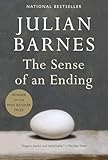
The Sense of an Ending (2011)
The Booker Prize winner and the best starting point — 150 pages that demonstrate Barnes’s essential method. Tony Webster revisits events from his youth when an unexpected bequest forces him to confront the gap between what he remembers and what actually happened. Barnes’s argument about how memory reshapes the past to protect the self — how the story we tell about our lives is a construction — is made with absolute formal elegance. The ending is a surprise that re-reads the entire novel.
The Major Works
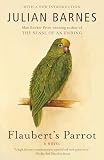
Flaubert’s Parrot (1984)
Barnes’s breakthrough novel and his most formally innovative. Geoffrey Braithwaite, a retired English doctor, investigates Flaubert while revealing his own grief about his late wife. The form — chronologies, bestiary, critical examination, fictitious bibliography — is a sustained argument about what we can know about a writer from their work and life, and about the relationship between obsession and grief. One of the most playfully intelligent British novels of the twentieth century.
Nothing to Be Frightened Of (2008)
Barnes’s memoir about dying — specifically, his fear of death as an atheist confronting personal extinction. The book weaves his conversations with his philosopher brother, his reflections on the deaths of writers he admires (Stendhal, Flaubert, Turgenev, Shostakovich), and his dry account of what death means in a secular age. It is simultaneously very funny and seriously engaged with the question of how one thinks about the end of consciousness.
Complete Bibliography (Major Works)
| Title | Year | Note |
|---|---|---|
| Metroland | 1980 | First novel; Paris; England |
| Flaubert’s Parrot | 1984 | Breakthrough; innovative |
| Staring at the Sun | 1986 | Quiet; beautiful |
| A History of the World in 10½ Chapters | 1989 | Inventive; connected stories |
| Talking It Over | 1991 | Love triangle; multiple narrators |
| The Porcupine | 1992 | Bulgaria; communist trial |
| Cross Channel | 1996 | Stories; England-France |
| England, England | 1998 | Satire; theme-park nation |
| Love, Etc | 2000 | Sequel to Talking It Over |
| Nothing to Be Frightened Of | 2008 | Death; memoir |
| The Sense of an Ending | 2011 | Booker Prize; best starting point |
| Levels of Life | 2013 | Grief; balloon; love |
| The Noise of Time | 2016 | Shostakovich; Soviet Russia |
| The Only Story | 2018 | First love; memory |
| Elizabeth Finch | 2022 | Late; philosophy; Julian of Norwich |
A Writer of Intelligence and Wit
Julian Barnes is one of the most intelligent and elegant of contemporary novelists, a writer whose fiction combines a sharp wit, a probing intelligence, and an elegant prose with a deep engagement with the great questions of memory, history, love, and mortality. Barnes’s fiction is distinguished by its intelligence, its wit, and its elegance, by a sharp and probing mind, a sophisticated wit, and a precise and elegant prose. He brings to his fiction a probing intelligence and a sophisticated wit, engaging the great questions of human existence with a sharpness, an irony, and an elegance that mark his work. This intelligence and wit are central to Barnes’s appeal, for his fiction combines a sharp wit, a probing intelligence, and an elegant prose with a deep engagement with the great questions of memory, history, love, and mortality. His sophisticated intelligence, his wit, and his elegant prose give his fiction its distinctive character and its appeal. For readers, Barnes offers a writer of intelligence and wit, fiction that combines a sharp wit and a probing intelligence with an elegant prose and a deep engagement with the great questions of human existence. A writer of intelligence and wit, Barnes combines a sharp wit, a probing intelligence, and an elegant prose with a deep engagement with the great questions of memory, history, love, and mortality.
Memory, History, and Truth
A central preoccupation of Julian Barnes’s fiction is the nature of memory, history, and truth, the unreliability of memory, the difficulty of knowing the past, and the elusive and constructed nature of truth. Barnes’s fiction is deeply concerned with memory, history, and truth, with the unreliability and the workings of memory, the difficulty of knowing and reconstructing the past, and the elusive, constructed, and uncertain nature of truth. His fiction explores how memory shapes and distorts our understanding of the past, how history is constructed and contested, and how truth proves elusive and uncertain, and he probes these questions with intelligence and subtlety. This preoccupation with memory, history, and truth is central to Barnes’s fiction, for he explores the unreliability of memory, the difficulty of knowing the past, and the elusive nature of truth with a probing intelligence and a sophisticated awareness of their complexity. His fiction illuminates the uncertain and constructed nature of memory, history, and truth, and the difficulty of knowing the past and ourselves. For readers, Barnes offers a profound exploration of memory, history, and truth, the unreliability of memory, the difficulty of knowing the past, and the elusive nature of truth. Memory, history, and truth are a central preoccupation of Barnes’s fiction, the unreliability of memory, the difficulty of knowing the past, and the elusive and constructed nature of truth.
Love, Mortality, and the Examined Life
Beneath its wit and intelligence, Julian Barnes’s fiction engages with profound seriousness the great human themes of love, mortality, and the examined life, the experience of love and loss, the awareness of death, and the effort to understand and reckon with the meaning of a life. Barnes’s fiction, for all its wit and irony, engages with profound seriousness the great human themes of love and mortality, exploring the experience of love and loss, the awareness and the fear of death, and the effort to understand and reckon with the meaning of a life. His fiction examines love in its joys and its losses, confronts the reality of mortality and the awareness of death, and reflects on the examined life, the effort to understand oneself and the meaning of one’s existence. This engagement with love, mortality, and the examined life gives Barnes’s fiction its depth and its seriousness beneath its wit, for he confronts the great human themes of love, loss, death, and the meaning of life with intelligence, honesty, and feeling. His fiction combines wit and intelligence with a profound engagement with the deepest questions of love, mortality, and the meaning of a life. For readers, Barnes offers a profound engagement with love, mortality, and the examined life, the experience of love and loss, the awareness of death, and the effort to understand the meaning of a life. Love, mortality, and the examined life are engaged with profound seriousness in Barnes’s fiction, the experience of love and loss, the awareness of death, and the effort to understand and reckon with the meaning of a life, beneath its wit and intelligence.
Reading Order Recommendations
New to Barnes: The Sense of an Ending → Flaubert’s Parrot → Nothing to Be Frightened Of.
Formal innovation: Flaubert’s Parrot → A History of the World in 10½ Chapters → The Sense of an Ending.
Short introduction: The Sense of an Ending → Levels of Life → Nothing to Be Frightened Of.
Frequently Asked Questions
What is the best Julian Barnes book to start with?
The Sense of an Ending (2011) is the best starting point — it won the Booker Prize, is only 150 pages, and is the fullest expression of Barnes's central preoccupation: the unreliability of memory and the gap between what we remember of our past and what we actually did. Flaubert's Parrot is the best starting point for readers who want Barnes's experimental formal intelligence — a fictional critique of Flaubert that is simultaneously a novel, an essay, and a meditation on the relationship between the life and the work.
What is The Sense of an Ending about?
The Sense of an Ending (2011) follows Tony Webster, a retired man in his sixties, who receives an unexpected bequest from the mother of his first girlfriend — a bequest that forces him to revisit his account of events forty years in the past and to discover that what he remembered is not what happened. The novel is about how memory serves the self — how we reshape the past to protect our image of ourselves — and about the specific way that small youthful cruelties, forgotten by their perpetrators, can define other people's lives. It is a masterclass in the construction of retrospective meaning.
What is Flaubert's Parrot about?
Flaubert's Parrot (1984) is narrated by a retired English doctor, Geoffrey Braithwaite, who has become obsessed with Flaubert and is attempting to track down the actual stuffed parrot that stood on Flaubert's desk while he wrote 'A Simple Heart.' The novel consists of Braithwaite's investigation — which includes chronologies of Flaubert's life, a bestiary of animals in his work, an examination of his critical reception — and reveals, gradually, the grief about his late wife that underlies his obsession. It is the most playfully intelligent British novel of the 1980s.
What is Nothing to Be Frightened Of about?
Nothing to Be Frightened Of (2008) is Barnes's memoir about the fear of death — specifically, his own atheist's confrontation with the fact of personal extinction, conducted through conversations with his brother (a philosopher) and sustained reflection on the deaths of writers and artists he admires. The book is simultaneously serious (Barnes's engagement with Pascal, Stendhal, and others on the question of dying well) and very funny (his dry account of his brother's reactions). It is one of the finest British prose works of the twenty-first century.