The Poppy War vs Babel: Which R.F. Kuang First?
The Poppy War and Babel are R.F. Kuang's two landmark fantasies. Here's how they differ, what each does best, and which to read first.
By Marcus Webb
R.F. Kuang became one of the most talked-about authors in fantasy with two very different landmark works, and readers constantly ask which to read first: The Poppy War (2018), her brutal military-fantasy debut, or Babel (2022), her dark academia phenomenon. Both are fiercely intelligent, historically grounded, and unafraid of darkness — but they belong to different subgenres and ask for different kinds of commitment. So how do they compare?
How They Stack Up
| The Poppy War | Babel | |
|---|---|---|
| Published | 2018 | 2022 |
| Subgenre | Grimdark military fantasy | Historical dark academia |
| Format | Trilogy | Standalone |
| Inspiration | 20th-century Chinese history | 1830s Oxford and empire |
| Core theme | War, power, and atrocity | Colonialism, language, and resistance |
| Read first? | For epic saga | For a contained literary entry |
A Quick Look at The Poppy War
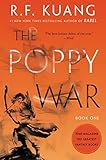
The Poppy War follows Rin, a war orphan who tests into an elite military academy and discovers a lethal shamanic power as her nation is plunged into a devastating war. Drawing directly on the Second Sino-Japanese War and figures from Chinese history, Kuang builds a grimdark epic that does not flinch from genocide, addiction, and the corrupting pull of power. It is the first book of a trilogy whose emotional and moral arc grows steadily darker and more harrowing — a brutal, unforgettable saga.
Babel: The Premise
Babel is set in an alternate 1830s where Britain’s empire runs on “silver-working,” a magic powered by what is lost in translation between languages. Robin, a Chinese orphan brought to Oxford’s prestigious translation institute, comes to realise that the scholarship he loves is the engine of imperial violence — and must choose between the institution and the resistance against it. A standalone that fuses dark academia with a blistering critique of colonialism, it is more contained and more overtly literary than The Poppy War.
The Real Differences
The biggest difference is form and commitment. The Poppy War is the opening of a sprawling trilogy; Babel is a single, self-contained novel. If you want an epic to sink into, the trilogy delivers; if you want one complete story, Babel is the cleaner choice.
A second is subgenre. The Poppy War is military fantasy — battles, strategy, and the machinery of war. Babel is dark academia — scholarship, secret societies, and the seductive danger of the elite classroom. Your taste in setting may decide it.
Then there is intensity versus focus. The Poppy War is relentlessly brutal, escalating into some of the darkest material in modern fantasy. Babel is angry but more controlled, channelling its fury into a tighter, more argued thesis about empire. One overwhelms; the other persuades.
Which Should You Read First?
If you want a vast, brutal epic and do not mind committing to a trilogy that grows steadily darker, start with The Poppy War. It is the more immersive saga and the purest expression of Kuang’s grimdark ambition.
If you want a contained, literary entry point, start with Babel. As a standalone with a clear thematic focus and the on-trend appeal of dark academia, it is the easier and more accessible introduction to Kuang’s work — and a complete experience in a single book.
A Note on Content and Tone
It is worth knowing that both books are demanding emotionally as well as intellectually. Kuang writes violence, oppression, and despair without softening them, and neither book offers tidy uplift — The Poppy War in particular goes to genuinely harrowing places as its trilogy unfolds. This is deliberate; Kuang is interested in the real costs of war and empire, not in catharsis. Readers who want that unflinching honesty will find few authors who deliver it as powerfully, but going in prepared for the darkness helps you meet both books on their own uncompromising terms.
What Comes Next
Once you have read both, our Babel vs The Secret History comparison places Kuang within the dark academia tradition, and our best dark academia books and best epic fantasy series roundups point to more in each of her modes.
When readers ask us, we say: read The Poppy War first for the brutal epic trilogy, or Babel first for the contained dark academia masterpiece — and either way, you will discover one of the most fearless writers in fantasy.
Frequently Asked Questions
Should I read The Poppy War or Babel first?
Either works, since they are unrelated standalones, but it depends on what you want. The Poppy War is a brutal military fantasy trilogy, so start there if you want an epic saga. Babel is a standalone dark academia novel, so start there if you want a more contained, literary entry point. Babel is the more accessible single-book commitment.
Which is better, The Poppy War or Babel?
Both are acclaimed and it comes down to taste. The Poppy War is a sweeping, grimdark military fantasy with a devastating emotional arc across three books. Babel is a more literary, focused dark academia novel with a sharper anti-colonial thesis. Babel won more mainstream awards and acclaim; The Poppy War has a fiercely devoted fanbase. Both showcase Kuang's anger and ambition.
Are The Poppy War and Babel similar?
They share R.F. Kuang's hallmarks — meticulous historical grounding, fury at empire and colonialism, and an unflinching willingness to depict violence and moral compromise. But they differ in form: The Poppy War is an epic military fantasy trilogy inspired by 20th-century Chinese history, while Babel is a standalone historical dark academia set at 1830s Oxford.