Where to Start with Arundhati Roy: A Reading Guide
Where to start with Arundhati Roy — whether to begin with The God of Small Things or The Ministry of Utmost Happiness. A complete reading guide.
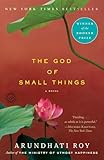
Arundhati Roy (born 1961) is the Indian novelist and political essayist who won the Booker Prize in 1997 for her debut novel The God of Small Things — a Booker-winning debut of such originality and formal ambition that it immediately established her as one of the most significant novelists writing in English anywhere in the world. She spent the following twenty years primarily as an essayist and political activist — opposing nuclear testing, writing about caste and inequality, covering the Kashmir conflict — before returning to fiction with The Ministry of Utmost Happiness (2017), a more fragmented and explicitly political novel that attempted to hold the whole of contemporary India inside a single work of fiction. Her fiction is inseparable from her political commitments; the Love Laws of The God of Small Things are the same laws she has spent her career challenging.
Where to Start: The God of Small Things (1997)
The essential Roy — and one of the most formally original and emotionally devastating novels of the 1990s. The Ipe family of Ayemenem, Kerala: an elderly matriarch, her children Ammu and Chacko, Chacko’s divorced English wife Margaret and their daughter Sophie, and the twins Rahel and Estha, whose lives the novel follows from 1969 to 1993. At the centre of the 1969 timeline is a catastrophe — an event so terrible and so entirely predictable, given the social laws that govern their world, that the novel cannot approach it directly. It circles it, approaching from different angles, building its revelation through recurrence and indirection.
Roy’s prose is one of the great achievements of late twentieth-century English fiction: she invented a new language for Indian experience, full of compound words (nothingness, the terror and the love), capitalised phrases (the Love Laws, the God of Small Things), and a child’s-eye sensory precision that renders the Kerala landscape and the family home with extraordinary vividness. Begin here; there is no better entry point.
The Ministry of Utmost Happiness (2017)
Roy’s second novel — twenty years after her debut, and a very different kind of book. Where The God of Small Things is tightly structured around a single family and a single catastrophic event, The Ministry of Utmost Happiness is fragmented, polyphonic, and explicitly political — an attempt to contain within a single novel the multiple political crises of contemporary India: Kashmir, Maoist insurgency, communal violence, caste oppression, and the rise of Hindu nationalism.
The central figure is Anjum, a hijra who finds that the graveyard — the only space truly outside the social order — is where community becomes possible for the excluded. Roy’s prose retains the distinctive sensory richness of her debut while developing a new political directness. Less formally perfect than its predecessor; more ambitious in scope. Best read after The God of Small Things, to which it forms a conscious sequel in spirit.
Why The God of Small Things Is the Ideal First Book
For a reader new to Arundhati Roy, The God of Small Things is the ideal first book because it is her acclaimed, Booker Prize-winning debut and the fullest expression of her distinctive gifts, the dazzling prose, the rich evocation of place, and the profound engagement with family, caste, and forbidden love. The God of Small Things tells the story of twins in Kerala, India, and the tragedy that shapes their family, moving across time to reveal how small things and great social forces shape human fate. As an entry point it is ideal, for it is her most celebrated work of fiction and a stunning showcase of her lyrical, emotionally powerful storytelling. It welcomes the newcomer with its gorgeous prose, its vivid setting, and its emotional and political depth, drawing the reader into one of the great novels of contemporary Indian literature. It is her defining novel and the one that best represents her gifts, so the new reader encounters Roy at her finest. For the newcomer, then, The God of Small Things is the natural and ideal starting point.
What to Expect as a New Reader
As a new reader, you can expect The God of Small Things to be a lyrical, emotionally powerful, and richly evocative novel. You can expect dazzling prose, for Roy writes in a distinctive, lyrical, inventive style full of vivid imagery and wordplay. You can expect a vivid setting, for the novel immerses the reader in the sights, sounds, and textures of Kerala in southern India. You can expect a non-linear structure, for the story moves across time, circling the central tragedy and gradually revealing what happened. You can expect profound themes, for the novel engages caste, class, family, politics, and forbidden love, showing how social forces and small things shape human fate. You can expect deep emotional power and tragedy. You should be prepared for painful events and some difficult material. Expect, in short, a lyrical, emotionally powerful, and richly evocative novel, a stunning introduction to Roy’s gifts.
Going Deeper After Your First Book
Once The God of Small Things has introduced you to Roy’s gifts, the reader who wishes to go deeper can explore her other work, both her fiction and her influential nonfiction. Her long-awaited second novel, The Ministry of Utmost Happiness, offers a sweeping, ambitious, and politically engaged portrait of contemporary India, continuing her lyrical prose and her concern with the marginalized, while her many essays and works of nonfiction reveal her as a passionate political writer and activist on issues of justice, power, and the lives of the powerless. Reading these after The God of Small Things deepens your appreciation of Roy’s distinctive gifts, the dazzling prose and the profound engagement with society and politics. Her characteristic concerns run through her work. Building your reading journey through Roy is a matter of following her from The God of Small Things into her second novel and her political essays. The reader who begins here and continues will encounter one of the most distinctive and politically engaged writers of contemporary literature.
Reading Arundhati Roy
Roy’s fiction is united by its insistence on the human cost of social law — the Love Laws of caste and class that determine who is permitted to love whom, and at what cost transgressions are punished. Her two novels are the same book approached from different directions: The God of Small Things through a single family’s catastrophe; The Ministry of Utmost Happiness through the whole broken polity of contemporary India. Begin with The God of Small Things: it is one of the finest novels in English from any country in the past thirty years.
Frequently Asked Questions
Where should I start with Arundhati Roy?
The God of Small Things (1997) is the only starting point — Roy's Booker Prize-winning debut and one of the most formally original novels published in English in the 1990s. Set in the small town of Ayemenem in Kerala in the 1960s and 1990s, it traces the lives of fraternal twins Rahel and Estha and the catastrophic consequences of their family's transgression of the Love Laws — the social and caste-based laws that determine who can love whom, and how much. The Ministry of Utmost Happiness is her second novel, published twenty years later, and is best read after the first.
What is The God of Small Things about?
The God of Small Things (1997) is set in Ayemenem, Kerala, and follows the Ipe family across two timelines — 1969, when a catastrophe occurs, and 1993, when the surviving twin Rahel returns from America to find her brother Estha silent and damaged. The catastrophe, approached obliquely throughout the novel, involves the Love Laws: the rules that govern caste, class, and sexual propriety in a society that enforces its hierarchies with absolute violence. The novel's prose is one of its central features — Roy invented a new English for Indian experience, full of compound words, recurrent phrases, and a sensory precision that is immediately recognisable. A devastating, formally inventive masterpiece.
What is The Ministry of Utmost Happiness about?
The Ministry of Utmost Happiness (2017) is Roy's second novel, published twenty years after her debut. It follows two main figures: Anjum, a hijra (a member of South Asia's transgender community) who lives in a graveyard in Delhi that has become a refuge for the excluded; and Tilo, an architect entangled in the Kashmir conflict and with three men who love her. The novel is more fragmented and more politically explicit than The God of Small Things — an attempt to hold the whole of contemporary India inside a single work of fiction, including Kashmir, Maoist insurgencies, communal violence, and the rise of Hindu nationalism.
Is The God of Small Things difficult to read?
The God of Small Things is not conventionally difficult but requires patience with its structure: it is non-linear, withholding its central revelation until the reader is prepared to receive it, and its prose — with invented compound words, capitalised phrases, and recursive repetition — is stylistically demanding in the best sense. The difficulty is the point: Roy's invented language is the language of a childhood seen from inside its own experience, and of a society that has made certain truths unspeakable. Readers who adjust to the style in the first chapters generally find the novel increasingly gripping and its conclusion among the most powerful in contemporary fiction.


