Where to Start with Beth O'Leary: A Reading Guide
Where to start with Beth O'Leary — how to approach The Flatshare, her contemporary romance built on an inventive premise of two strangers who share a flat but never meet. A complete reading guide.
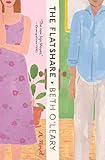
Beth O’Leary is a British author who worked in publishing before turning to fiction. The Flatshare (2019) was her debut novel, published by Quercus in the United Kingdom and Flatiron Books in the United States. It became a major BookTok success and introduced O’Leary as one of the more inventive voices in contemporary British romance, combining warm premises with genuine emotional substance.
Where to Start: The Flatshare (2019)
The essential Beth O’Leary — and a contemporary romance with one of the most structurally clever premises in the genre. The Flatshare opens with a setup that is both specific and irresistible: Tiffy Moore, recently out of a relationship she can’t quite characterise and financially desperate, answers an unusual flat-share advertisement. A one-bedroom London flat, shared with a palliative care nurse named Leon Twomey. The arrangement: Tiffy uses the flat during the week, Leon uses it on nights and weekends. Alternating occupancy. One bed. No guarantee they’ll ever properly meet.
What develops is a relationship built entirely on notes. Tiffy, who works at a small craft publishing house and covers every surface with sticky notes anyway, starts leaving messages. Leon, who communicates in fragments even when he has time to write more, responds. The notes multiply from practical to personal to something neither of them quite names. A connection forms in the white space between two people who share a physical life without sharing any of it directly.
O’Leary alternates point-of-view between Tiffy and Leon throughout the novel, and the voice contrast is both structural and characterological. Tiffy’s chapters are long, present-tense, and associative — her mind moves quickly, she circles back, she writes how she talks. Leon’s chapters are short, stripped, and emotionally compressed by training and habit: working in palliative care requires absorbing grief professionally while keeping enough intact to function, and the habit has shaped how he expresses himself everywhere. The contrast makes the relationship’s development richer, because the reader sees what each is giving the other — Tiffy gives warmth and overflow; Leon gives steadiness and precision.
Leon is one of the more quietly affecting romantic heroes in recent British fiction. His emotional reserve is rendered not as damage requiring rescue but as a mode of being that has costs and benefits, and his gradual opening to Tiffy is plotted with patience and care.
The novel’s most emotionally serious strand is the subplot about Tiffy’s ex, Justin. O’Leary depicts a relationship that was not obviously abusive by external markers — Justin was charming, creative, intermittently devoted — but that systematically diminished Tiffy’s confidence and self-trust through subtle control and emotional manipulation. The book doesn’t hurry Tiffy’s recognition of this. It lets her piece it together over the course of the novel, with the reader understanding what she’s describing before she names it. The contrast between Justin’s behavior and Leon’s — the way Leon consistently makes space for Tiffy rather than claiming it — is the novel’s quiet argument about what good actually looks like, stated through accumulation rather than declaration.
The resolution of the Justin subplot is slightly rushed relative to the care of its development, and some secondary characters are thinner than the main pair. These are minor reservations about a debut that handles tonal balance — keeping warmth and emotional gravity in the same book — with more skill than most.
Why The Flatshare Is the Ideal First Book
For a reader new to Beth O’Leary, The Flatshare is the ideal first book because it is her charming debut and the fullest expression of her distinctive gifts, the warm humor, the endearing characters, and the heartfelt, feel-good romance. The Flatshare follows two strangers who share a flat, and a bed, on opposite schedules, communicating only through notes, in a charming, funny, and emotionally warm love story. As an entry point it is ideal, for it is her best-known book and a perfect example of her warm, witty, and heartfelt contemporary romance. It welcomes the newcomer with its delightful premise, its endearing characters, and its warmth and humor, drawing the reader into her feel-good fiction. It is her breakout work and a fine representation of her gifts, so the new reader encounters O’Leary at her most characteristic. For the newcomer, then, The Flatshare is the natural and ideal starting point.
What to Expect as a New Reader
As a new reader, you can expect The Flatshare to be a charming, funny, and heartwarming contemporary romance. You can expect a delightful premise, for two strangers share a flat and a bed on opposite schedules, never meeting, communicating only through notes. You can expect endearing characters, for O’Leary’s leads are warm, relatable, and easy to root for. You can expect warm humor, for the novel is genuinely funny and charming. You can expect a heartfelt romance, building sweetly and satisfyingly through the characters’ notes and growing connection. You can expect emotional depth alongside the comedy, for O’Leary handles real and sometimes difficult subjects with care. You can expect a feel-good, uplifting read. Expect, in short, a charming, funny, and heartwarming contemporary romance, a delightful introduction to O’Leary’s gifts.
Going Deeper After Your First Book
Once The Flatshare has introduced you to O’Leary’s gifts, the reader who wishes to go deeper can explore her other novels, which continue her warm humor, her endearing characters, and her heartfelt, feel-good romance, often built on charming or inventive premises. Her other contemporary romances follow relatable, lovable characters through funny, warm, and emotionally satisfying love stories, each marked by her charm, her wit, and her emotional warmth, and her gift for handling real-life struggles with sensitivity. Reading these after The Flatshare deepens your appreciation of O’Leary’s distinctive gifts, the warm humor, the endearing characters, and the heartfelt romance. Her characteristic strengths run through her work, and the reader charmed by The Flatshare will find them across her novels. Building your reading journey through O’Leary is a matter of following her romances from The Flatshare into her other novels. The reader who begins here will find one of the most charming and warm-hearted authors of contemporary romance to follow.
Reading Beth O’Leary
Begin with The Flatshare — it is her most essential and most widely read novel. Her subsequent books (The Switch, The Road Trip, The Wake-Up Call) develop similar tonal signatures with different premises. All standalone.
For the full Beth O’Leary bibliography, reviews, and biography, visit the Beth O’Leary author page on Editors Reads.
Affiliate disclosure: Links to Amazon on this page are affiliate links. We earn a small commission at no extra cost to you.
Frequently Asked Questions
Where should I start with Beth O'Leary?
The Flatshare (2019) is O'Leary's essential and most widely read book — a contemporary romance with one of the most inventive premises in the genre. Two strangers share a one-bedroom London flat on alternating shifts and fall in love entirely through notes before they ever properly meet. Warm, charming, and more emotionally serious than its cozy premise suggests, particularly in its handling of Tiffy's recovery from a subtly abusive relationship.
What is The Flatshare about?
The Flatshare follows Tiffy Moore, recently out of a difficult relationship and financially desperate, who answers an ad for a one-bedroom London flat she will share with palliative care nurse Leon Twomey on alternating shifts — meaning they will never be in the flat at the same time. The relationship develops through notes left around the flat. O'Leary alternates between Tiffy's and Leon's perspectives with distinct voices, weaving in a subplot about Tiffy's gradually dawning understanding that her ex-relationship was emotionally abusive.
Is The Flatshare just a light romance?
The Flatshare has a warm, cozy exterior that can make it appear lighter than it is. The subplot about Tiffy's ex Justin is a serious and carefully handled portrait of emotional abuse — subtle, non-dramatic, and psychologically accurate about how control and manipulation work when they don't leave visible marks. O'Leary doesn't rush Tiffy's recognition, letting her piece it together gradually. The contrast between Justin and Leon is the novel's quiet argument about what healthy love actually looks like.
What should I read after The Flatshare?
After The Flatshare, Emily Henry's Beach Read covers another British/American romantic premise with comparable emotional depth and sharper dialogue. Sally Thorne's The Hating Game covers enemies-to-lovers in a workplace setting with similar slow-burn tension. Josie Silver's One Day in December covers another epistolary-adjacent premise — two strangers connected by a glance — with comparable London warmth.