Where to Start with Gay Hendricks: A Reading Guide
Where to start with Gay Hendricks — how to approach The Big Leap, his framework identifying the Upper Limit Problem — the unconscious self-sabotage that caps success — and the path from the Zone of Excellence to the Zone of Genius. A complete reading guide.
By Lena Fischer
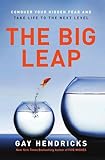
Gay Hendricks (born 1945 in New Hampshire) is an American psychologist, therapist, executive coach, and author who has published more than forty books across his career. He holds a PhD in counselling psychology from Stanford University and spent many years as a professor at the University of Colorado before focusing on coaching and writing. The Big Leap (2009) is his most widely read and influential work — a distillation of concepts he developed across decades of work with individuals and organisations who consistently performed below their potential despite apparent capability.
Where to Start: The Big Leap (2009)
The Big Leap makes a diagnosis most self-help books avoid: that the primary obstacle to human flourishing is not external circumstance but internal — specifically, the unconscious ceiling Hendricks calls the Upper Limit Problem, the habit of self-sabotaging whenever life improves beyond what feels allowed. The Big Leap introduces two concepts that have achieved wide currency in coaching, executive development, and self-improvement contexts: the Upper Limit Problem and the Zone of Genius. Both are simple enough to state in a sentence and generative enough to organise a significant change in how a person works and lives.
The Upper Limit Problem is the book’s central insight and the one that most readers encounter first. Hendricks observed in his clinical and coaching practice that people self-sabotage in specific, patterned ways whenever their wellbeing, success, or happiness exceeded a certain threshold — a threshold set by unconscious beliefs about how much good they deserved. The forms the self-sabotage takes are varied but recognisable: picking a fight with a partner after a professional success, manufacturing a health complaint before a major achievement, generating a crisis just as a project is going well, worrying compulsively when there is nothing specific to worry about. The mechanism is not conscious, which is why it is so resistant to ordinary willpower; the person is not choosing to undermine their success, they are maintaining an unconscious homeostasis.
The four zones framework gives structure to the Upper Limit concept by explaining what exactly people are capping. Most capable people operate in the Zone of Excellence — doing things they do very well, being reliably competent and highly compensated, receiving the social rewards that excellence produces. The Zone of Genius is adjacent but distinct: it is the area where unique ability, deep joy, and effortless performance converge in ways that cannot be replicated by anyone else. The Zone of Excellence is the trap: it is comfortable enough to prevent the risk required to discover Genius, and sufficiently rewarded that leaving it feels irrational.
The practical exercises throughout the book are designed to help readers identify their Upper Limit triggers and their specific Zone of Genius activities. The triggers section — which maps the common forms of self-sabotage to the specific underlying beliefs that drive them — is the most actionable single section and the one most likely to produce immediate recognition.
Why The Big Leap Is the Ideal First Book
For a reader new to Gay Hendricks, The Big Leap is the ideal first book because it is his most popular and influential work and the fullest expression of his central ideas about overcoming the inner barriers to success and fulfillment. The Big Leap introduces Hendricks’s well-known concept of the Upper Limit Problem, the idea that we unconsciously sabotage our own success and happiness when we exceed our internal sense of what we deserve, and offers a path toward what he calls our Zone of Genius. As an entry point it is ideal, for it is his best-known book and a clear introduction to his approach to personal growth. It welcomes the newcomer with its memorable central concept, its practical guidance, and its accessible style, drawing the reader into his ideas about removing the inner limits on success and joy. It is among his most famous works and a fine representation of his approach, so the new reader encounters Hendricks’s thinking directly. For the newcomer interested in personal growth, then, The Big Leap is an excellent starting point.
What to Expect as a New Reader
As a new reader, you can expect The Big Leap to be an accessible, practical, and concept-driven book about overcoming inner barriers to success. You can expect a memorable central idea, the Upper Limit Problem, the notion that we unconsciously sabotage ourselves when our success or happiness exceeds our internal comfort zone. You can expect the concept of the Zone of Genius, Hendricks’s term for the activities that draw on our unique gifts and bring the greatest fulfillment and success. You can expect practical guidance, for the book offers ways to recognize and overcome self-sabotage and to spend more time in one’s Zone of Genius. You can expect an accessible, encouraging style with examples and exercises. You can expect a focus on the inner, psychological barriers to fulfillment. Expect, in short, an accessible, practical, and concept-driven book about overcoming inner barriers to success, a fine introduction to Hendricks’s ideas.
Going Deeper After Your First Book
Once The Big Leap has introduced you to Hendricks’s ideas, the reader who wishes to go deeper can explore his other books, which continue his work on personal growth, relationships, and conscious living, often drawing on his long career as a psychologist and teacher. His other writings extend his ideas to areas such as relationships and conscious loving, much of it written with his wife and collaborator, and to further dimensions of personal transformation and authentic living. Reading these after The Big Leap deepens your engagement with Hendricks’s distinctive approach, the focus on overcoming inner barriers and living from one’s gifts. His characteristic concepts run through his work, and the reader who has valued The Big Leap will find them extended across his books. Building your reading journey through Hendricks is a matter of following his ideas from The Big Leap into his other works on growth and relationships. The reader who begins here and continues will find a widely read teacher of personal growth and conscious living.
Reading Gay Hendricks
The Big Leap is Hendricks’s essential and most widely read book. The Genius Zone (2021) is the natural follow-on for readers who want to go deeper on identifying and inhabiting their zone of unique contribution.
For the full Gay Hendricks bibliography, reviews, and biography, visit the Gay Hendricks author page on Editors Reads.
Affiliate disclosure: Links to Amazon on this page are affiliate links. We earn a small commission at no extra cost to you.
Frequently Asked Questions
Where should I start with Gay Hendricks?
The Big Leap: Conquer Your Hidden Fear and Take Life to the Next Level (2009) is Hendricks's essential book — a short, focused framework built around two concepts that have become genuinely influential in coaching and personal development circles. The Upper Limit Problem is the unconscious tendency to self-sabotage when life exceeds our internal thermostat setting for success, love, or happiness — picking a fight after a professional win, getting sick before a milestone, creating drama when things are going well. The Zone of Genius is the specific area where our most unique abilities and deepest joy converge, as distinct from the Zone of Excellence where most high achievers comfortably perform without fully flourishing.
What is The Big Leap about?
The book presents a theory of why capable, successful people consistently fail to sustain peak performance and peak happiness: not because they lack skill or motivation, but because they have an unconscious upper limit on how much good they believe they deserve. When life exceeds that limit — through success, love, creative fulfillment, or any other positive experience — the mind manufactures a problem to bring things back down to familiar ground. The self-sabotage is not conscious and not irrational from the perspective of the underlying belief; it is the mind maintaining a homeostasis it was trained to maintain. Hendricks developed this framework across decades as a therapist and executive coach and presents it with specific case studies and practical exercises for identifying and raising the upper limit.
What is the Zone of Genius and how does it differ from the Zone of Excellence?
Hendricks identifies four zones of human functioning. In Incompetence, we do things we are not good at. In Competence, we do things adequately. In Excellence, we do things we are very good at — this is where most successful people spend most of their time, and it often feels like success because it is rewarded with praise, money, and security. In Genius, we do the specific things that only we can do in the way we do them, that produce deep joy and feel effortless, and that represent our most distinctive contribution. The distinction matters because Excellence can be a trap: it provides sufficient reward to prevent the risk required to discover and commit to Genius. Being very good at something the world reliably rewards is often what keeps people from finding out what they are uniquely suited to do.
What should I read after The Big Leap?
After The Big Leap, Hendricks's The Genius Zone (2021) is the direct follow-on — a deeper exploration of how to identify and inhabit your Zone of Genius in practice. For other frameworks addressing the psychology of self-sabotage and peak performance, Steven Pressfield's The War of Art covers resistance — the internal force that opposes creative work — with comparable directness. Mihaly Csikszentmihalyi's Flow covers the psychological state that Hendricks's Zone of Genius points toward. Brené Brown's Daring Greatly covers the vulnerability and risk-tolerance that moving from Excellence to Genius requires.