Where to Start with Harper Lee: A Reading Guide
Where to start with Harper Lee — whether to begin with To Kill a Mockingbird or Go Set a Watchman. A complete reading guide to the American novelist.

Harper Lee (1926–2016) was the American novelist who published To Kill a Mockingbird in 1960, won the Pulitzer Prize in 1961, and produced what became one of the most widely read and most widely taught novels in American literary history — a book that has shaped how generations of American readers first encountered the question of racial injustice. Lee published almost nothing else in her lifetime: she gave occasional interviews and wrote a few short pieces, but the complete silence that followed her debut remained unbroken until Go Set a Watchman appeared in 2015, under contested circumstances, fifty-five years after her first novel.
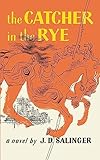
Where to Start: To Kill a Mockingbird (1960)
The essential Lee — and one of the great American novels. Jean Louise ‘Scout’ Finch is six years old in Maycomb, Alabama, when her father Atticus is appointed to defend Tom Robinson, a Black man accused of raping Mayella Ewell. It is the 1930s. The outcome of the trial is not in question.
Scout and her brother Jem watch. They see how the town organises itself around the trial. They see the jury convict a man everyone in the courtroom knows is innocent. They see their father try — with full knowledge that he will fail — to do what is right.
Lee’s decision to narrate through Scout is the novel’s central formal achievement: the child’s perspective makes the injustice legible without requiring the adult’s rationalisation of it. Scout cannot understand why the jury convicts Tom Robinson, because the logic of racism is genuinely incomprehensible to a child who has not yet learned to pretend it makes sense. Her incomprehension is the novel’s moral argument.
Atticus Finch became one of the most celebrated characters in American fiction: the morally impeccable lawyer-father who tells his children that you never really understand a person until you climb into their skin and walk around in it. Go Set a Watchman has complicated this portrait, but not destroyed it.
Go Set a Watchman (2015)
The early draft — adult Scout finding Atticus’s racial limitations. Read only after To Kill a Mockingbird, and with full awareness of the contested circumstances of its publication. More interesting as a document about how Mockingbird was made than as a novel in its own right.
Why To Kill a Mockingbird Is the Essential First Book
For a reader new to Harper Lee, To Kill a Mockingbird is the essential first book because it is her masterpiece, one of the most beloved novels in American literature, and, for most purposes, her defining work. A winner of the Pulitzer Prize and a staple of American education, To Kill a Mockingbird tells the story of racial injustice and moral conscience in the segregated South, observed through the eyes of a young girl whose father, a principled lawyer, defends a Black man falsely accused. As an entry point, it is the essential and natural place to begin, for it is Lee’s defining masterpiece, the beloved novel on which her reputation rests. It welcomes the newcomer with its compelling story, its memorable characters, and its moral power, drawing the reader into a beloved and morally serious novel. It is her masterpiece and, for most purposes, her singular essential work, so that the new reader encounters Lee at her finest and most characteristic. For the newcomer, then, To Kill a Mockingbird is the natural and essential starting point, the beloved masterpiece that secured her place in American literature.
What to Expect as a New Reader
As a new reader, you can expect To Kill a Mockingbird to be a beloved and morally powerful novel, telling a story of racial injustice and moral conscience through the eyes of a child. You can expect a compelling story, for the novel is set in the segregated South and centers on the trial of a Black man falsely accused and the principled lawyer who defends him, observed through the eyes of his young daughter. You can expect memorable characters, above all the principled lawyer who has become an enduring symbol of moral conscience, and the children whose perspective gives the novel its warmth and immediacy. You can expect moral power, for the novel engages the deep questions of racial injustice, moral courage, and the conflict between conscience and prejudice with a power that has moved generations of readers. You can expect a warm, accessible, and deeply affecting narrative that combines the perspective of childhood with serious moral weight. Expect, in short, a beloved and morally powerful novel of racial injustice and moral conscience, an essential and moving introduction to Harper Lee.
Going Deeper After Your First Book
Once To Kill a Mockingbird has introduced you to Harper Lee’s beloved masterpiece, the reader who wishes to go deeper has one further option within her work, the novel published late in her life and drawn from an earlier version of the material that became To Kill a Mockingbird. This other novel, surrounded by considerable discussion and controversy regarding its origins and publication, offers a different and more complicated perspective on the characters and concerns of the beloved masterpiece, and is best approached with an awareness of its complicated relationship to To Kill a Mockingbird and the circumstances of its publication. For most readers, however, Lee remains the author of a single beloved masterpiece, and To Kill a Mockingbird is the essential and defining work. The reader who wishes to go further may approach the other novel with appropriate context, while recognizing that the masterpiece stands complete in itself. Building your reading journey through Lee’s work is a matter of beginning with the beloved masterpiece and, if you wish, approaching the other novel with awareness of its complicated context. The reader who begins with To Kill a Mockingbird will have encountered one of the most beloved and morally powerful novels in American literature.
Reading Harper Lee
Begin with To Kill a Mockingbird — it is her essential novel and the one that has mattered to readers for sixty years. Read Go Set a Watchman with caution and context: it illuminates the genesis of Mockingbird but does not replace it.
For the full Harper Lee bibliography, reviews, and biography, visit the Harper Lee author page on Editors Reads.
Affiliate disclosure: Links to Amazon on this page are affiliate links. We earn a small commission at no extra cost to you.
Frequently Asked Questions
Where should I start with Harper Lee?
To Kill a Mockingbird (1960) is the only starting point — Lee's Pulitzer Prize-winning novel narrated by Jean Louise 'Scout' Finch, a young girl in a small Alabama town in the 1930s, whose father Atticus Finch defends a Black man accused of raping a white woman. One of the most widely taught and most widely read American novels ever written; Scout's narration gives one of the great accounts of how a child experiences and begins to understand racial injustice.
What is To Kill a Mockingbird about?
To Kill a Mockingbird follows Scout Finch across several childhood summers in Maycomb, Alabama, culminating in the trial of Tom Robinson, a Black man falsely accused by a white woman. The novel is narrated in retrospect by an adult Scout but told from the child's perspective — she and her brother Jem see the injustice of the trial clearly, before they fully understand the social machinery that produces it. Atticus Finch, their father, became the most idealised lawyer-hero in American fiction; the novel's moral clarity is both its power and its most discussed limitation.
Should I read Go Set a Watchman?
Go Set a Watchman (2015) was published controversially — written before To Kill a Mockingbird, it was initially rejected by publishers and set aside; its 2015 publication followed questions about Lee's cognitive capacity to consent to its release. The novel shows an adult Scout returning to Maycomb and discovering that Atticus holds racist views she cannot reconcile with her childhood memory of him. It is best understood as an early draft that was transformed into To Kill a Mockingbird rather than a sequel; reading it after the original is the right order, with that context in mind.
Is To Kill a Mockingbird problematic?
To Kill a Mockingbird has been criticised, particularly in recent decades, for its 'white saviour' narrative structure — a Black man's fate is determined entirely by a white lawyer's moral courage, and Tom Robinson is given almost no interiority or agency. These are genuine structural limitations. The novel also remains a remarkably effective account of racial injustice as experienced by a white child, and its moral seriousness earned it the Pulitzer Prize and decades of classroom use. Both the strengths and the limitations are real.