Where to Start with Jenny Offill: A Reading Guide
Where to start with Jenny Offill — whether to begin with Dept. of Speculation or Weather. A complete reading guide to the American autofiction writer.
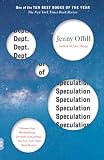
Jenny Offill (born 1968) is the American novelist who established herself as one of the foremost practitioners of fragmentary autofiction in English with Dept. of Speculation (2014) — a formally brilliant short novel about a marriage in crisis, told in disconnected shards. Her method — building a narrative from aphorisms, quotations, observations, and short scenes, trusting the white space between fragments to carry as much meaning as the text itself — has been influential on a generation of American fiction writers. Her second novel, Weather (2020), extended the same method to the largest possible contemporary subject: the climate crisis as the ambient condition of modern life.
Where to Start: Dept. of Speculation (2014)
The essential Offill — and the novel in which her method is displayed at its most concentrated. The story is simple in outline: a marriage, an affair, a possible reconstruction. The narrator is a writer; her husband works in finance; they have a daughter and a life built on a particular idea of love and possibility. When the husband has an affair, the novel’s narrator stops referring to herself as ‘I’ and begins referring to herself as ‘she’ — as if the crisis has produced a dissociation between the self and its story.
The fragmentary form — short paragraphs, quotations from Simone Weil and Rilke and astronauts, overheard conversations, aphorisms — is not stylistic decoration. It is structural argument: a marriage in crisis is experienced as disconnected shards that no longer add up to a whole. At 177 pages, the compression is total. Among the most formally intelligent short novels in recent American fiction.
Weather (2020)
Offill’s second novel — the same fragmentary method applied to a different and larger subject. Lizzie Benson is a librarian, a wife, a mother, and a sister to a difficult brother in recovery; her former mentor, a climate scientist, asks her to answer the listener mail for her podcast about environmental collapse. The novel moves between the pressures of Lizzie’s domestic life and the larger dread of civilisational collapse — not as imminent catastrophe but as the ambient anxiety that colours every contemporary experience.
Less intimate than Dept. of Speculation and broader in its concerns: Offill turns from the private crisis of the marriage to the public crisis of the planet, and the fragmentary form proves equally suited to civilisational dread. Best read after the first novel.
Why Dept. of Speculation Is the Ideal First Book
For a reader new to Jenny Offill, Dept. of Speculation is the ideal first book because it is her breakthrough novel and the fullest expression of her distinctive achievement, the fragmentary, compressed, and luminous form she has made her own. Dept. of Speculation tells the story of a marriage, its hopes, strains, and crises, through a series of short, fragmentary passages, brilliant in their compression and resonance, that together build a powerful and intimate portrait. As an entry point, it offers the purest expression of Offill’s gifts, the fragmentary form, the compressed and luminous prose, and the capacity to render the inner life of a marriage and a self with extraordinary precision and power. It welcomes the newcomer with its brilliance, its intimacy, and its distinctive form, drawing the reader into a novel of remarkable compression and resonance. It is her breakthrough novel and the one that best represents her gifts, so that the new reader encounters Offill at her most characteristic. For the newcomer, then, Dept. of Speculation is the natural and ideal starting point.
What to Expect as a New Reader
As a new reader, you can expect Dept. of Speculation to be a fragmentary, compressed, and luminous novel, rendering the inner life of a marriage with extraordinary precision. You can expect a fragmentary form, for the novel is built from a series of short, discrete passages, fragments, observations, and reflections, rather than continuous narrative, a form that Offill has made distinctively her own. You can expect compression and resonance, for each fragment is brilliantly compressed, dense with meaning and feeling, and the spaces between them are charged with implication. You can expect an intimate portrait of a marriage, for the novel traces the hopes, strains, and crises of a marriage and the inner life of its narrator with precision and power. You can expect luminous, intelligent prose and a reading experience of unusual concentration and brilliance. You should expect an unconventional novel that rewards the reader open to its fragmentary form. Expect, in short, a fragmentary, compressed, and luminous novel of marriage and the inner life, a brilliant introduction to Offill’s distinctive form.
Going Deeper After Your First Book
Once Dept. of Speculation has introduced you to Offill’s distinctive form, the reader who wishes to go deeper can explore her other fiction, which continues her fragmentary, compressed, and luminous approach, extending it to new subjects, including the anxieties of the contemporary world. Her subsequent novel applies her characteristic fragmentary form and compressed brilliance to the anxieties of the present, including environmental and political dread, in the same distinctive style. Reading it after Dept. of Speculation deepens your appreciation of Offill’s distinctive gifts, the fragmentary form, the compressed and luminous prose, and the capacity to render inner life and contemporary experience with precision and power. Her characteristic form and gifts run through her work, and the reader who has been struck by Dept. of Speculation will find them in her other fiction. Building your reading journey through Offill’s work is a matter of following her fragmentary, luminous fiction from her breakthrough novel into her other work. The reader who begins with Dept. of Speculation and continues through her work will find one of the most distinctive and brilliant stylists in contemporary fiction.
Reading Jenny Offill
Offill’s fiction belongs to the tradition of the fragmentary or lyric novel — short, dense, built from accretion rather than plot, trusting the spaces between fragments as much as the fragments themselves. Her debt is to writers like Renata Adler and Maggie Nelson as much as to conventional novelists; her method is closer to the lyric essay than to narrative fiction. What distinguishes her from purely formal experiment is emotional directness: the feeling at the centre of both novels is genuine and legible, even when the form that expresses it is unconventional. Begin with Dept. of Speculation — it is very short and entirely sufficient.
Frequently Asked Questions
Where should I start with Jenny Offill?
Dept. of Speculation (2014) is the essential starting point — Offill's most celebrated novel and the purest demonstration of her fragmentary method. A marriage is told in disconnected shards: notes, observations, quotations from philosophers and astronauts, overheard conversations. The wife is a writer; her husband has an affair; the novel traces the collapse and possible reconstruction of a life built around a particular idea of love. At 177 pages it is very short, very dense, and formally brilliant. Weather, published six years later, applies the same method to the larger subject of climate anxiety.
What is Dept. of Speculation about?
Dept. of Speculation (2014) tells the story of a marriage — an unnamed wife who is a writer, her husband, their young daughter — through disconnected fragments: aphorisms, quotations, overheard conversations, philosophical observations, domestic notes. When the husband has an affair, the narrator shifts from 'I' to 'she,' as if the crisis has separated her from herself. The novel is about what happens when the story you have built your life around — love as salvation, the marriage as the container of meaning — is threatened. The fragmentary form is not stylistic decoration but structural argument: a marriage in crisis is experienced exactly this way, as shards that no longer cohere.
What is Weather about?
Weather (2020) is Offill's second novel — the same fragmentary form applied to a different subject. Lizzie Benson is a librarian, a mother, and a sister to a difficult brother in recovery. Her former mentor, a climate scientist, asks her to answer listener mail for her podcast on environmental collapse. The novel moves between Lizzie's domestic life and the approaching catastrophe of climate change — not as a dramatic event but as an ambient condition of contemporary American consciousness, a dread that colours every domestic moment. Less intimate than Dept. of Speculation but broader in scope: Offill turns her attention from the private crisis to the public one.
Is Jenny Offill's fiction difficult?
Offill's novels are very short and written in a fragmentary style — they look unconventional on the page, consisting of short paragraphs separated by white space, with quotations and aphorisms inserted between scenes. But they are not intellectually demanding: the fragments are each individually clear, and the emotional logic that connects them is legible even when it is not stated. The difficulty, if any, is in adjusting to the absence of conventional plot — Offill's novels progress through accumulation of detail and shift of consciousness rather than dramatic event. Readers who enjoy autofiction, lyric essays, and fragmentary fiction will find her immediately engaging; readers who need conventional narrative structure may find the form initially disorienting.