Where to Start with Peter Watts: A Reading Guide
Where to start with Peter Watts — how to approach Blindsight, his landmark hard SF novel that uses a first-contact scenario to question whether consciousness itself is an evolutionary advantage. A complete reading guide.
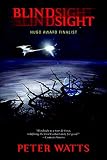
Peter Watts is a Canadian marine biologist and science fiction author whose fiction is notable for the density of its scientific grounding — he typically appends fifty or more pages of references and notes to his novels, directing readers to the research that underpins each major claim. Blindsight (2006) was published by Tor Books and became a Hugo Award finalist. It is widely regarded as among the most intellectually ambitious hard science fiction novels of the twenty-first century and has accumulated a cult following among readers who value the kind of philosophical seriousness most of the genre does not attempt.
Where to Start: Blindsight (2006)
The essential Peter Watts — and the most rigorous philosophical argument in contemporary science fiction. Blindsight begins with a seemingly conventional setup — a first-contact mission to investigate alien activity on the edge of the solar system — and uses it to develop an argument that is genuinely disturbing: consciousness, the quality of awareness and subjective experience that defines the human sense of selfhood, may be an evolutionary mistake.
The neurological foundation of Watts’s argument is real science, carefully assembled. Research on split-brain patients suggests that conscious awareness often constructs post-hoc explanations for actions that were decided unconsciously. Studies on blindsight — the phenomenon that names the novel — show that patients with damage to the visual cortex can accurately report the location of objects they insist they cannot see; their unconscious visual processing remains intact while conscious awareness of it is absent. High-speed motor performance (batting, catching) requires unconscious rather than conscious processing, because conscious thought is too slow. Each of these findings points in the same direction: sophisticated cognition does not require awareness; awareness may even interfere with performance.
Watts extrapolates this across evolutionary time. If intelligence and consciousness are separable — if an entity can be intelligent without being aware — then it is an open question whether evolution requires consciousness at all. The aliens the crew encounters, the Rorschach and the scramblers, demonstrate precisely this: intelligence of extraordinary complexity and responsiveness, apparently without any subject of experience. There is no one home. And they are more capable, not less, for this absence.
The narrator, Siri Keeton, is the formal instrument of this argument. As a child, Siri had half his brain removed to treat epilepsy. The surgery preserved his cognitive function but left him without normal emotional and self-reflective processing — he experiences other people’s inner lives as performances to be decoded rather than as states to empathise with. His professional role is that of synthesist: someone trained to observe specialists in radically different disciplines and translate their communications for broader audiences. He is, constitutionally and neurologically, a relay rather than a participant.
The choice to narrate through Siri is formally audacious. A novel asking whether consciousness is meaningful is narrated by someone whose consciousness is compromised — who may be telling the story of an experience he did not, in the full sense, have. His narration is precise and intelligent and yet consistently at a slight remove from the events he describes, as though they are happening to someone else in a room Siri is watching through glass. The reader is always receiving the novel through a filter that enacts the question the novel is asking.
The alien design is Watts’s most radical formal decision. Most science fiction aliens are, fundamentally, people with different physiology: they have goals, motivations, communication, the possibility of negotiation or conflict. Watts builds something different. The scramblers behave in response to stimuli in ways that are complex and purposeful, but purposeful in the way a defense system is purposeful — without any implication that there is something it is like to be this thing. They can learn to fake human behavior in response to human interaction tests. They cannot pass tests that require genuine awareness of their own deception, not because they are unintelligent, but because awareness is not among their capacities.
This is the horror the novel builds toward: not that the aliens are hostile but that the concept of hostility implies an interiority they may not have. They are not trying to harm the crew. They are not trying to do anything in any subjective sense. They are responding. That this response is lethal is not their intention because there may be no intention.
The 50-page bibliography at the book’s end is not decoration. Watts is directing readers to the actual research — in neuroscience, evolutionary biology, philosophy of mind, cognitive science — that underpins each major claim in the novel. Blindsight is hard science fiction in the most literal sense: fiction that draws its strangeness from where the science actually points.
Why Blindsight Is the Ideal First Book
For a reader new to Peter Watts, Blindsight is the ideal first book because it is his most acclaimed novel and the fullest expression of his distinctive gifts, the dense, rigorous hard science fiction, the dark and challenging ideas, and the profound engagement with consciousness and the nature of intelligence. Blindsight follows a crew sent to investigate a mysterious alien presence at the edge of the solar system, an encounter that raises unsettling questions about consciousness, intelligence, and what it means to be human, in a dense, brilliant, and challenging novel. As an entry point it is ideal, for it is his most celebrated work and a perfect example of his rigorous, dark, idea-driven hard science fiction. It welcomes the ambitious newcomer with its rigorous ideas, its dark vision, and its profound questions, drawing the reader into his distinctive vision. It is his most famous work and the one that best represents his gifts, so the new reader encounters Watts at his most characteristic. For the ambitious newcomer, then, Blindsight is an excellent, if demanding, starting point.
What to Expect as a New Reader
As a new reader, you can expect Blindsight to be a dense, rigorous, and challenging work of hard science fiction. You can expect rigorous hard science fiction, for Watts grounds his story in real and speculative science, pursued with intellectual rigor. You can expect dark and challenging ideas, for the novel is bleak, unsettling, and intellectually demanding. You can expect a profound engagement with consciousness, for the novel raises disturbing questions about consciousness, intelligence, and whether the two are even necessarily linked. You can expect a compelling premise, for a crew is sent to investigate a mysterious alien presence. You can expect dense, demanding prose and ideas. You can expect a bleak, profound, and thought-provoking read. You should be prepared for difficulty and darkness. Expect, in short, a dense, rigorous, and challenging work of hard science fiction, a demanding but rewarding introduction to Watts’s gifts.
Going Deeper After Your First Book
Once Blindsight has introduced you to Watts’s gifts, the reader who wishes to go deeper can explore his related and other work, which continues his dense, rigorous hard science fiction, his dark and challenging ideas, and his profound engagement with consciousness, biology, and the future. Its companion novel, set in the same universe, extends his unsettling exploration of consciousness and the posthuman, while his other novels and stories, including his acclaimed earlier work, display the same scientific rigor and dark vision. Reading these after Blindsight deepens your appreciation of Watts’s distinctive gifts, the rigorous hard science fiction, the dark and challenging ideas, and the profound engagement with consciousness and intelligence. His characteristic darkness and rigor run through his work. Building your reading journey through Watts is a matter of following his fiction from Blindsight into its companion and his other work. The reader who begins here and continues will find one of the most rigorous, dark, and intellectually challenging writers in contemporary hard science fiction to follow.
Reading Peter Watts
Blindsight is Watts’s most widely read and most essential work. The sequel Echopraxia (2014) continues the story and extends the argument but can also be read independently.
For the full Peter Watts bibliography, reviews, and biography, visit the Peter Watts author page on Editors Reads.
Affiliate disclosure: Links to Amazon on this page are affiliate links. We earn a small commission at no extra cost to you.
Frequently Asked Questions
Where should I start with Peter Watts?
Blindsight (2006) is Watts's essential novel — a hard science fiction first-contact story that is not really about aliens but about consciousness: whether awareness is an evolutionary advantage or an expensive overhead that intelligence could do without. A Hugo Award finalist with a 50-page bibliography of scientific sources, it is the most rigorously researched philosophical argument in contemporary science fiction and one of the most genuinely unsettling novels in the genre.
What is Blindsight about?
Blindsight follows a crew of cognitively modified humans — including a narrator who had half his brain removed, and a vampire revived from extinction for its superior processing capabilities — sent to make first contact with an alien presence at the edge of the solar system. What they find challenges every assumption about intelligence, consciousness, and what alien life might be. The aliens may be vastly intelligent without being conscious at all, which raises the question of whether consciousness is something the universe requires from its intelligent inhabitants.
Is Blindsight difficult to read?
Blindsight is among the most demanding novels in contemporary science fiction. The narrator is cognitively unusual in ways that affect how he tells the story. The alien encounter is deliberately incomprehensible by design. The scientific and philosophical content — neuroscience of consciousness, evolutionary biology, the philosophy of mind — is dense and does not simplify itself for accessibility. Readers who want character warmth or narrative momentum over ideas will find the novel cold. Those who can engage with the ideas will find it one of the most rewarding SF novels published in the past twenty years.
What should I read after Blindsight?
After Blindsight, Vernor Vinge's A Fire Upon the Deep covers comparable questions about the nature of intelligence and alien consciousness with somewhat more narrative accessibility. Stanisław Lem's Solaris is the canonical earlier treatment of alien incomprehensibility that Blindsight reads in conversation with. Jeff VanderMeer's Annihilation covers similarly unsettling alien strangeness from a more literary-horror angle.


