Where to Start with Phil Knight: A Reading Guide
Where to start with Phil Knight — how to approach Shoe Dog, his essential memoir about building Nike. A complete reading guide.
By Marcus Webb

Phil Knight (born 1938) is the American entrepreneur who co-founded Nike in 1964 — initially as Blue Ribbon Sports, a distributor of Japanese Tiger running shoes — and served as its CEO and chairman for decades. Shoe Dog (2016) is his only book: a memoir of the company’s first eighteen years, written in retirement with unusual candour about the failures, near-disasters, and compromises that preceded Nike’s success. Bill Gates has called it one of his favourite books of all time.
Where to Start: Shoe Dog (2016)
The essential Knight — and the best business memoir ever written. Shoe Dog is unusual in the genre because it does not lie. The standard business memoir rewrites history into a series of obstacles overcome through vision and determination; Knight’s account is an honest record of a company that was effectively bankrupt multiple times in its early years, built on debt, luck, and relationships that worked out through fortune rather than design.
The story begins in 1962, when Knight — fresh from a Stanford MBA and a round-the-world trip — walks into the Tiger Shoe factory in Kobe, Japan with no appointment, no company, and no credibility, and convinces the management to let him represent their running shoes in the United States. He borrows fifty dollars from his father, orders his first samples, and starts selling shoes from the trunk of his car at track meets. That company — Blue Ribbon Sports — eventually becomes Nike.
What Knight refuses to do is make this into a triumph narrative. He is candid about the bank meetings where he told partial truths to keep his credit line alive. He writes about the fear — real, physical fear — of the company folding. He documents the decisions that were strategically wrong and only worked because competitors failed faster. He was not a good husband or father during those years, and he says so. This is the most honest account of what building a company actually costs, written by someone who was there.
The recurring theme is fanaticism. Knight’s early employees — the people he calls the Buttfaces — were not employees but true believers: Bill Bowerman, his college track coach and co-founder who poured rubber into his wife’s waffle iron to design a better sole; Jeff Johnson, the first employee who mailed Knight daily letters from his one-man East Coast operation; Rob Strasser, the lawyer who became his closest adviser. You cannot build something exceptional with people who treat it as a job, Knight argues, and the evidence of the book supports him.
The origin stories of Nike’s most iconic elements — the Swoosh designed by a graphic design student for $35 and accepted reluctantly by Knight; the name suggested by Johnson in a dream when Knight needed it in forty-eight hours; the waffle sole from Bowerman’s kitchen — demythologise the brand while making it more remarkable. There was no master plan. There was obsession, luck, and people who cared too much to stop.
Why Shoe Dog Is the Essential First Book
For a reader new to Phil Knight, Shoe Dog is the essential first book because it is his memoir and his only book, the candid and compelling story of how he built Nike from nothing into one of the world’s most iconic companies. Shoe Dog recounts Knight’s improbable journey, from selling running shoes out of the trunk of his car to building a global brand, with all the risks, setbacks, rivalries, and moments of crisis along the way. As an entry point it is both natural and essential, for it is his single book, an honest and engaging memoir that has been widely praised as one of the best business and entrepreneurial memoirs of recent years. It welcomes the newcomer with its gripping story, its candor, and its very human portrait of the struggle to build a company, drawing the reader into the early, precarious days of a now-famous brand. It is his complete published work and the full expression of his story, so the new reader encounters Knight whole. For the newcomer, then, Shoe Dog is the natural and essential starting point.
What to Expect as a New Reader
As a new reader, you can expect Shoe Dog to be a candid, gripping, and surprisingly literary entrepreneurial memoir. You can expect an improbable origin story, for Knight recounts starting out by importing and selling running shoes from the trunk of his car. You can expect honesty about struggle, for the memoir is frank about the financial brinkmanship, doubts, failures, and near-collapses that marked Nike’s early years. You can expect a vivid cast of characters, the eccentric partners, employees, and rivals who shaped the company. You can expect genuine narrative drive and emotional depth, for Knight writes with reflection and feeling rather than corporate polish. You can expect insight into entrepreneurship, risk, and the realities of building something from nothing. You can expect a memoir that reads like a novel. Expect, in short, a candid, gripping, and surprisingly literary entrepreneurial memoir, an excellent and complete introduction to Knight’s story.
Going Deeper After Your First Book
Once Shoe Dog has told you Knight’s story, the reader who wishes to go deeper can carry its themes into the wider literature of entrepreneurship, business, and company-building, to which Shoe Dog is an inspiring introduction. Since the memoir is Knight’s only book, the natural next step is outward, into the broad field of business memoirs and histories that explore the building of companies, the experience of entrepreneurship, and the realities of risk and growth that Knight’s story so vividly captures. Readers drawn to the Nike story can also explore histories of the company, of sport and branding, and of the wider business world it helped shape. Reading more deeply builds on the human, ground-level perspective that Shoe Dog provides. Building your reading journey from Shoe Dog is a matter of carrying its lessons into the wider literature of entrepreneurship and business. The reader who begins with Shoe Dog will have encountered one of the most candid and compelling entrepreneurial memoirs in print.
Reading Phil Knight
Shoe Dog is Knight’s only book. It stands alone and requires no prior reading.
For the full Phil Knight bibliography, reviews, and biography, visit the Phil Knight author page on Editors Reads.
Affiliate disclosure: Links to Amazon on this page are affiliate links. We earn a small commission at no extra cost to you.
Frequently Asked Questions
Where should I start with Phil Knight?
Shoe Dog (2016) is Knight's only book — a memoir of building Nike from a $50 borrowed from his father and a handshake deal for Japanese running shoes into one of the world's most iconic brands. Unusually honest for a business memoir: Knight admits to failures, lies, and near-bankruptcy throughout. Bill Gates and Warren Buffett have both named it a favourite. The best business memoir ever written.
What is Shoe Dog about?
Shoe Dog covers the early history of Nike from 1962 to its IPO in 1980: Knight's round-the-world trip after Stanford MBA, his walk-in visit to the Tiger Shoe factory in Japan, founding Blue Ribbon Sports with his college track coach Bill Bowerman, and the years of debt, banking crises, and competitive threats that nearly killed the company multiple times before it became Nike. It is honest about what building a company actually costs — in time, money, relationships, and integrity.
Is Shoe Dog a business how-to book?
Shoe Dog is deliberately not a business how-to book. Knight does not distil his experience into principles or frameworks. It is a memoir in the truest sense — an immersive account of what it felt like to build Nike, told with the honesty and narrative drive of good fiction. The lessons, if any, are implicit: that building something exceptional requires obsession, the right team, and a tolerance for chaos and uncertainty that most people cannot sustain.
What should I read after Shoe Dog?
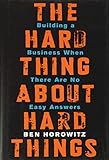
After Shoe Dog, Ben Horowitz's The Hard Thing About Hard Things covers the emotional reality of running a company under pressure with comparable honesty. Walter Isaacson's Steve Jobs is the other essential founder biography — a harder portrait of a more difficult subject. For the business history context, Brad Stone's The Everything Store covers Amazon's early years with similar access and narrative drive.