Where to Start with Ray Bradbury: A Reading Guide
Where to start with Ray Bradbury — whether to begin with Fahrenheit 451, The Martian Chronicles, or Something Wicked This Way Comes. A complete reading guide.
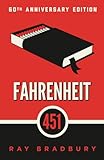
Ray Bradbury (1920–2012) was the American writer who is nominally associated with science fiction but was, in practice, something more singular: a prose poet who used the settings of science fiction and dark fantasy — Mars, the future, carnivals at midnight — to write meditations on memory, loss, the passage of time, and the particular beauty of the American Midwest of his childhood. His Mars is not a scientifically plausible planet but a dreaming, melancholic space where extinct civilisations remember themselves; his futures are not technological extrapolations but emotional amplifications of anxieties already present. He is one of the most distinctive stylists in American literature, and Something Wicked This Way Comes is arguably his masterpiece.
Where to Start: Fahrenheit 451 (1953)
The essential Bradbury — and his most enduring novel. Guy Montag is a fireman in a future America where books are banned and firemen burn houses where books are found. The novel begins with Montag’s encounter with Clarisse McClellan, a teenager who asks him if he is happy — a question no one has ever asked — and traces his awakening to everything he has been trained to destroy.
Bradbury’s prose here is at its most lyrical: the opening sentence (It was a pleasure to burn) is one of the finest in American science fiction. The novel is a passionate defence of literature and a prescient description of a culture that chooses sensation over reflection — written in the era of television, it speaks more directly to the era of social media and infinite content. His most immediately accessible and most widely read novel.
The Martian Chronicles (1950)
Bradbury’s most distinctively original work — and the one that most completely demonstrates what makes him unlike any other science fiction writer. A series of linked stories following the colonisation of Mars across twenty-seven years, from 1999 to 2026: the first expeditions, the destruction of the Martian civilisation by Earth disease, the waves of settlers building new Ohio towns on a planet they cannot understand, and the eventual abandonment of Mars as Earth burns.
Bradbury was not writing about Mars. He was writing about American expansionism, about the destruction of indigenous cultures, about nostalgia and the impossibility of recovering what has been lost. His prose is among the most beautiful in American literature; his Martians are elegies in motion. His most purely literary achievement.
Something Wicked This Way Comes (1962)
Bradbury’s most sustained novel — and perhaps his masterpiece. A carnival arrives in a small Illinois town at midnight in October — Cooger and Dark’s Pandemonium Shadow Show — and two thirteen-year-old boys, Will Halloway and Jim Nightshade, discover that its attractions offer exactly what people most desire, at a price that cannot be paid. Will’s father, the library’s middle-aged janitor, becomes the boys’ only ally against a carnival that feeds on human longing.
The novel is an extended poem on time, temptation, mortality, and the specific terror and beauty of being thirteen. Dark’s carnival is one of the great symbols in American literature: beautiful, seductive, and irredeemably corrupt. His darkest and most fully realised work.
Why Fahrenheit 451 Is the Ideal First Book
For a reader new to Ray Bradbury, Fahrenheit 451 is the ideal first book because it is his most famous novel, a classic of dystopian fiction, and the fullest expression of his distinctive gifts, the lyrical prose, the passionate humanism, and the imaginative warning about a society that has abandoned books and thought. Fahrenheit 451 imagines a future in which books are banned and burned, and follows a fireman whose job is to destroy them until he begins to question everything, in a poetic and powerful defense of literature and the life of the mind. As an entry point it is ideal, for it is his best-known work and a perfect example of his lyrical, humane, and imaginative fiction. It welcomes the newcomer with its compelling vision, its lyrical prose, and its passionate defense of books, drawing the reader into his distinctive imagination. It is his most celebrated work and the one that best represents his gifts, so the new reader encounters Bradbury at his finest. For the newcomer, then, Fahrenheit 451 is the natural and ideal starting point.
What to Expect as a New Reader
As a new reader, you can expect Fahrenheit 451 to be a lyrical, passionate, and imaginative dystopian novel. You can expect a powerful premise, for the novel imagines a future where books are banned and burned, and follows a fireman whose job is to destroy them. You can expect lyrical prose, for Bradbury writes with poetic, vivid, and emotionally rich language unusual in science fiction. You can expect passionate humanism, for the novel is a heartfelt defense of books, literature, memory, and the life of the mind. You can expect a warning, for the book imagines a society that has abandoned reading, thought, and depth for distraction and conformity. You can expect emotional power and enduring relevance. You can expect a short, accessible, and resonant novel. Expect, in short, a lyrical, passionate, and imaginative dystopian novel, a superb introduction to Bradbury’s gifts.
Going Deeper After Your First Book
Once Fahrenheit 451 has introduced you to Bradbury’s gifts, the reader who wishes to go deeper can explore his other works, which continue his lyrical prose, his passionate humanism, and his imaginative vision across science fiction, fantasy, and the macabre. His celebrated story collection of interconnected tales about the colonization of Mars is a poetic, melancholy masterpiece, while his nostalgic novel of childhood and his dark fantasy of a sinister carnival reveal the range of his imagination, and his many short stories are among his finest achievements. Reading these after Fahrenheit 451 deepens your appreciation of Bradbury’s distinctive gifts, the lyrical prose, the passionate humanism, and the imaginative vision. His characteristic qualities run through his work. Building your reading journey through Bradbury is a matter of following his imagination from Fahrenheit 451 into his story collections and other novels. The reader who begins here and continues will find one of the most lyrical and beloved imaginative writers of the twentieth century.
Reading Ray Bradbury
Bradbury’s fiction is distinguished by its prose style — lyrical, rhythmic, given to long cataloguing sentences that accumulate the sensory texture of a moment or a place — and by its emotional subjects: memory, loss, the passage of time, the specific sadness of American expansionism. He is less interested in the future as a place than in the future as an emotional condition — what we are moving toward and what we are leaving behind. Begin with Fahrenheit 451 for the most celebrated and the most immediately accessible; read The Martian Chronicles for his most distinctive and most literary vision.
Frequently Asked Questions
Where should I start with Ray Bradbury?
Fahrenheit 451 (1953) is the essential starting point — Bradbury's most celebrated novel and one of the great dystopian works of the twentieth century. In a future where firemen burn books rather than extinguish fires, Guy Montag begins to question the society he enforces. Written as a passionate defence of literature's value, it is more prescient now than when it was written: its description of a culture that chooses sensation over reflection speaks directly to the age of social media and shortened attention spans. The Martian Chronicles is the best alternative for readers who want Bradbury's most lyrical and most distinctively original work.
What is Fahrenheit 451 about?
Fahrenheit 451 (1953) is set in a future America where books have been banned and where 'firemen' burn houses where books are found, rather than extinguishing fires. Guy Montag is a fireman who begins to question his work after meeting Clarisse, a seventeen-year-old who asks him if he is happy — a question no one has ever asked him before. Montag secretly begins to read the books he should be burning and eventually joins the 'Book People,' a community of exiles who have memorised books to preserve them. Bradbury's prose is more lyrical than conventional science fiction — his writing approaches poetry — and the novel is less about political totalitarianism than about the cultural choice to value sensation over thought.
What is The Martian Chronicles about?
The Martian Chronicles (1950) is a series of linked stories following the colonisation of Mars by humans fleeing an increasingly troubled Earth, spanning the years 1999 to 2026. Bradbury is not interested in the science of space travel; he is interested in what humanity brings with it and what it destroys in the process. The Martian civilisation is rendered with extraordinary beauty, and its destruction by Earth disease and human carelessness is treated as a tragedy analogous to the destruction of indigenous American cultures. The book is a sustained meditation on American expansionism, nostalgia, and the loneliness of people who cannot stop moving long enough to understand what they have lost.
Is Ray Bradbury science fiction?
Bradbury resists easy categorisation. He used the settings of science fiction — Mars, the future, space — but was not particularly interested in scientific accuracy and often said he was writing poetry rather than science fiction. His Mars is a dreaming, elegiac planet that could not exist; his futures are emotional extrapolations rather than technological predictions. The Martian Chronicles and Something Wicked This Way Comes in particular are works of dark fantasy or literary prose poetry using science fiction and horror settings. Bradbury himself preferred the term 'fantasy writer.' Begin with Fahrenheit 451 for the most recognisably science-fictional; try The Martian Chronicles for his most distinctly Bradburyesque vision.


