Where to Start with Sally Rooney: A Reading Guide
Where to start with Sally Rooney — whether to begin with Normal People, Conversations with Friends, or Beautiful World Where Are You. A complete reading guide.

Sally Rooney (born 1991) is the Irish novelist whose first three books — Conversations with Friends (2017), Normal People (2018), and Beautiful World, Where Are You (2021) — made her the most talked-about literary novelist of her generation. Her fiction follows young, educated people (usually in or around Trinity College Dublin) through romantic relationships marked by class anxiety, power imbalances, and the difficulty of communicating honestly. She has been compared to Jane Austen (for her interest in social observation and class) and Henry Green (for her dialogue). Normal People won the Costa Novel Award and was adapted into a Hulu/BBC series in 2020; Rooney is a committed Marxist whose politics inform the texture of her novels even when they are not their explicit subject.
Where to Start: Normal People (2018)
The essential Rooney — and one of the most precisely written love stories in contemporary fiction. Connell Waldron is popular at school in Carricklea; Marianne Sheridan is the strange, unpopular girl he has known since childhood, whose mother employs his mother. They begin sleeping together in secret — Connell’s social standing, he tells himself, prevents him from acknowledging her publicly — and then arrive at Trinity College Dublin, where their positions are reversed: Marianne flourishes, Connell is the one who is uncertain and peripheral.
The novel traces their relationship across four years, through other partners and other countries, through Marianne’s masochism and Connell’s depression and the damage each has done to the other and the way they return to each other anyway. Rooney writes dialogue in the style of Henry Green — no quotation marks, narration and speech running together — which gives the novel a particular intimacy, as if the reader is inside the conversation rather than observing it.
Conversations with Friends (2017)
Rooney’s debut — and the more formally austere of her first two novels. Frances is twenty-one, a Trinity student, and entirely convinced that she understands her own emotional life. She and her ex-girlfriend Bobbi perform spoken word poetry together; after a reading, they are taken up by Melissa, a journalist and photographer, and Melissa’s husband Nick, an actor. Frances begins a secret affair with Nick.
The novel is about the appeal of the emotionally unavailable — Nick is passive, pleasant, and fundamentally unreachable — and about the way Frances’s self-understanding protects her from acknowledging how much she wants from him. More uncomfortable than Normal People, less conventionally sympathetic, and in some ways more honest about the psychology it depicts.
Beautiful World, Where Are You (2021)
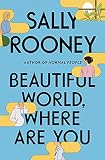
Rooney’s most intellectually ambitious novel — split between the parallel lives of Alice (a novelist who has had a public breakdown and retreated to rural Ireland) and Eileen (her best friend, working at a literary magazine in Dublin) and the long emails they write to each other. The emails range from the personal (their romantic lives, their fears about growing older) to the philosophical (what is art for, what is a good life, whether religion offers something secular life cannot).
The novel is Rooney at her most self-aware — Alice’s discomfort with her own success and with the literary world’s response to her work reads clearly as Rooney’s — and at her most formally unusual. Less continuously pleasurable than Normal People, more intellectually rewarding.
Why Normal People Is the Ideal First Book
For a reader new to Sally Rooney, Normal People is the ideal first book because it is her most acclaimed and beloved novel and the fullest expression of her distinctive gifts, the spare, precise prose, the acute emotional intelligence, and the intimate exploration of love and connection among young people. Normal People follows the complicated, on-and-off relationship between two young people, Connell and Marianne, from school into university, in a quiet, intense, and emotionally precise novel. As an entry point it is ideal, for it is her best-known work and a perfect example of her intimate, emotionally acute, contemporary fiction. It welcomes the newcomer with its compelling relationship, its emotional precision, and its spare prose, drawing the reader into her distinctive vision. It is her most famous work and the one that best represents her gifts, so the new reader encounters Rooney at her most characteristic. For the newcomer, then, Normal People is the natural and ideal starting point.
What to Expect as a New Reader
As a new reader, you can expect Normal People to be a quiet, intense, and emotionally precise novel. You can expect a central relationship, for the novel follows the complicated, on-and-off connection between two young people from school into university. You can expect spare, precise prose, for Rooney writes with restraint, clarity, and emotional exactness. You can expect acute emotional intelligence, for Rooney captures the subtle dynamics of intimacy, miscommunication, and power between her characters. You can expect a focus on the inner lives and relationships of young people. You can expect themes of love, class, vulnerability, and connection. You can expect a quiet, intimate, character-driven story rather than dramatic plot. You can expect emotional depth achieved through understatement. Expect, in short, a quiet, intense, and emotionally precise novel, a superb introduction to Rooney’s gifts.
Going Deeper After Your First Book
Once Normal People has introduced you to Rooney’s gifts, the reader who wishes to go deeper can explore her other novels, which continue her spare, precise prose, her acute emotional intelligence, and her intimate exploration of love, friendship, and connection among young people. Her debut novel follows the entangled relationships of a group of young people with the same emotional precision, while her later novels extend her exploration of love, friendship, work, and meaning in contemporary life. Reading these after Normal People deepens your appreciation of Rooney’s distinctive gifts, the spare prose, the emotional intelligence, and the intimate exploration of relationships. Her characteristic strengths run through her work, and the reader moved by Normal People will find them across her novels. Building your reading journey through Rooney is a matter of following her fiction from Normal People into her other novels. The reader who begins here and continues will find one of the most acclaimed and emotionally precise novelists of her generation.
Reading Sally Rooney
Rooney’s fiction is built on a particular kind of emotional intelligence: the ability to render, with great precision, the gap between what characters say and what they feel, between their self-understanding and what the reader can see. Her prose is clean and her pacing is confident; she writes sex with unusual directness, and she handles the class dynamics of her characters’ world with more care than most contemporary fiction. Begin with Normal People — it is the most immediately engaging and the most structurally accomplished; read Conversations with Friends for the more unsettling psychological portrait; approach Beautiful World for the most ambitious and most personal.
Frequently Asked Questions
Where should I start with Sally Rooney?
Normal People (2018) is the best starting point — the Booker Prize-longlisted novel that follows Connell and Marianne from school in County Sligo through four years at Trinity College Dublin, tracing the relationship that neither of them can quite commit to or let go of. It is Rooney's most emotionally direct novel, her plotting is at its most assured, and the love story at its centre is one of the most convincingly written in contemporary fiction. Conversations with Friends is the alternative for readers who want Rooney's debut, which is formally more austere and psychologically more uncomfortable.
What is Normal People about?
Normal People (2018) follows Connell Waldron and Marianne Sheridan from their final year at secondary school in Carricklea, County Sligo, through four years studying at Trinity College Dublin. Connell is popular, athletic, and secretly uncertain; Marianne is isolated at school but flourishes at university. Their relationship — begun in secret, broken off, renewed, broken again — is the novel's subject. Rooney traces it across years with extraordinary precision: the power dynamics that shift as their social positions change, the miscommunications that aren't really about miscommunication, and what it means to be deeply known by someone you cannot quite be with.
What is Conversations with Friends about?
Conversations with Friends (2017) is Rooney's debut — narrated by Frances, a twenty-one-year-old Trinity student who performs spoken word poetry with her ex-girlfriend Bobbi and who becomes involved with Nick, a married actor, after she and Bobbi meet Nick and his wife Melissa at a reading. The novel is about power (who has it, who gives it away willingly), about the appeal of emotional unavailability, and about a young woman who presents herself as completely rational about her own feelings and is shown, gradually, to be deeply wrong. More austere and more uncomfortable than Normal People.
What is Beautiful World, Where Are You about?
Beautiful World, Where Are You (2021) follows Alice (a novelist living in rural Ireland after a breakdown) and Eileen (her best friend, a literary magazine editor in Dublin) through a year of emails to each other and parallel romantic entanglements — Alice with Felix, a warehouse worker she meets on a dating app; Eileen with Simon, a childhood friend. The novel alternates between the two women's lives and the long emails they write to each other about aesthetics, faith, the direction of civilization, and what constitutes a good life. Rooney's most intellectually ambitious novel and the most formally unusual.