Where to Start with Shawn Achor: A Reading Guide
Where to start with Shawn Achor — how to approach The Happiness Advantage, his positive psychology framework arguing that happiness precedes and enables success rather than following from it. A complete reading guide.
By Lena Fischer
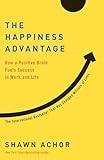
Shawn Achor (born 1978) is an American positive psychology researcher, speaker, and author who spent twelve years at Harvard University — first as an undergraduate resident advisor and then as a lecturer and researcher — studying the relationship between happiness and performance. His research and consulting work with Fortune 500 companies, military organisations, and educational institutions led to The Happiness Advantage (2010), the book that translated his research findings into seven specific principles for cultivating the positive emotional baseline that enables higher performance and achievement. His TED Talk on the subject became one of the most watched in the program’s history.
Where to Start: The Happiness Advantage (2010)
The essential Shawn Achor — and the most accessible introduction to positive psychology applied to performance and achievement. The Happiness Advantage opens by challenging the formula that governs most people’s working lives: if I work hard enough and achieve enough, then I will be happy. Achor’s twelve years of research at Harvard produced a different finding, grounded in neuroscience: the brain in a positive state is measurably more capable than the same brain in a neutral or negative state — more creative, better at problem-solving, faster at processing information, and significantly more productive.
If this is true, the conventional formula is backwards. Working harder toward achievement in a state of constant deferred happiness is not just unpleasant; it is neurologically inefficient. Cultivating the positive emotional baseline first creates the cognitive conditions that make achievement more likely.
The seven principles are the book’s practical core. Two are worth examining in detail.
The Tetris Effect is named after the phenomenon where people who play Tetris for extended periods begin seeing falling blocks in their waking environment — they have trained their brains to pattern-match on Tetris shapes. Achor extends this to explain how pessimistic thinking becomes self-reinforcing: brains trained to scan for threat, failure, and limitation find what they are looking for and become progressively more attuned to negative patterns. The inverse is equally true. Deliberate practices that train positive pattern recognition — keeping a daily gratitude log, identifying three new positive things each day — gradually shift the default scanning pattern toward opportunity and possibility rather than threat.
The 20-Second Rule is Achor’s most immediately actionable principle and the one most grounded in research on activation energy and habit formation. Most people fail at behavioral change not because they lack motivation in the abstract but because the friction of beginning a desired behavior is too high at the moment of choice. Reducing that friction by just twenty seconds — putting the guitar in the centre of the room rather than in a case in the closet, placing the book on your pillow, preparing the gym bag the night before — has been shown to dramatically increase follow-through on intended behaviors. The rule also works in reverse: increasing the friction for undesired behaviors by twenty seconds (deleting social media apps from your phone, keeping the television remote in another room) reduces their occurrence.
Social Investment is the principle that receives the least attention in popular summaries but may be the most important. Achor’s research shows that the single strongest predictor of workplace performance and resilience is the quality of social connections — and that under stress, most people do the opposite of investing socially, withdrawing precisely when connection would help most.
The book’s research base should be approached with informed awareness. Some findings Achor draws on were produced before the replication crisis in psychology identified significant reliability problems in parts of the literature, and Achor is more confident in some claims than the current evidence warrants. The core argument — that positive emotional states improve cognitive performance — has solid support; some of the specific magnitude claims have more uncertainty than the book implies.
Why The Happiness Advantage Is the Ideal First Book
For a reader new to Shawn Achor, The Happiness Advantage is the ideal first book because it is his best-known work and the fullest expression of his distinctive contribution, a research-based case that happiness fuels success rather than the other way around. The Happiness Advantage draws on positive psychology to argue that a positive mindset improves performance, and offers practical principles for cultivating happiness and reaping its benefits at work and in life. As an entry point it is ideal, for it is his defining book and a clear statement of his approach. It welcomes the newcomer with its central argument, its research grounding, and its practical principles, drawing the reader into the science of happiness and success. It is his most important work and the one that best represents his thinking, so the new reader encounters Achor’s approach directly. For the newcomer interested in happiness and performance, then, The Happiness Advantage is the natural and ideal starting point.
What to Expect as a New Reader
As a new reader, you can expect The Happiness Advantage to be an engaging, research-based, and practical book about happiness and success. You can expect a central argument, that happiness fuels success rather than the other way around, reversing the common assumption. You can expect grounding in positive psychology, for Achor draws on research showing how a positive mindset improves performance. You can expect practical principles, for the book offers concrete principles and habits for cultivating happiness and reaping its benefits. You can expect application to work and life, for Achor focuses on performance, productivity, and well-being. You can expect an accessible, engaging, and encouraging style. You can expect actionable advice grounded in research. Expect, in short, an engaging, research-based, and practical book about happiness and success, a fine introduction to Achor’s approach.
Going Deeper After Your First Book
Once The Happiness Advantage has introduced you to Achor’s approach, the reader who wishes to go deeper can explore his other books and the wider literature of positive psychology and well-being to which his work belongs. His other works extend his thinking on happiness, potential, and the power of our connections and mindset, continuing his research-based, practical approach, while the broad field of positive psychology, including the work of the researchers who founded it, offers many further perspectives the reader is well prepared to explore. Reading more widely deepens your engagement with Achor’s distinctive contribution, the case that happiness fuels success. His characteristic approach runs through his work, and the reader who has valued The Happiness Advantage will find it across his books. Building your reading journey from The Happiness Advantage is a matter of following its ideas into his other books and the wider positive-psychology literature. The reader who begins here will have a research-based, practical foundation for thinking about happiness and success.
Reading Shawn Achor
The Happiness Advantage is Achor’s essential and most widely read book. Readers who want to continue should move to Before Happiness (2013), which develops the positive priming framework and covers how to perceive reality more accurately and usefully.
For the full Shawn Achor bibliography, reviews, and biography, visit the Shawn Achor author page on Editors Reads.
Affiliate disclosure: Links to Amazon on this page are affiliate links. We earn a small commission at no extra cost to you.
Frequently Asked Questions
Where should I start with Shawn Achor?
The Happiness Advantage: The Seven Principles of Positive Psychology That Fuel Success and Performance at Work (2010) is Achor's essential book — a research-backed framework organised around seven principles for cultivating the positive emotional baseline that makes higher performance and achievement more likely. Achor spent twelve years researching happiness at Harvard and consulting with Fortune 500 companies on wellbeing and performance, and the book translates those findings into specific, actionable practices rather than vague inspiration.
What is The Happiness Advantage about?
The Happiness Advantage argues that the dominant formula for achievement — work hard, succeed, then be happy — is neurologically backwards. The brain in a positive state is significantly more creative, better at problem-solving, and more productive than the same brain in a neutral or negative state. This means that investing in happiness before achievement creates the conditions for more achievement, not less. The book presents seven principles drawn from positive psychology research: the Happiness Advantage itself, the Fulcrum and Lever (how mindset shapes available resources), the Tetris Effect (training the brain to scan for opportunity), Falling Up (finding the growth path through adversity), the Zorro Circle (starting small to regain control), the 20-Second Rule (reducing activation energy for positive habits), and Social Investment.
What is the 20-Second Rule and why does it matter?
The 20-Second Rule is Achor's most practically useful principle: making desired behaviors 20 seconds easier to start (putting the guitar in the middle of the room, not in the case) and undesired behaviors 20 seconds harder reduces the activation energy required to make different choices. Most people fail at habit change not because they lack motivation at the moment of decision but because the infrastructure of their environment defaults them back to existing patterns. Reducing the friction for better choices — by just 20 seconds — dramatically increases follow-through without requiring ongoing willpower.
What should I read after The Happiness Advantage?
After The Happiness Advantage, Achor's Before Happiness develops the positive priming framework further. Martin Seligman's Flourish is the most comprehensive account of positive psychology research by one of its founders — the academic foundation beneath Achor's popular framework. Susan David's Emotional Agility provides the complementary perspective on how to move through difficult emotions effectively rather than suppressing or avoiding them, which is the necessary counterpart to Achor's emphasis on cultivating positive states.