Where to Start with William Faulkner: A Reading Guide
Where to start with William Faulkner — whether to begin with As I Lay Dying, The Sound and the Fury, or Light in August. A complete reading guide.

William Faulkner (1897–1962) is the most technically innovative of the great American novelists — the writer who, alongside Joyce, pushed the modernist novel to its furthest formal limits and produced, in his best work, some of the most profound accounts of history, family, and race in American literature. His Yoknapatawpha novels — set in his invented county in Mississippi — constitute one of the most fully realised fictional worlds in any literature. He won the Nobel Prize in Literature in 1949.
Where to Start
The Best Entry Point: As I Lay Dying (1930)
The best first Faulkner — formally experimental but in a way that quickly becomes legible, and underpinned by a dark comedy that makes the experimentation purposeful rather than arbitrary. The Bundren family’s journey to bury Addie — through flood, fire, and days of summer heat with a decomposing body on a wagon — is simultaneously tragic and grotesque. Each of the fifteen narrators has a distinctive voice and angle of vision; the family’s motivations (Cash’s obsessional carpentry, Darl’s uncanny perception, Jewel’s violent devotion, Anse’s self-serving piety) create a portrait of an entire community’s psychology. Short (under 300 pages) and among Faulkner’s most urgent narratives.
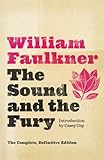
The Masterpiece: The Sound and the Fury (1929)
Faulkner’s most celebrated novel and his most structurally demanding. The Compson family’s disintegration — the loss of their land, their sister Caddy’s disgrace, Quentin’s suicide, Benjy’s institutionalisation — is told in reverse chronological fragments through four radically different perspectives. The Benjy section, which opens the novel, presents a consciousness that cannot distinguish past from present or absent from present; readers who persist past this opening (which is intentionally disorienting) find the novel’s emotional weight increasing with each subsequent section. Best approached after As I Lay Dying, when Faulkner’s method is already familiar.
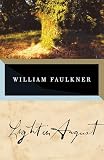
Light in August (1932)
The best second or third Faulkner for most readers — combining Faulkner’s formal experimentation with a more accessible narrative structure. The converging stories of Joe Christmas (a man of uncertain racial identity, living in the violence of the American South’s racial paranoia), Lena Grove (pregnant, walking across Alabama to find the father of her child), and the Reverend Gail Hightower (living in fantasies of Confederate glory) constitute Faulkner’s most sustained account of how race, religion, and gender shape individual lives and destroy them. The most approachable of his major novels after As I Lay Dying.
The Greatest: Absalom, Absalom! (1936)
Faulkner’s most ambitious novel and, for many readers, his greatest — but requiring the most preparation. The story of Thomas Sutpen’s rise and fall in antebellum Mississippi is reconstructed by multiple narrators who can never be certain of the facts; the novel’s very structure (competing, contradictory accounts of the same events) enacts its theme: that the South’s history is inseparable from the myths the South tells about itself. The Quentin sections — in which he and his Harvard roommate Shreve piece together Sutpen’s story in a cold Cambridge dormitory room — are Faulkner’s most psychologically complex writing. Approach it after both As I Lay Dying and The Sound and the Fury.
Why As I Lay Dying Is the Ideal First Book
For a reader new to William Faulkner, As I Lay Dying is the ideal first book because it is among his most accessible major novels and a fine expression of his distinctive gifts, the formal experimentation, the dark comedy, and the profound exploration of the American South. As I Lay Dying follows the Bundren family’s arduous journey to bury their mother, told through a chorus of shifting first-person voices, in a novel whose experimentation quickly becomes legible and is underpinned by a dark, purposeful comedy. As an entry point it is ideal, for it is one of his more approachable masterpieces and a perfect introduction to his demanding, brilliant fiction. It welcomes the newcomer with its compelling story, its inventive form, and its dark humor, drawing the reader into his distinctive vision. It is among his major works and a fine representation of his gifts, so the new reader encounters Faulkner at his most accessible. For the newcomer, then, As I Lay Dying is the natural and ideal starting point.
What to Expect as a New Reader
As a new reader, you can expect As I Lay Dying to be an inventive, dark, and profound novel of the American South. You can expect formal experimentation, for the novel is told through a chorus of shifting first-person voices, each a different family member or observer. You can expect accessibility within the experimentation, for the form quickly becomes legible and propels the story. You can expect a compelling story, the Bundren family’s arduous, often disastrous journey to bury their mother. You can expect dark comedy, for the novel is grimly, purposefully funny amid its hardship and tragedy. You can expect profound exploration of family, poverty, and the rural South. You can expect a vivid sense of place and voice. You should expect a challenging but rewarding novel that repays attention. Expect, in short, an inventive, dark, and profound novel of the American South, a fine introduction to Faulkner’s gifts.
Going Deeper After Your First Book
Once As I Lay Dying has introduced you to Faulkner’s gifts, the reader who wishes to go deeper can explore his other novels, which continue his formal experimentation and his profound exploration of the American South, often set in his invented Yoknapatawpha County. His acknowledged masterpiece, with its famously challenging stream-of-consciousness opening, is among the greatest of American novels, while his other major works render the history, families, and tragedies of the South with extraordinary power and ambition. These novels are more demanding than As I Lay Dying, but the reader who has gained a foothold there is well prepared. Reading these deepens your appreciation of Faulkner’s distinctive gifts, the formal experimentation, the dark vision, and the profound exploration of the South. Building your reading journey through Faulkner is a matter of following his fiction from As I Lay Dying into his other novels. The reader who begins here and continues will encounter one of the greatest and most influential American novelists, and a Nobel laureate.
Reading Faulkner
Faulkner’s sentences are famously long — sometimes running for pages, looping back on themselves, subordinating clause within clause within clause. The difficulty is real but specific: his syntax is not obscure, but it demands that the reader hold a great deal in mind at once, and it often defers its grammatical resolution to the sentence’s end. The best approach is to read slowly, not to panic when a sentence becomes tangled, and to trust that the emotional logic will emerge from the texture of the prose even when the syntactic logic is unclear. Many readers find that Faulkner becomes easier and more rewarding with each successive novel.
Frequently Asked Questions
Where should I start with William Faulkner?
As I Lay Dying (1930) is the best starting point — a novel about the Bundren family's journey to bury their matriarch Addie in her home county, told through fifteen different narrators, each section titled with the narrator's name. It is Faulkner at his most formally innovative but also his most earthy and dark-comic; the family's picaresque journey through flood and fire with a decomposing corpse has a black comedy that makes Faulkner's experimental technique easier to bear than in The Sound and the Fury. Light in August is the best second novel; The Sound and the Fury for readers who want to go deeper.
Is The Sound and the Fury Faulkner's masterpiece?
The Sound and the Fury (1929) is Faulkner's most celebrated and most studied novel — the account of the Compson family's disintegration, told through four sections: Benjy's section (narrated by a developmentally disabled man who cannot distinguish past from present), Quentin's section (narrated on the day of his suicide), Jason's section (narrated by the family's bitter, mercenary surviving son), and a third-person account of the Black servant Dilsey's Easter Sunday. It is Faulkner's most technically challenging novel and his most emotionally devastating; the Benjy section requires patience but rewards it. Best approached after As I Lay Dying.
What is Absalom, Absalom! about?
Absalom, Absalom! (1936) is Faulkner's most ambitious novel — the story of Thomas Sutpen, who arrives in Jefferson, Mississippi, in 1833 with a hundred wild slaves and a French architect and builds a plantation, Sutpen's Hundred, through sheer will and ruthlessness, and whose family is then destroyed by the consequences of his design. The novel is narrated by Rosa Coldfield, Mr. Compson, and finally Quentin Compson and his Harvard roommate Shreve, who reconstruct Sutpen's story from fragments and rumour. Faulkner's most sustained meditation on the South's history and self-mythology; widely considered his greatest achievement, though it requires the most preparation.
Do I need to know Southern American history to read Faulkner?
A basic awareness of the American Civil War, Reconstruction, and the social hierarchy of the post-war South is helpful for reading Faulkner but not essential. His Yoknapatawpha County (based on Lafayette County, Mississippi) has its own fully realised history that the novels gradually reveal; readers who begin with As I Lay Dying and proceed through his work will absorb the necessary context gradually. The most important thing to know going in: the Old South — the plantation economy, its racial hierarchy, its mythology of honor — is Faulkner's central subject, and his novels are simultaneously inside this mythology and critical of it.