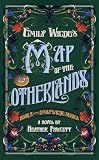
Editors Reads Verdict
A charming, intelligent fantasy with a genuine scholarly sensibility and a slow-burn romance that develops through epistolary excerpts and competing academic personalities — Fawcett has invented a delightful protagonist in Emily Wilde.
What We Loved
- Emily Wilde is an immediately distinctive protagonist — prickly, brilliant, and genuinely funny
- The field-notes structure gives the fantasy world a grounded, scholarly texture
- The slow-burn romance between Emily and Wendell is developed with patience and wit
- The Norwegian village setting is atmospheric without being generic
Minor Drawbacks
- The pacing is leisurely in a way that will not suit all readers
- Wendell's mysteriousness is slightly prolonged before the reveal
- The faerie lore, while inventive, occasionally feels more accumulated than necessary
Key Takeaways
- → Expertise and social intelligence are different skills — a person can be extraordinary at one without possessing the other
- → The scholarly impulse — the desire to categorize, understand, and document the unknown — is itself a form of love
- → Fantasy creatures are most interesting when their otherness is treated with genuine curiosity rather than reduced to utility or threat
- → Slow-burn romance rewards patience in proportion to the investment it requires
| Author | Heather Fawcett |
|---|---|
| Publisher | Del Rey |
| Pages | 352 |
| Published | January 10, 2023 |
| Language | English |
| Genre | Fiction, Fantasy, Romance |
| Difficulty | Beginner |
| Best For | Cozy fantasy readers who want academic atmosphere alongside romance, fans of T. Kingfisher's A Wizard's Guide to Defensive Baking, and anyone who has ever wanted to read a novel by a fictional faerie scholar. |
How Emily Wilde's Encyclopaedia of Faeries Compares
Emily Wilde's Encyclopaedia of Faeries at a glance against 3 similar books readers weigh alongside it.
| Book | Author | Rating | Best for |
|---|---|---|---|
| Emily Wilde's Encyclopaedia of Faeries (this book) | Heather Fawcett | ★ 4.2 | Cozy fantasy readers who want academic atmosphere alongside romance, fans of T |
| A Psalm for the Wild-Built | Becky Chambers | ★ 4.1 | Science Fiction |
| Legends & Lattes | Travis Baldree | ★ 4.3 | Readers seeking comfort fiction with genuine emotional warmth, fans of cozy |
| The Very Secret Society of Irregular Witches | Sangu Mandanna | ★ 4.2 | Readers of TJ Klune's The House in the Cerulean Sea, Travis Baldree's Legends & |
The Scholar in the Field
Emily Wilde is not pleasant company. She is prickly, exacting, socially obtuse in ways that are sometimes deliberately deployed and sometimes simply her character, and possessed of the specific arrogance of someone who knows her field better than anyone else and is not interested in pretending otherwise. She is also an extraordinary faerie scholar at Cambridge, author of a field guide that is the standard reference in her discipline, and in pursuit of a single great project: a comprehensive encyclopaedia of all faerie species, including the hidden folk of Scandinavia, about whom almost nothing has been properly documented.
The village of Hrafnsvik in Norway, where Emily arrives in winter with the intention of spending several months in research, is not immediately cooperative. The villagers are protective of their relationship with the local faeries — a relationship managed through precise, long-established protocols that outsiders who don’t understand can easily violate. Emily is an outsider who doesn’t understand, and her initial research is constrained by suspicions she hasn’t yet earned the right to allay.
Then Wendell Bambleby arrives. Wendell is Emily’s Cambridge colleague — charming, careless, brilliant in a different register from Emily’s careful scholarship, and in possession of an inexplicable talent for immediately winning people’s trust. He is also infuriating, in the specific way that people who make things look effortless are infuriating to people who know how hard things actually are.
The two of them, established antagonists in academic life, must research together in a Norwegian village in winter. The results are comic, romantic, and, eventually, considerably stranger than either of them anticipated.
The Field-Notes Structure
Emily Wilde’s Encyclopaedia of Faeries is told through Emily’s research journal — field notes, observations, transcribed conversations with villagers, assessments of the local faerie ecology. This is an unusual narrative choice that produces unusual effects. The academic register gives the fantasy world a specificity that more conventionally narrated fantasy often lacks: Emily categorizes, classifies, distinguishes between species, notes the differences between Norwegian faerie varieties and the ones she has studied elsewhere. The world acquires a sense of depth and system because a character whose entire purpose is to understand it rigorously is our lens.
The irony — and it is a productive irony — is that Emily’s scholarly precision is precisely what makes her bad at seeing certain things. Her field notes record her observations about Wendell with the same careful neutrality she brings to faerie taxonomy, and the gap between what she observes and what those observations mean is one of the novel’s primary comic and romantic resources. She is excellent at noticing; she is not excellent at interpretation.
The epistolary element extends to occasional letters home, which give Emily a different register — the slightly softer, more self-revealing mode of private correspondence — and allow Fawcett to show a different dimension of the character without abandoning the primary voice.
Wendell Bambleby
Wendell is Emily’s foil in the most productive sense: the two characters illuminate each other by contrast, and neither would be as interesting without the other. Where Emily is meticulous, Wendell is intuitive. Where Emily is methodical, Wendell is improvisational. Where Emily has made herself difficult, Wendell has made himself easy — a performance of effortlessness that conceals something Emily gradually comes to recognize as its own form of discipline.
The mystery of Wendell — what he is, what he knows, what his real relationship is to the faerie world he and Emily are studying — is the novel’s structural hook, and Fawcett deploys the revelation with good timing. The mystery is present enough to be tantalizing but not so aggressively foregrounded that it overwhelms the more immediate pleasures of the Emily-Wendell dynamic.
The romance is slow, careful, and appropriately constrained by Emily’s incapacity for directness in personal matters. She can describe Wendell’s qualities with scholarly precision; she cannot quite process what those qualities mean to her, or at least cannot process them in ways she would admit to herself. The gradual emergence of recognition is handled with the patience it requires.
The Norwegian Village
Hrafnsvik is one of those fictional small places that are rendered with enough specificity to feel like somewhere particular. The winter landscape, the specific architecture of a Norwegian fishing village, the social texture of a community that has lived alongside the supernatural for generations and has developed elaborate, practical relationships with it — all of this is rendered without the airlessness that detailed world-building can produce.
The relationship between the village and its faeries is perhaps the novel’s most original element. The hidden folk of Hrafnsvik are not the faeries of conventional fantasy — they are neither purely threatening nor purely benevolent, and the villagers’ relationship with them is neither fearful propitiation nor naive friendship but something more interesting: practical coexistence, with its own etiquette, its own history of misunderstandings and repairs, its own ongoing negotiation.
Emily’s project of documenting this coexistence is both her professional goal and, without her quite intending it, a form of respect — the scholarly attention is also an acknowledgment of the faeries as subjects worth understanding rather than simply as objects to be categorized.
Cozy Fantasy’s Requirements
Emily Wilde’s Encyclopaedia of Faeries belongs to the current wave of cozy fantasy — the genre moment that produced A Psalm for the Wild-Built, Legends & Lattes, and The Very Secret Society of Irregular Witches, among others. The cozy fantasy label implies certain things: warmth over horror, character over plot, the pleasures of atmosphere and comfort alongside narrative momentum.
Fawcett meets these requirements while doing something slightly different with them. Emily Wilde is not an easy comfort — she is difficult, eccentric, occasionally genuinely unkind. The coziness of the novel is not the coziness of uncomplicated warmth but the coziness of a cold winter in a Norwegian village, with hot drinks and firelight and the specific pleasure of being in a strange place with people who are slowly becoming less strange.
The pacing is leisurely, which suits the genre and the scholarly premise but which will not suit readers who want momentum over atmosphere. Those who settle into the novel’s rhythm will find the reward proportionate to the patience.
The Encyclopaedia and What It Represents
The central metaphor of the novel — the encyclopaedia, the project of comprehensive faerie documentation — is well chosen because it is genuinely about something. The desire to understand and document the world, to find the right names and categories and descriptions for things that have never been systematically understood, is the scholarly impulse in its purest form. Emily has made this impulse the center of her life.
What the novel explores is the ways in which that impulse, however admirable, is insufficient — not as a professional project but as a way of being in the world. The things that matter most resist documentation. The experience she is having in Hrafnsvik exceeds her field notes’ capacity to capture it, and the gap between what she is experiencing and what she is writing down is the space where the novel’s most important things happen.
Our rating: 4.2/5 — A charming, intelligent cozy fantasy with a genuinely distinctive protagonist and a slow burn that earns its warmth. Emily Wilde is the kind of prickly, brilliant heroine the genre needed.
Frequently Asked Questions
What is "Emily Wilde's Encyclopaedia of Faeries" about?
Curmudgeonly Cambridge faerie scholar Emily Wilde travels to a remote Norwegian village to research hidden faeries for her encyclopaedia, accompanied by her brilliant, insufferable colleague Wendell Bambleby — who has secrets of his own about the world she's studying.
Who should read "Emily Wilde's Encyclopaedia of Faeries"?
Cozy fantasy readers who want academic atmosphere alongside romance, fans of T. Kingfisher's A Wizard's Guide to Defensive Baking, and anyone who has ever wanted to read a novel by a fictional faerie scholar.
What are the key takeaways from "Emily Wilde's Encyclopaedia of Faeries"?
Expertise and social intelligence are different skills — a person can be extraordinary at one without possessing the other The scholarly impulse — the desire to categorize, understand, and document the unknown — is itself a form of love Fantasy creatures are most interesting when their otherness is treated with genuine curiosity rather than reduced to utility or threat Slow-burn romance rewards patience in proportion to the investment it requires
Is "Emily Wilde's Encyclopaedia of Faeries" worth reading?
A charming, intelligent fantasy with a genuine scholarly sensibility and a slow-burn romance that develops through epistolary excerpts and competing academic personalities — Fawcett has invented a delightful protagonist in Emily Wilde.
Ready to Read Emily Wilde's Encyclopaedia of Faeries?
Check the current price on Amazon.
Check Price on Amazon (paid link)Prices and availability are subject to change. See Amazon for current price.
Review last updated: