Editors Reads Verdict
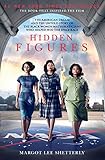
Margot Lee Shetterly's meticulously researched history recovers the forgotten stories of women like Katherine Johnson, Dorothy Vaughan, and Mary Jackson — Black mathematicians whose indispensable contributions to American space exploration were hidden by both racism and sexism for decades.
What We Loved
- The historical research is exceptional — Shetterly spent years in archives recovering these stories
- The individual portraits are vivid without being romanticized
- The intersection of the Space Race, civil rights movement, and World War II creates a rich historical canvas
- The book corrects a significant omission from American scientific and cultural history
Minor Drawbacks
- The large cast of characters can make tracking individuals challenging
- Some readers find the historical detail dense relative to the narrative momentum
- The film adaptation streamlined the story in ways that illuminate how much complexity Shetterly's book contains
Key Takeaways
- → Excellence can survive in impossible circumstances but it requires more than excellence — it requires luck and allies
- → Systemic racism and sexism create invisible costs that are visible only when the record is corrected
- → The most important historical actors are often the least documented
- → Intelligence and ambition navigate institutional barriers in specific, particular ways that deserve specific record
- → The story of American achievement is inseparable from the story of American exclusion
| Author | Margot Lee Shetterly |
|---|---|
| Publisher | William Morrow |
| Pages | 346 |
| Published | September 6, 2016 |
| Language | English |
| Genre | History, Non-Fiction, Biography |
| Difficulty | Beginner |
| Best For | Readers interested in American history, the Space Race, Black women's history, and the intersection of civil rights and scientific progress. |
How Hidden Figures Compares
Hidden Figures at a glance against 3 similar books readers weigh alongside it.
| Book | Author | Rating | Best for |
|---|---|---|---|
| Hidden Figures (this book) | Margot Lee Shetterly | ★ 4.5 | Readers interested in American history, the Space Race, Black women's history, |
| Becoming | Michelle Obama | ★ 4.8 | Anyone interested in American political history, the Obama era, or memoir as a |
| Between the World and Me | Ta-Nehisi Coates | ★ 4.5 | Readers who want to understand anti-Black racism in America through literary |
| The Immortal Life of Henrietta Lacks | Rebecca Skloot | ★ 4.6 | Readers interested in medical history, bioethics, race and medicine in America, |
The Computers Who Were Human
At NASA’s Langley Research Center during the 1940s, 1950s, and 1960s, the term “computer” referred to a person — specifically, to the teams of women who performed the mathematical calculations that engineers needed. Among these women were a group of Black mathematicians whose work was indispensable to American aviation and space research, and whose contributions were systematically obscured by both the racial segregation of the era and the institutional invisibility of women’s intellectual labor.
Margot Lee Shetterly grew up in Hampton, Virginia, near Langley, and knew some of these women as members of her parents’ social circle. Her book recovers their stories through years of archival research, interviews, and the reconstruction of a historical world that had been essentially erased from the official record.
Katherine Johnson, Dorothy Vaughan, Mary Jackson
The three central figures who anchor the narrative each represent different aspects of the Black female mathematician’s experience at Langley:
Katherine Johnson’s mathematical intuition was so precise that John Glenn, before his 1962 orbital flight, refused to proceed until she personally verified the IBM computer’s calculations. Her orbital mechanics work is now celebrated, but for decades it was classified and she was uncredited.
Dorothy Vaughan became NASA’s first Black supervisor in 1949, teaching herself FORTRAN when she understood that electronic computers would replace human ones — and teaching her entire team, ensuring their survival in the transition.
Mary Jackson became the first Black female engineer at NASA after petitioning to take the advanced engineering courses held in Virginia’s segregated school system.
The Double Burden
Shetterly is meticulous about the specific texture of what these women navigated: the segregated bathroom in the main building, the “Colored Computers” designation that separated them from white mathematicians doing the same work, the social navigation required to be taken seriously in an environment that had structural reasons not to take them seriously.
Their achievements were not achieved despite their circumstances — they were achieved by women who understood their circumstances completely and found specific, intelligent strategies for doing what they needed to do within them.
The Film and the Book
The 2016 film adaptation, starring Taraji P. Henson, Octavia Spencer, and Janelle Monáe, introduced these stories to an enormous audience. The film necessarily simplified and dramatized Shetterly’s more complex historical account. Both are valuable; neither is sufficient without the other.
The Erased Labor Behind the Space Race
The deepest achievement of Hidden Figures is its recovery of a category of work that history had rendered doubly invisible — the intellectual labor of Black women whose calculations were indispensable to American aviation and spaceflight yet who were systematically written out of the official record. Before electronic computers, the word “computer” denoted a human being, usually a woman, performing mathematics by hand, and at Langley a segregated pool of Black female mathematicians did this exacting work under conditions designed to keep them unseen. Shetterly’s book restores these women to the historical narrative of the space race, demonstrating that the triumphs conventionally attributed to astronauts and engineers rested on a foundation of uncredited computation performed by people the era refused to acknowledge. By documenting precisely how their work fed into the trajectories, the wind-tunnel data, and the orbital mechanics of American spaceflight, she corrects a record that had erased them, and she makes a broader argument about how much of history’s labor is performed by those its official accounts ignore.
Excellence Under Segregation
Shetterly is meticulous about the specific, grinding texture of the segregation these women navigated, and this attention is what lifts the book above simple celebration. The “West Computing” group was physically separated from white colleagues doing identical work; there was a designated “colored” bathroom in another building; the women had to assert their competence continually within an institution that had structural reasons not to recognize it. Crucially, Shetterly frames their achievements not as triumphs accomplished in spite of these obstacles but as the work of women who understood their circumstances with complete clarity and devised intelligent, deliberate strategies for accomplishing what they needed to within them. Katherine Johnson’s quiet insistence on attending briefings from which women were excluded, Dorothy Vaughan’s anticipation of the shift to electronic computing, Mary Jackson’s petition to take engineering courses in a segregated school — each is a study in navigating a hostile system without being defeated by it. The book honors not just their brilliance but their strategic intelligence about the world they lived in.
Three Lives, One Institution
By anchoring its sweeping history in the particular lives of Katherine Johnson, Dorothy Vaughan, and Mary Jackson, Hidden Figures gives an institutional and social history the intimacy of biography. Each woman represents a distinct facet of the Black female mathematician’s experience at Langley: Johnson the prodigious calculator whose orbital work John Glenn personally trusted over the new IBM machines; Vaughan the supervisor and self-taught programmer who shepherded her team through technological upheaval; Jackson the aspiring engineer who fought the educational system for the right to advance. Shetterly braids their stories against the backdrop of the Second World War, the Cold War, the civil rights movement, and the desegregation of the American workplace, so that individual ambition is always shown in dialogue with vast historical forces. The result is a narrative that is at once personal and panoramic, allowing the reader to grasp both the specific obstacles these particular women faced and the larger transformations of an era through the lens of their careers.
The Book, the Film, and the Recovery
Published in 2016 and adapted that same year into an acclaimed and commercially successful film starring Taraji P. Henson, Octavia Spencer, and Janelle Monáe, Hidden Figures became a genuine cultural phenomenon, returning these women to public consciousness on an enormous scale. The book and film together did significant work, inspiring new attention to the contributions of women and people of color in STEM and prompting belated official recognition, including honors for Katherine Johnson in her final years. Shetterly’s more detailed and historically textured account and the film’s necessarily simplified, dramatized version serve different but complementary purposes: the film delivered the story to a mass audience, while the book supplies the depth, nuance, and documentary rigor the screen could not. As an act of historical recovery — restoring to the record the women whose mathematics helped launch America into space — the book is essential, told at last with the detail, accuracy, and respect its subjects had always deserved but never received in their own time.
Our rating: 4.5/5 — An essential historical recovery: the stories of women whose mathematics helped launch America into space, finally told with the detail and respect they have always deserved.
Reading Guides
Frequently Asked Questions
What is "Hidden Figures" about?
The true story of the Black female mathematicians who served as 'human computers' at NASA during the Space Race — women whose calculations helped launch America into space while they navigated the segregated South.
Who should read "Hidden Figures"?
Readers interested in American history, the Space Race, Black women's history, and the intersection of civil rights and scientific progress.
What are the key takeaways from "Hidden Figures"?
Excellence can survive in impossible circumstances but it requires more than excellence — it requires luck and allies Systemic racism and sexism create invisible costs that are visible only when the record is corrected The most important historical actors are often the least documented Intelligence and ambition navigate institutional barriers in specific, particular ways that deserve specific record The story of American achievement is inseparable from the story of American exclusion
Is "Hidden Figures" worth reading?
Margot Lee Shetterly's meticulously researched history recovers the forgotten stories of women like Katherine Johnson, Dorothy Vaughan, and Mary Jackson — Black mathematicians whose indispensable contributions to American space exploration were hidden by both racism and sexism for decades.
Ready to Read Hidden Figures?
Check the current price on Amazon.
Check Price on Amazon (paid link)Prices and availability are subject to change. See Amazon for current price.
Review last updated: