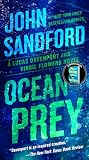
Editors Reads Verdict
A strong late-series Prey entry and one of the best Davenport/Flowers crossover novels — the Florida setting is a refreshing change, the drug-smuggling plot is well-constructed, and the dual-protagonist dynamic works.
What We Loved
- The Davenport/Flowers crossover is one of the most entertaining relationships in the extended Sandford universe
- Florida setting marks a change from the usual Minnesota terrain
- Strong pacing for a late-series entry — no signs of the formula wearing thin
Minor Drawbacks
- Book 31 — best appreciated with some Prey series context
- The drug smuggling plot is slightly less distinctive than some earlier series hooks
Key Takeaways
- → The best series continue to find fresh angles — new settings and character combinations
- → Drug trafficking at scale operates with its own brutal logic
| Author | John Sandford |
|---|---|
| Publisher | G.P. Putnam's Sons |
| Pages | 467 |
| Published | April 6, 2021 |
| Language | English |
| Genre | Crime Fiction, Police Procedural, Thriller |
| Difficulty | Intermediate |
| Best For | Prey series readers at Book 31. The crossover with Virgil Flowers also rewards Flowers series readers. |
How Ocean Prey Compares
Ocean Prey at a glance against 3 similar books readers weigh alongside it.
| Book | Author | Rating | Best for |
|---|---|---|---|
| Ocean Prey (this book) | John Sandford | ★ 4.4 | Prey series readers at Book 31 |
| Field of Prey | John Sandford | ★ 4.4 | Prey series readers at Book 24 |
| Rules of Prey | John Sandford | ★ 4.3 | Crime fiction readers who want a long series with a distinctive protagonist |
| The Black Echo | Michael Connelly | ★ 4.3 | Crime fiction readers looking for a series to commit to |
A Crossover Two Series in the Making
Ocean Prey is the thirty-first Lucas Davenport novel, but it is also something the series has only flirted with before: a full crossover that hands roughly equal time to Davenport and to Virgil Flowers, the laconic, free-ranging investigator who anchors Sandford’s parallel “Flowers” series. For longtime readers of either franchise, that pairing is the book’s main event. Davenport, now a Deputy U.S. Marshal with national reach, and Flowers, the Minnesota state agent with a novelist’s eye and a farmer’s patience, have crossed paths and traded barbs for years; here Sandford finally builds a case around both of them, and the result is one of the most purely enjoyable late-series entries he has produced. At book thirty-one, that is no small achievement.
A Case That Starts at Sea
The plot opens with violence on the water off the Florida coast: a Coast Guard boarding goes catastrophically wrong, federal agents are killed, and an investigation into a sophisticated drug-and-gold smuggling operation stalls. When the conventional approach fails, the case is handed to Davenport, who in turn pulls in Flowers and a team to work it from the inside. The maritime setting is the freshest thing about the book. After thirty Minnesota-centered novels, the Gulf Coast — the diving, the boats, the open-water tension of an operation that literally takes place beneath the surface — gives the series a jolt of new scenery and new mechanics. Sandford clearly enjoyed the change, and the undercover-diver angle generates set pieces the landlocked entries could never stage.
The Davenport–Flowers Dynamic
The reason the crossover works is chemistry. Davenport is sharper, more political, and more comfortable with lethal force; Flowers is looser, funnier, and more willing to talk his way through a problem. Putting them on the same case lets Sandford play their temperaments against each other, and the dialogue — always one of his strengths — crackles. Flowers, in particular, gets room to operate, and readers of his series will feel the book tilts pleasurably in his direction during its long undercover middle. The supporting cast of agents and divers is sketched with Sandford’s usual economy, giving the team-up enough texture that the violence, when it comes, carries weight. This is procedural entertainment built on character as much as plot, which is what has kept the Prey series alive for three decades.
Sandford’s Reliable Machinery
What Ocean Prey demonstrates is how well-oiled Sandford’s storytelling machine remains. The pacing is brisk without feeling rushed, the procedural logic holds together, and the violence arrives in sharp, consequential bursts rather than constant noise. Sandford has always written villains who are competent and genuinely dangerous, and the smugglers here are no exception — professional, ruthless, and a credible match for the investigators. The prose is lean and propulsive, engineered for momentum, and the plotting rewards attention without demanding it. For a series this far along, the absence of fatigue is the headline: there is no sense of an author going through the motions, only one enjoying a fresh setting and a favorite pairing.
Where It’s Slightly Less Distinctive
If there is a criticism, it is that the central hook — a drug-smuggling operation — is a touch more generic than some of the series’ more memorable premises, which have built around distinctive killers or unusual crimes. The “what” of the case is less striking than the “who” of the investigation, and a reader drawn to Sandford’s most inventive villains may find this plot solid rather than special. The book is also, inevitably, richer for readers with series history; while it functions as a competent standalone thriller, the pleasure of the Davenport–Flowers interplay depends on knowing both men, and a newcomer would miss most of that resonance. These are minor reservations about a book whose chief aim — to entertain its established audience — it meets fully.
Who Should Read It
Ocean Prey is a treat for anyone who follows either Sandford series, and especially for readers who follow both. The change of scenery, the team-up, and the undercover-diving angle make it one of the more memorable recent installments, and it is brisk enough to satisfy as pure vacation reading. Newcomers can follow the action without difficulty but would be better served starting earlier — with Rules of Prey for Davenport or one of the early Flowers novels — to appreciate why this particular pairing is such a draw. For the faithful, it is the rare late-series entry that feels like a reward rather than an obligation.
The Audio Edition and Sandford’s Longevity
One practical note: Ocean Prey is among the entries best experienced on audio, in a production that captures the Davenport–Flowers banter especially well, and many readers find the crossover’s dialogue-heavy stretches even more enjoyable read aloud. More broadly, the book is a testament to an unusual kind of authorial stamina. John Sandford — the pen name of Pulitzer Prize–winning journalist John Camp — launched the Prey series in 1989, and the fact that the thirty-first installment can still feel fresh, fast, and fun is a genuine rarity in long-running crime fiction, where most franchises sag into formula long before this point. Sandford has kept the series alive partly by refusing to let Davenport stand still — aging him, promoting him, shifting his jurisdiction — and partly by cross-pollinating with the Flowers books, exactly as he does here. Ocean Prey is evidence that the strategy still works.
The Verdict
Ocean Prey is a strong, brisk, thoroughly enjoyable late-series crossover that pairs Lucas Davenport with Virgil Flowers and trades Minnesota for the Gulf Coast to fine effect. The smuggling plot is solid rather than singular, and the book rewards series familiarity, but the fresh maritime setting, the sharp procedural construction, and above all the chemistry between Sandford’s two best characters make it one of the most entertaining recent entries in a remarkably durable franchise.
Our rating: 4.4/5 — A brisk, entertaining crossover that teams Davenport with Virgil Flowers and swaps Minnesota for the Florida coast: fresh maritime setting, sharp procedural plotting, and the series’ best double act — late-series Sandford at its most fun.
Frequently Asked Questions
What is "Ocean Prey" about?
Lucas Davenport and Virgil Flowers investigate a drug smuggling operation off the Florida coast that is leaving federal agents dead — a crossover entry between Sandford's two major series.
Who should read "Ocean Prey"?
Prey series readers at Book 31. The crossover with Virgil Flowers also rewards Flowers series readers.
What are the key takeaways from "Ocean Prey"?
The best series continue to find fresh angles — new settings and character combinations Drug trafficking at scale operates with its own brutal logic
Is "Ocean Prey" worth reading?
A strong late-series Prey entry and one of the best Davenport/Flowers crossover novels — the Florida setting is a refreshing change, the drug-smuggling plot is well-constructed, and the dual-protagonist dynamic works.
Ready to Read Ocean Prey?
Check the current price on Amazon.
Check Price on Amazon (paid link)Prices and availability are subject to change. See Amazon for current price.
Review last updated: