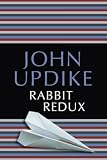
Editors Reads Verdict
Updike's most turbulent Rabbit novel turns Harry's home into a pressure-cooker of the late-1960s — race, drugs, Vietnam, the moon landing. Uncomfortable and dated in places, but a bracing, ambitious portrait of America coming apart.
What We Loved
- Updike's prose is dazzling — precise, sensuous, alive to ordinary American life
- An ambitious attempt to capture the fracturing of America in the late 1960s
- Harry Angstrom remains one of literature's great ambivalent everymen
Minor Drawbacks
- The treatment of race and the characters of color is uncomfortable and dated
- Harry is passive and often unlikable; the novel withholds easy sympathy
Key Takeaways
- → The personal mirrors the national; Harry's disordered home stands in for a fracturing country
- → Passivity is its own kind of choice — Harry absorbs the era rather than acting in it
- → Updike's genius is in rendering the texture of ordinary American life with extraordinary precision
| Author | John Updike |
|---|---|
| Publisher | Ballantine Books |
| Pages | 368 |
| Published | November 5, 1971 |
| Language | English |
| Genre | Literary Fiction, Classic Literature |
| Difficulty | Advanced |
| Best For | Readers of literary fiction continuing the Rabbit tetralogy and admirers of Updike's prose and his portrait of postwar America. |
How Rabbit Redux Compares
Rabbit Redux at a glance against 3 similar books readers weigh alongside it.
| Book | Author | Rating | Best for |
|---|---|---|---|
| Rabbit Redux (this book) | John Updike | ★ 4.0 | Readers of literary fiction continuing the Rabbit tetralogy and admirers of |
| Rabbit Is Rich | John Updike | ★ 4.2 | Readers of American literary fiction who want the definitive portrait of |
| Rabbit, Run | John Updike | ★ 4.1 | Literary fiction readers interested in postwar American life and the origins of |
| The Witches of Eastwick | John Updike | ★ 3.9 | Readers of Updike's other work — best approached with some familiarity with his |
Rabbit at the Center of the Storm
Rabbit Redux is the second of John Updike’s four novels about Harry “Rabbit” Angstrom, the former high-school basketball star whose ordinary, restless, self-deceiving life Updike used as a barometer of postwar America. Each Rabbit book is set in the decade of its writing, and where the first, Rabbit, Run, captured the suffocations of late-1950s conformity, Rabbit Redux drops Harry into the chaos of 1969 — and lets that chaos invade his home. It is the most turbulent and politically charged book of the tetralogy, an ambitious and frequently uncomfortable attempt to register the fracturing of America through the living room of a single ambivalent man.
When the novel opens, Harry has, in a sense, been tamed. The reckless young man who ran from his marriage in the first book is now a settled, deadened figure: a Linotype operator working a dying trade, living a small life in suburban Pennsylvania. Then his wife, Janice, leaves him for another man, and Harry’s house — emptied of its ordinary order — fills instead with two outsiders who carry the era’s upheavals directly into his home: Jill, a runaway rich teenager adrift in drugs and counterculture, and Skeeter, a Black Vietnam veteran and self-styled radical. What follows is a strange, charged, claustrophobic domestic drama in which the great forces of the late 1960s — race, Vietnam, drugs, sexual revolution, the moon landing that hums in the background — play out within four walls.
The Glory of the Prose
Whatever one makes of the novel’s content, the prose is extraordinary. Updike was one of the great stylists in American literature, and Rabbit Redux is a showcase of his powers: the precise, sensuous, almost overwhelming attention to the textures of ordinary life, the way he can make a description of a kitchen or a body or a television’s glow shimmer with significance. He renders Harry’s America — its products, its surfaces, its boredoms and small lusts — with a fidelity that is the book’s enduring achievement. Few writers have ever looked so closely at the ordinary, or found so much in it. For readers who love language, the sentences alone justify the book.
Harry himself remains one of literature’s great ambivalent everymen. He is not admirable; he is passive, prejudiced, self-pitying, frequently maddening. But Updike refuses to flatter or condemn him, instead rendering his confusion and his appetites with unsparing honesty. Harry is a man to whom things happen, who absorbs the era rather than acting upon it, and the novel makes his very passivity a kind of mirror — the ordinary American buffeted by historical forces he neither understands nor controls. The personal and the national are inseparable here: Harry’s disordered house, with its runaway and its radical, stands in for a country coming apart.
The Discomfort and the Datedness
Rabbit Redux is not an easy or a comfortable book, and some of its discomfort has aged poorly. The novel’s treatment of race — embodied in Skeeter, who is at once the book’s most electric character and a figure built from the era’s anxieties — is genuinely uncomfortable, and the language and attitudes throughout reflect the period in ways that modern readers will find jarring and at times offensive. Updike is, to a degree, dramatizing white America’s fear and fascination rather than simply endorsing them, and the novel is clearly interested in Harry’s racism as a symptom. But the portraiture is filtered through Harry’s limited, prejudiced consciousness, and readers will differ on how successfully Updike critiques the attitudes he depicts versus merely reproducing them. It is a book that requires reading with historical awareness and a critical eye.
The novel also withholds the easy pleasures of likability. Harry is difficult to root for, the events are often grim, and Updike offers little in the way of redemption or resolution. This is by design — Updike was after honesty, not comfort — but it makes Rabbit Redux a more demanding and less immediately rewarding read than its admirers’ praise might suggest.
An Ambitious, Flawed Achievement
Within the tetralogy, Rabbit Redux is often considered the most ambitious and the most uneven of the four. It reaches for something enormous — to capture an entire convulsive moment in American history through one ordinary man’s domestic disorder — and it does not fully control the materials it summons. But the ambition is real, the prose is magnificent, and the portrait of a country and a man both coming apart is bracing and memorable. It deepens the long project of the Rabbit novels, which together form one of the most sustained portraits of American life in twentieth-century fiction.
For readers committed to that project, Rabbit Redux is essential, the turbulent second movement in Harry Angstrom’s long story. It is uncomfortable, dated in its handling of race, and deliberately hard to love — but it is also the work of a master stylist grappling honestly with a country in crisis, and it rewards the reader willing to meet it on those difficult terms.
Final Verdict
Our rating: 4.0/5 — Updike’s most turbulent Rabbit novel, pulling the upheavals of 1969 America into one man’s living room. Magnificently written and bracingly ambitious, but uncomfortable and dated in its treatment of race, and built around a deliberately unlikable everyman. Demanding, flawed, and essential to the tetralogy.
Read it after Rabbit, Run, then continue with Rabbit Is Rich.
Frequently Asked Questions
What is "Rabbit Redux" about?
The second of Updike's Rabbit novels. A decade after Rabbit, Run, Harry Angstrom is a settled, deadened print worker in 1969 — until his wife leaves and his house fills with a runaway teenager and a Black militant, drawing the turmoil of the American 1960s into his living room.
Who should read "Rabbit Redux"?
Readers of literary fiction continuing the Rabbit tetralogy and admirers of Updike's prose and his portrait of postwar America.
What are the key takeaways from "Rabbit Redux"?
The personal mirrors the national; Harry's disordered home stands in for a fracturing country Passivity is its own kind of choice — Harry absorbs the era rather than acting in it Updike's genius is in rendering the texture of ordinary American life with extraordinary precision
Is "Rabbit Redux" worth reading?
Updike's most turbulent Rabbit novel turns Harry's home into a pressure-cooker of the late-1960s — race, drugs, Vietnam, the moon landing. Uncomfortable and dated in places, but a bracing, ambitious portrait of America coming apart.
Ready to Read Rabbit Redux?
Check the current price on Amazon.
Check Price on Amazon (paid link)Prices and availability are subject to change. See Amazon for current price.
Review last updated: