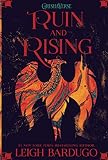
Editors Reads Verdict
The Grisha trilogy's conclusion is ambitious and genuinely surprising. Bardugo subverts the expected beats of a chosen-one fantasy conclusion and delivers an ending that not everyone will love — but which is far more honest and thematically coherent than a conventional climax would have been.
What We Loved
- The ending prioritises thematic integrity over reader satisfaction — a rare and genuinely brave choice in YA fantasy
- The Darkling remains the series' most compelling antagonist — ideologically coherent in a way that is more disturbing than simple evil
- The epilogue is quietly brilliant and earns the peaceful register it inhabits
- Alina's arc reaches a resolution that is honest about what the chosen-one narrative actually costs
Minor Drawbacks
- Many readers found the conclusion devastating in ways that felt like a betrayal rather than a choice
- The Alina/Mal relationship requires more investment than the series consistently delivers on that pairing
- The pacing in the underground opening section moves slowly relative to the urgency the situation implies
Key Takeaways
- → The chosen-one narrative asks what being chosen actually costs — Bardugo answers that question without flinching
- → Power has a corrupting effect on identity that cannot simply be resisted through good intentions
- → An ending that prioritises thematic truth over emotional comfort is often better appreciated with time and distance
- → The most compelling villain in a series holds an ideology with internal coherence rather than mere cruelty
- → Resolution sometimes means choosing ordinary life over extraordinary destiny — and that choice is worth honouring
| Author | Leigh Bardugo |
|---|---|
| Publisher | Henry Holt and Co. |
| Pages | 422 |
| Published | June 17, 2014 |
| Language | English |
| Genre | Fantasy, Young Adult Fantasy, Magic School Fantasy |
How Ruin and Rising Compares
Ruin and Rising at a glance against 3 similar books readers weigh alongside it.
| Book | Author | Rating | Best for |
|---|---|---|---|
| Ruin and Rising (this book) | Leigh Bardugo | ★ 4.2 | Fantasy |
| 10th Anniversary | James Patterson | ★ 3.7 | Women's Murder Club readers invested in Lindsay's life |
| 11/22/63 | Stephen King | ★ 4.5 | King fans ready for his most ambitious work, history buffs interested in the |
| 11th Hour | James Patterson | ★ 3.7 | Women's Murder Club readers |
Ruin and Rising Review
Ruin and Rising closes the Grisha trilogy in a way that felt controversial at the time and has aged into something more respected as readers have had distance to reflect on it. Bardugo’s ending is not the triumphant chosen-one conclusion the genre machinery sets up — it is something smaller, more personal, and ultimately more true to what the series was exploring all along.
Alina begins the book at her lowest point: underground, cut off from her power, and isolated from her allies. The journey to the firebird takes her across a Ravka increasingly consumed by civil war. The Darkling, now commanding a terrifying new kind of Grisha, remains the series’ most compelling antagonist — a character whose ideological coherence is more disturbing than simple evil.
The ending: Much has been written about how Ruin and Rising concludes. Without spoiling, Bardugo makes choices that prioritise thematic integrity over reader satisfaction. The series’ questions about power, identity, and the costs of being chosen are answered honestly. Many readers found this devastating; others found it exactly right.
What works: The escalating scope of the Darkling’s threat. The evolution of the Alina/Mal relationship into something more complicated than it started as. The world’s politics, which feel genuinely consequential. The quiet brilliance of the epilogue.
Verdict: The most debated conclusion in the Grishaverse — which is itself evidence that Bardugo was doing something worth debating. Essential for completing the trilogy, and better appreciated on reflection than in the moment.
After This Book
The Six of Crows duology — Six of Crows and Crooked Kingdom — takes place in the same world but follows Kaz Brekker’s crew of criminals in the merchant city of Ketterdam. It is widely considered Bardugo’s masterwork and can be read immediately after this trilogy concludes.
Reading Guides
Beginning at the Bottom
Ruin and Rising opens with Alina at her lowest point in the entire trilogy: underground in the White Cathedral, cut off from sunlight and therefore from her power, her allies scattered, and the Darkling in control of the narrative above. Bardugo does not soften this. The first section of the book is genuinely uncomfortable — not because it is gratuitously dark but because it is honest about what it looks like when a chosen-one figure is stripped of the conditions that make her chosen.
The underground sequence also introduces the Apparat and the White Cathedral’s cult of followers who have constructed a religious mythology around Alina. They believe in her as a symbol; they need her as an icon; and what they want from her is entirely incompatible with what she needs to do. This tension — between being believed in and being understood — is one of the novel’s most interesting minor themes, and it prepares the ground for the ending’s choices about identity and power.
The Firebird and What It Costs
The search for the firebird — the third amplifier — drives the novel’s middle section across a Ravka in civil war. Bardugo uses the journey to show the country in its fullest state: not the court, not the Little Palace, but the ordinary people who have been living with the consequences of the Shadow Fold and the Darkling’s war for generations. The world feels larger and more real in these sequences than in either of the preceding volumes.
When the firebird’s nature is finally revealed, it recontextualizes everything the trilogy has said about amplifiers, about the relationship between Grisha power and its source, and about what Alina has been building toward. The revelation is one of Bardugo’s best — both surprising and in retrospect inevitable, a function of rules she established in the first pages of the first novel.
The Darkling in His Final Form
The Darkling in Ruin and Rising is the most fully realized version of the character. Stripped of the ambiguity that made him compelling in Shadow and Bone — when readers, like Alina, were not entirely sure whether his stated feelings were genuine — he is now something more clarified: a man whose ideology has consumed his capacity for anything else. The novel is sympathetic enough to show the cost of this, the residue of something that might once have been human connection. But it does not use that sympathy as mitigation.
The Ending and Its Controversy
The conclusion of Ruin and Rising is one of the most discussed endings in YA fantasy of the 2010s. Without revealing the specifics: Bardugo makes choices about power, identity, and what it means to survive the story’s central conflict that prioritize thematic integrity over genre expectation. The chosen-one narrative, which promises that destiny is real and that the extraordinary person will be rewarded for accepting their role, is answered here with something more honest and more complicated.
Many readers found this devastating. The Alina/Mal relationship, which requires more investment than either the series or those readers consistently provided, becomes the center of the ending’s emotional stakes. For readers who had that investment, the conclusion lands as intended. For others — the readers who wanted Alina to choose the Darkling, or who wanted something more conventionally triumphant — it remains a source of ongoing debate.
What is clear, from the perspective of several years’ distance, is that Bardugo was doing something worth arguing about: writing a conclusion honest enough to alienate the readers who wanted a different story.
After the Grisha Trilogy
The Six of Crows duology, set in the same world roughly two years before the events of the Grisha trilogy, follows Kaz Brekker’s criminal crew and is widely considered Bardugo’s masterwork. It can be read immediately after this trilogy and requires no prior Grishaverse knowledge, though the world-building lands with additional resonance for readers who have the Grisha trilogy’s context.
Final Verdict
Our rating: 4.2/5 — The Grisha trilogy’s conclusion is ambitious and genuinely surprising. Bardugo subverts the expected beats of a chosen-one fantasy conclusion and delivers an ending that not everyone will love — but which is far more honest and thematically coherent than a conventional climax would have been.
Frequently Asked Questions
What is "Ruin and Rising" about?
Alina is trapped underground, her power diminished and her allies scattered. To defeat the Darkling and end the Fold, she must find the firebird — the third amplifier — before he does. The fate of Ravka and all of its Grisha rests on a choice that will cost Alina everything.
What are the key takeaways from "Ruin and Rising"?
The chosen-one narrative asks what being chosen actually costs — Bardugo answers that question without flinching Power has a corrupting effect on identity that cannot simply be resisted through good intentions An ending that prioritises thematic truth over emotional comfort is often better appreciated with time and distance The most compelling villain in a series holds an ideology with internal coherence rather than mere cruelty Resolution sometimes means choosing ordinary life over extraordinary destiny — and that choice is worth honouring
Is "Ruin and Rising" worth reading?
The Grisha trilogy's conclusion is ambitious and genuinely surprising. Bardugo subverts the expected beats of a chosen-one fantasy conclusion and delivers an ending that not everyone will love — but which is far more honest and thematically coherent than a conventional climax would have been.
Ready to Read Ruin and Rising?
Check the current price on Amazon.
Check Price on Amazon (paid link)Prices and availability are subject to change. See Amazon for current price.
Review last updated: