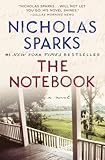
Editors Reads Verdict
The Notebook is the novel that defined Nicholas Sparks's career and the contemporary romance genre he effectively reinvented. Its framing device — an old man reading to his wife in a nursing home — gives the love story a weight and inevitability that transcends sentiment, landing instead in genuine emotional power.
What We Loved
- The nursing home framing device transforms a conventional romance into a meditation on memory and devotion
- The class barrier between Noah and Allie gives the central love story credible structural conflict
- Sparks's prose is clean and precise — emotional without being manipulative in its best passages
- The novel's brevity works in its favour, sustaining a single emotional register without overextending
Minor Drawbacks
- The secondary characters are functional rather than fully developed
- Some readers find the novel's emotional directness too unguarded — it makes no attempt at ironic distance
- The wartime separation sequence is compressed in ways that limit its dramatic potential
Key Takeaways
- → Love expressed through daily devotion over decades outlasts the grand gestures of youth
- → Class barriers in relationships are real obstacles that require active, costly choices to overcome
- → Memory, even when it fails clinically, can be reached through emotional truth
- → The most enduring romantic commitment is not a single decision but a daily practice
| Author | Nicholas Sparks |
|---|---|
| Publisher | Grand Central Publishing |
| Pages | 214 |
| Published | October 1, 1996 |
| Language | English |
| Genre | Romance, Fiction, Contemporary Fiction |
| Difficulty | Beginner |
| Best For | Romance readers looking for an emotionally direct, structurally inventive love story; readers interested in narratives that use ageing and memory as a romantic frame. |
How The Notebook Compares
The Notebook at a glance against 3 similar books readers weigh alongside it.
| Book | Author | Rating | Best for |
|---|---|---|---|
| The Notebook (this book) | Nicholas Sparks | ★ 4.2 | Romance readers looking for an emotionally direct, structurally inventive love |
| It Ends with Us | Colleen Hoover | ★ 4.2 | Readers of contemporary romance who want emotional depth |
| Me Before You | Jojo Moyes | ★ 4.4 | Romance readers who want emotional depth and a willingness to engage with |
| One Day | David Nicholls | ★ 4.3 | Literary fiction readers who want emotional weight in their romance |
A Love Story Inside a Love Story
The Notebook opens in a nursing home. An elderly man named Duke sits with a woman suffering from dementia, and he reads to her from a notebook — the story of two young people in North Carolina in 1946: Noah Calhoun, a local mill worker’s son, and Allie Nelson, the daughter of a wealthy family spending the summer at Wrights Landing.
This framing device is the novel’s structural masterstroke. Every reader understands within the first pages who Duke and his companion are, and this knowledge — that we are watching an old man try to bring his wife back to herself through the story of their own love — gives the romance that follows a weight it could not otherwise carry. The teenage love story is not simply a love story; it is an act of care by an old man who refuses to accept that the woman he loves is gone.
Class, Choice, and the Summer of 1946
The central romance follows the conventions of the genre — boy meets girl, circumstances separate them, years pass, they find their way back — but Sparks grounds the conflict in social specificity. Noah is charming and intelligent and has nothing; Allie is charming and intelligent and has everything her family’s money provides, including a mother who intercepts Noah’s letters for the fourteen years of their separation.
The class barrier is real enough to be structurally convincing. Allie’s parents’ objection to Noah is not irrational within its own social logic; they have a version of their daughter’s future that Noah is simply incompatible with. The novel does not dismiss this logic — it asks what it costs Allie to choose against it, and what it costs Noah to keep the faith for fourteen years without knowing whether his letters were ever received.
Sparks’s Prose and the Courage of Sentimentality
Nicholas Sparks writes with a directness about feeling that the literary culture of the late twentieth century found unfashionable. The Notebook does not approach emotion obliquely or protect itself with irony. It says plainly what it means: that love, sustained over decades through genuine effort and daily choice, is among the most serious things a human life can contain.
This directness divides readers. Those who find sentiment embarrassing will find the novel too unguarded. Those who accept the novel on its own terms — which is to say, those willing to let a simple story mean what it intends to mean — will find it genuinely moving.
The Ending and Its Emotional Logic
The framing device delivers its full weight in the novel’s final pages, when the mechanism of memory and recognition and loss that Sparks has been building resolves. The ending is not a surprise if you have been reading carefully; it is an inevitability, and its power comes not from shock but from the accumulation of everything the framing device has prepared. Duke’s devotion, rendered in those final pages, is the argument the novel has been making from its first sentence.
Our rating: 4.2/5 — A structurally inventive romance whose nursing home framing device elevates a timeless love story into a meditation on memory, devotion, and the daily practice of love.
Reading Guides
- Books Like The Notebook: 11 Love Stories That Will Make You Cry
- Books Like Me Before You: Romance, Disability, and the Love That Changes Everything
- Nicholas Sparks Books in Order: Complete Reading Guide (2026)
- The Fault in Our Stars vs Me Before You: Which Emotional Novel Should You Read First?
The Writing of The Notebook
Nicholas Sparks has described writing The Notebook over approximately six months in 1994-1995, drawing on the relationship of his wife’s grandparents — a couple who had been together for sixty years and whose devotion to each other he witnessed directly. The elderly man’s practice of reading aloud to his wife in her dementia — the specific act that forms the novel’s framing device — was, by Sparks’s account, something he observed rather than invented.
Sparks was twenty-eight when he completed the manuscript, working as a pharmaceutical sales representative in North Carolina. The novel was submitted to literary agents and eventually represented by Theresa Park, who placed it with Warner Books for a first-edition advance of one million dollars — an extraordinary sum for a debut novel. The Notebook was published in October 1996 and became an immediate bestseller, spending twenty-four weeks on the New York Times bestseller list and establishing Sparks as one of the most commercially significant fiction writers in America.
Noah and Allie as Types and Individuals
The central romance follows archetypal lines — the poetic working-class man, the beautiful rich girl, the families’ opposition, the separation and return — but Sparks individuates his characters enough that they feel like people rather than functions. Noah’s articulate love for the natural world — the rivers, the swamp, the physical reality of the Carolina coast — gives him a particularity that purely romantic leads often lack. Allie’s genuine uncertainty — her love for Noah is real, but so is her eventual relationship with Lon Hammond Jr., the decent man her family approves of — gives her more interior complexity than a simple love-triangle structure usually allows.
The fourteen years of Noah’s letters — sent and never received, intercepted by Allie’s mother — raise the question of what faith in a person means when you have no evidence that the faith is reciprocated. Noah waits and rebuilds the house and keeps faith with a love that has no confirmation. Whether this is devotion or delusion is a question the novel is honest enough to acknowledge before resolving it.
Memory and Love in the Framing Device
The nursing home frame does more work than simply providing an emotional context for the romance. It argues something specific about memory and identity: that emotional truth — the love Allie and Noah shared — can persist in the body and in the heart even when the cognitive structures that normally carry memory have been disrupted. Duke’s reading to his companion is not merely an act of tenderness; it is a theory of memory — that the stories we have lived deeply enough can be accessed through the same pathways as direct experience.
This theory is not scientifically defensible in any rigorous sense, but it is the theory the novel needs in order to mean what it intends to mean, and Sparks earns it by spending the entire book building the love story that the frame requires to be real.
The 2004 Film and Its Cultural Legacy
The Notebook was adapted for film in 2004, directed by Nick Cassavetes and starring Ryan Gosling as Noah and Rachel McAdams as Allie. The film became one of the most commercially successful romance films of its decade, earning over $115 million worldwide, and created a cultural legacy — including the famous rain-kiss scene, among the most reproduced images in contemporary romantic cinema — that has made it the defining visual reference point for a generation of romance readers and viewers.
Ryan Gosling and Rachel McAdams became, for several years, the romantic pairing most cited by survey respondents when asked to name the ideal romantic couple, and the film’s cultural saturation has been, if anything, an obstacle to the novel’s independent reputation. The book predates the film by eight years and is, in many respects, the richer work — quieter, more interior, more attentive to the specificity of what Noah and Duke are doing in that nursing home.
Frequently Asked Questions
What is "The Notebook" about?
An elderly man reads aloud to his wife from a notebook — the story of their love across decades, class barriers, and the Second World War. One of the best-selling love stories ever written.
Who should read "The Notebook"?
Romance readers looking for an emotionally direct, structurally inventive love story; readers interested in narratives that use ageing and memory as a romantic frame.
What are the key takeaways from "The Notebook"?
Love expressed through daily devotion over decades outlasts the grand gestures of youth Class barriers in relationships are real obstacles that require active, costly choices to overcome Memory, even when it fails clinically, can be reached through emotional truth The most enduring romantic commitment is not a single decision but a daily practice
Is "The Notebook" worth reading?
The Notebook is the novel that defined Nicholas Sparks's career and the contemporary romance genre he effectively reinvented. Its framing device — an old man reading to his wife in a nursing home — gives the love story a weight and inevitability that transcends sentiment, landing instead in genuine emotional power.
Ready to Read The Notebook?
Check the current price on Amazon.
Check Price on Amazon (paid link)Prices and availability are subject to change. See Amazon for current price.
Review last updated: