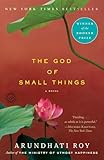
Set in the small town of Ayemenem in Kerala, India, Arundhati Roy's Booker Prize-winning novel traces the lives of fraternal twins Rahel and Estha and the catastrophic consequences of their family's transgression of the Love Laws — the laws that determine who can love whom, and how, and how much.
Three interconnected novellas — City of Glass, Ghosts, and The Locked Room — in which Paul Auster dismantles the detective genre to explore identity, surveillance, authorship, and the unreliability of language, all set in a New York that is both hyper-real and increasingly abstract.
The definitive English anthology of Fernando Pessoa's poetry — including all four major heteronyms (Alberto Caeiro, Ricardo Reis, Álvaro de Campos, and Pessoa himself) in translations by Richard Zenith.
Ernaux's account of her mother — a woman who left the rural working class through running a café-grocery in Normandy, who was proud but not educated, who developed Alzheimer's late in life. Written after her mother's death, it is also a reckoning with class, ambition, and the distance that education creates.
Therese Belivet, a young woman working in a New York department store, meets Carol Aird — older, wealthy, in the midst of a difficult divorce. A love story told with Highsmith's characteristic precision, remarkable for its time because it ends happily. Originally published in 1952 under the pseudonym Claire Morgan as 'The Price of Salt', it was the first novel in American publishing to portray a lesbian relationship without punishment or renunciation. Filmed in 2015 with Cate Blanchett and Rooney Mara.
The conclusion of the Border Trilogy — John Grady Cole and Billy Parham are both working on a New Mexico cattle ranch in the early 1950s when John Grady falls in love with Magdalena, an epileptic prostitute across the border in Juárez.
Two narratives alternate in strictly separate chapters: in one, a 'Calcutec' data processor in near-future Tokyo is drawn into a conspiracy involving encrypted information and subterranean creatures; in the other, a nameless man enters a walled town where residents have no shadow and unicorn skulls must be read at dusk. The two stories converge on questions about consciousness, identity, and what it means to lose the self. Murakami's most structurally ambitious novel.
Ed Kennedy, an underage cab driver with no real ambitions, accidentally stops a bank robbery and begins receiving mysterious playing cards that send him on missions to help — and sometimes confront — strangers in his city.
The conclusion of the MaddAddam Trilogy — survivors of the waterless flood, including the Crakers (Crake's genetically engineered humans), form an uneasy community. Toby must tell the Crakers stories about the old world as they all try to build something new.
Narrated by Stingo, a young Southern writer who moves to Brooklyn in 1947, Sophie's Choice tells the story of his friendship with Sophie Zawistowski — a Polish Catholic Holocaust survivor — and her volatile lover Nathan Landau, and the secret at the heart of Sophie's experience in Auschwitz.
The first volume of Marcel Proust's seven-volume In Search of Lost Time, Swann's Way begins with the narrator's memory of childhood in Combray, triggered by the taste of a madeleine dipped in tea, and extends into a long account of Charles Swann's consuming love for Odette de Crécy.
In 1959, Baptist preacher Nathan Price moves his wife and four daughters from Georgia to the Belgian Congo to serve as a missionary — and the novel, narrated by the five women whose lives he commands, traces the consequences of his rigid certainty against the backdrop of Congolese independence.
The second MaddAddam Trilogy novel — Toby and Ren, former members of the God's Gardeners environmental cult, survive the waterless flood that destroyed civilization. Their stories run parallel to the events of Oryx and Crake, seen from a different angle.
A Tokyo copywriter receives a photograph of a meadow with a strange sheep — one with a star on its back — and is blackmailed by a sinister political operative into finding it. The sheep chase takes him to Hokkaido, to a remote mountain hotel, and into territory that is no longer entirely real. The first major Murakami novel and the beginning of his characteristic blend of the mundane and the uncanny.
In a small Turkish village in Anatolia, Christians and Muslims have lived together for centuries — until WWI, Gallipoli, the Greek-Turkish War, and the population exchanges of the 1920s destroy everything. A companion in scope and grief to Captain Corelli's Mandolin.
Thirteen-year-old Jason Taylor navigates a year of his life in a small Worcestershire village in 1982 — a stammer, a dissolving marriage, and the specific brutality of adolescent social hierarchies.
Set against the upheavals of the Russian Revolution, World War I, and the ensuing Civil War, Doctor Zhivago follows the poet-physician Yuri Zhivago and his consuming love for Larissa Antipova across years of revolution, separation, and survival in a Russia being remade against its own will.
Marco Stanley Fogg arrives at Columbia University in 1965 as an orphan with a modest inheritance, spends it all on books, comes close to starvation, and is gradually drawn into a series of coincidences that reveal his family history across two more generations of lost and wandering American men.
Nora Webster, recently widowed in a small Irish town at the end of the 1960s, rebuilds her life. Not dramatically, not quickly — she takes a clerical job, joins a choral society, gradually reclaims the person she was before her marriage subsumed her.
Mickey Sabbath is 64, a former puppeteer, recently fired, grieving his mistress of thirteen years who has died of cancer. He is considering suicide. The novel is his furious, obscene, grief-saturated attempt to make sense of a life spent in obsessive pursuit of women and pleasure — and the losses that have accumulated.
K. arrives in a village dominated by an enormous castle and attempts to gain access to the authorities who have apparently summoned him as a land surveyor — an attempt that proves endlessly deferred, interrupted, and obscured.
Fabrizio del Dongo, a young Italian nobleman, wanders onto the field of Waterloo (without understanding what is happening), flees various entanglements, falls in love with the actress Marietta, and becomes caught in the political intrigues of the court of Parma, where his aunt, the Duchess Sanseverina, rules through her relationship with the Count.
A radical reimagining of the life of Christ — depicting Jesus as a man torn between the flesh and the spirit, tempted on the cross by a vision of the ordinary human life he might have lived.
Jim Nashe, a former firefighter driving aimlessly through America with his inheritance, picks up a young gambler named Pozzi — and after losing everything in a card game against two eccentric millionaires, they find themselves building a medieval wall in a Pennsylvania field to pay off their debt.