The attempted assassination of Bob Marley in Kingston, Jamaica in December 1976 is the still point around which this vast, polyphonic novel turns — following gang members, CIA operatives, journalists, and ghosts across three decades and multiple continents in dense, overlapping Jamaican voices.
Istanbul, 1591. A master miniaturist has been murdered, and his killer remains hidden among the sultan's circle of illuminators. Told through multiple voices—including a corpse, a dog, a gold coin, and the color red itself—Pamuk's novel is simultaneously a murder mystery, a meditation on art and perspective, and a portrait of the Ottoman world at the threshold of modernity.
In an Italian villa at the end of World War II, a burned and dying man is cared for by a Canadian nurse, visited by a Sikh sapper and a former thief; the mystery of the patient's identity, and what the North African desert did to him, forms the novel's slow-burning centre.
A young British woman visits Crete and discovers her family's connection to Spinalonga — the island across the bay that served as Greece's last functioning leper colony until 1957 — uncovering four generations of love, stigma, and survival.
The fictional autobiography of Sayuri, a geisha in the Gion district of Kyoto, from the 1920s through post-war Japan — a world of rigorous training, patron rivalries, and hidden lives.
On the Greek island of Kefalonia during the Italian and German occupation of World War II, a young woman falls in love with an Italian officer while her fiancé fights with the partisans in the mountains.
Katey Kontent, a secretary from Brooklyn, begins 1938 in New York City with ambition, wit, and $100 in savings. A chance encounter with Tinker Grey sets her on a course through the social strata of Manhattan.
A mysterious death, a missing fortune, and a damaged woman bring twelve men together in a Hokitika hotel on the New Zealand West Coast in 1866. Catton's structurally extraordinary novel uses astrological charts to determine its form, with each section exactly half the length of the previous one.
Tolstoy's vast panorama of Russian society during Napoleon's invasion, following five aristocratic families across fifteen years of war, love, loss, and transformation.
Nicolas Rubashov, a veteran of the Revolution and Old Bolshevik, is arrested by the Party he helped create and subjected to interrogation — a psychological unravelling that forces him to confront the logical endpoint of the ideology he has spent his life serving.
In 17th-century West Africa, Doro — an immortal being who inhabits the bodies of his victims — encounters Anyanwu, a healer with the ability to reshape her own body. Their struggle across centuries is one of the most compelling power dynamics in American literature: desire, domination, and the complicated love between two beings who are only human in the loosest sense.
Based on the true story of Grace Marks, an Irish immigrant in Canada convicted of murdering her employer and his housekeeper in 1843. A young psychiatrist interviews Grace in prison — the novel is his attempt to determine whether she is guilty, innocent, or something more complicated.
Toni Morrison's Pulitzer Prize-winning masterpiece about a former slave haunted by the ghost of her murdered daughter — and the legacy of slavery on the body, memory, and soul.
Bjartur of Summerhouses has spent eighteen years in bondage to pay for his croft. Now free, he will be independent or die. Through drought, famine, debt, and the deaths of those he might have loved, Bjartur's stubbornness is heroic and catastrophic in equal measure. Laxness's masterpiece—the great Icelandic novel, and the reason he won the Nobel Prize.
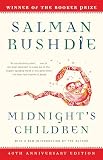
Born at the exact moment of Indian independence, Saleem Sinai discovers he is telepathically connected to the 1,001 children born in the first hour of a free India — and that his own life is fatally, inextricably entwined with the history of his nation.
In 14th-century China, a peasant girl takes on her dead brother's identity and his fate — greatness — and fights her way through the collapse of the Mongol Yuan dynasty to become one of history's most powerful figures.
Shūsaku Endō's masterpiece of faith and doubt. A young Portuguese Jesuit smuggles himself into seventeenth-century Japan during the brutal persecution of Christians, only to confront the apparent silence of God in the face of unbearable suffering.
Iris Chase, elderly and alone, narrates the story of her family's collapse over the 20th century. Nested within her memoir is her dead sister Laura's posthumous novel — and within that, a pulp science-fiction story told by clandestine lovers. The Booker Prize winner 2000.
In Leningrad on the eve of the German invasion in 1941, nineteen-year-old Tatiana falls in love with Alexander — a Red Army officer carrying dangerous secrets — as the 872-day siege closes around the city and its inhabitants.
Based on the true diary of Martha Ballard, this is the story of a colonial midwife in 1789 Maine who investigates a murder — and challenges a justice system that cannot imagine women as witnesses to their own lives.
Gracetown, Florida, 1950. Twelve-year-old Robert Stephens Jr. is sentenced to the Gracetown School for Boys — a Jim Crow-era reform school where boys disappear, ghosts walk the grounds, and the horrors of the institution are both living and dead.
Set in the 1960s Netherlands, The Safekeep follows Isabel, a fastidious, controlled woman whose carefully ordered life begins to unravel when her brother's girlfriend Isabelle arrives and starts disturbing both her possessions and her sense of self — forcing a confrontation with questions about how the Dutch acquired the objects in their homes after World War II.
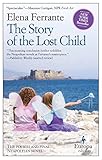
The final volume: Elena and Lila return to Naples in middle age, their friendship tested by a final, devastating loss as the neighbourhood that made them both begins to dissolve.
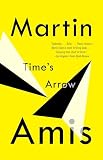
Martin Amis's most formally audacious novel tells the life of a Nazi doctor — including his work at Auschwitz — entirely in reverse chronological order, narrated by a consciousness that inhabits the doctor's body but does not share his knowledge, experiencing time running backwards.