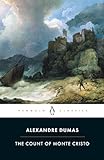
Alexandre Dumas was a prolific nineteenth-century French novelist whose adventure epics, including The Count of Monte Cristo, remain among the most beloved stories ever written.
Alexandre Dumas was one of the most productive and widely read novelists of the nineteenth century, a mixed-race Frenchman whose career spanned decades and produced an astonishing quantity of work, much of it written in collaboration with research assistants. His reputation suffered in his own time from accusations that he was more impresario than author, but the quality of his best work makes those charges seem beside the point.
The Count of Monte Cristo is his masterpiece: the story of Edmond Dantès, wrongly imprisoned in the Château d’If, who escapes after years of confinement and returns as the mysterious Count to exact a patient, elaborate revenge on those who destroyed him. At around 1,200 pages in unabridged editions, it is genuinely epic, and Dumas fills it with incident, intrigue, and an inexhaustible appetite for the pleasures of storytelling. The pacing, the plot machinery, the theatrical reversals — all of it operates at a level of craft that explains why the novel has never been out of print.
The weaknesses are real: characterization is often melodramatic, women are largely decorative or villainous, and the novel’s sprawling middle can test patience. But there is something irresistible about Dumas’s energy and his moral universe — a world where wrongs are righted, patience is rewarded, and the pleasure of the story is unapologetically the point. The Count of Monte Cristo is not subtle, but it is magnificent.
Reading Guides