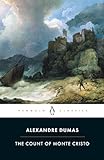
Editors Reads Verdict
The ultimate revenge fantasy executed with mathematical precision and operatic grandeur — Dumas's adventure novel is among the most purely enjoyable long books in the tradition, making its 1276 pages feel inadequate rather than excessive.
What We Loved
- The revenge plot is executed with extraordinary patience and ingenuity — every thread planted early pays off magnificently
- Dantès's transformation from innocent sailor to calculating Count is psychologically convincing across both halves
- The Parisian social scenes are wickedly observed — Dumas understood high society's vanities perfectly
Minor Drawbacks
- Dantès's near-omnipotence in the second half occasionally strains credibility
- Some romantic subplots are formulaic even by nineteenth-century standards
Key Takeaways
- → Revenge executed to perfection is still morally corrosive — the Count's triumph costs him his capacity for ordinary joy
- → Identity is constructed and can be fully reconstructed — Dantès becomes the Count as a deliberate act of will
- → The innocent children of the guilty are revenge's unavoidable moral complication
- → Waiting for the right moment requires a patience that transforms the person who waits
| Author | Alexandre Dumas |
|---|---|
| Publisher | Penguin Classics |
| Pages | 1276 |
| Published | August 28, 1844 |
| Language | English |
| Genre | Adventure, Classic Fiction, Historical Fiction |
How The Count of Monte Cristo Compares
The Count of Monte Cristo at a glance against 3 similar books readers weigh alongside it.
| Book | Author | Rating | Best for |
|---|---|---|---|
| The Count of Monte Cristo (this book) | Alexandre Dumas | ★ 4.8 | Adventure |
| Anna Karenina | Leo Tolstoy | ★ 4.9 | Classic Fiction |
| Crime and Punishment | Fyodor Dostoevsky | ★ 4.8 | Classic Fiction |
| Les Misérables | Victor Hugo | ★ 4.8 | Classic Fiction |
The Count of Monte Cristo Review
There is a particular pleasure in a perfectly executed revenge, and The Count of Monte Cristo provides it at operatic length and with architectural precision. Edmond Dantès — a young sailor on the verge of happiness, with a captaincy ahead and a beloved fiancée waiting — is betrayed by three men driven by jealousy, greed, and political self-interest. He is imprisoned without trial in the Château d’If, where he spends fourteen years.
His escape, his acquisition of a vast buried treasure on the island of Monte Cristo, and his reinvention as the mysterious Count are the novel’s first act. The remaining nine hundred pages are his patient, intricate, devastating revenge on the men who destroyed his life and the families who inherited their guilt.
What distinguishes Dumas from lesser revenge storytellers is patience and ingenuity. The Count does not simply punish his enemies; he engineers situations in which they destroy themselves. He uses wealth, social position, and a forensic knowledge of each adversary’s specific weakness — acquired across years of research — to construct traps set hundreds of pages before they spring. Fernand Mondego falls through his own ambition. Danglars through his greed. Villefort through the family secrets the Count has long known and kept in reserve.
The novel’s seriousness lies in its willingness to complicate the revenge it has spent so long delivering. The Count’s adversaries have children — Valentine, Albert, Eugénie — who are innocent. Dantès, who began as pure justice, begins to feel the cost of his mission. The young sailor who entered the Château d’If full of love and ambition cannot be recovered by wealth or triumph, and the novel’s final pages carry a genuine elegiac weight beneath the satisfaction.
A Conspiracy of Small Men
The betrayal that launches everything is a masterclass in how ordinary human weakness combines into catastrophe. Edmond Dantès is destroyed not by a single villain but by a convergence of petty motives: Danglars, the jealous ship’s purser who covets Edmond’s coming captaincy; Fernand Mondego, the rival who wants his fiancée Mercédès; Caderousse, the drunken neighbor who knows the truth and stays silent; and Villefort, the ambitious magistrate who imprisons an innocent man to protect his own political future. Dumas’s genius is to make each of them comprehensible, even mundane — these are not monsters but careerists and cowards, which is exactly what makes their crime so chilling. The young, trusting Dantès never sees it coming, and his fourteen years in the dungeon of the Château d’If are the price of other men’s small ambitions.
The Making of the Count
The novel’s pivot is Edmond’s prison education at the hands of the Abbé Faria, a fellow prisoner who becomes mentor, surrogate father, and the key to everything. Faria teaches Dantès languages, science, history, and the ways of the world, transforming an unlettered sailor into a polished, formidable mind — and, on his deathbed, reveals the location of a fabulous treasure buried on the island of Monte Cristo. When Dantès escapes and claims the fortune, the transformation is complete: the man who emerges is not Edmond at all but a deliberate, self-authored creation, the cosmopolitan and seemingly omniscient Count of Monte Cristo. This act of total self-reinvention is one of literature’s most thrilling, and it carries the novel’s deepest theme — that identity is something constructed by will, and that the Count is as much Edmond’s creation as his enemies’ destruction.
Revenge as Divine Providence
What elevates the Count above a mere avenger is his conviction that he is not taking personal vengeance but acting as the instrument of Providence — God’s appointed agent of justice on earth. He does not simply kill his enemies; he becomes a kind of fate, engineering elaborate situations in which each man is destroyed by his own besetting sin, his greed or ambition or buried guilt turned into the weapon of his ruin. This theatrical, almost supernatural patience is the source of the novel’s intoxicating pleasure: traps are laid hundreds of pages before they spring, and every detail planted in the early chapters returns to devastating effect. It is plotting of operatic grandeur and mathematical precision, and few novels have ever been so satisfyingly constructed.
Wait and Hope
Yet Dumas refuses to let the revenge be uncomplicated, and that refusal is what makes the novel endure. As the Count’s machinations begin to harm the innocent — the children and dependents of the guilty — he is forced to confront the corrosive cost of his mission, the way perfect vengeance has hollowed out the loving young man he once was. The novel’s famous final counsel, that all human wisdom is contained in two words — wait and hope — arrives as a hard-won moral resolution, an acknowledgment that even a triumphant revenge cannot restore what was lost, and that life must be lived forward rather than only avenged. Beneath the swashbuckling spectacle runs this genuine seriousness about justice, mercy, and the limits of retribution.
Why It Endures
The Count of Monte Cristo remains one of the most purely entertaining long novels ever written — a 1,200-page epic that reads faster than books a quarter its length, propelled by cliffhangers, disguises, poisonings, duels, and reversals. It has been adapted countless times for stage and screen precisely because its central fantasy is so universal and so satisfying: the wronged innocent who returns, transformed and unstoppable, to set the world right. That Dumas married this irresistible plot to real psychological depth and moral complexity is why the book has never gone out of print or fashion. It is the rare classic that is also a page-turner, and the rare adventure that is also a meditation on the soul.
Our rating: 4.8/5 — The greatest revenge story ever told, and the most satisfying long adventure novel in the tradition.
Reading Guides
- Books Like The Count of Monte Cristo: 11 Epic Adventure and Revenge Classics
- Books Like The Name of the Rose: Medieval Mystery, Semiotics, and the Library as Labyrinth
- Books Like The Shadow of the Wind: Mystery, Books, and the Ghosts of Barcelona
- Best Books of All Time: 30 Titles Every Reader Should Know (2026)
Frequently Asked Questions
What is "The Count of Monte Cristo" about?
Edmond Dantès is wrongly imprisoned, escapes after fourteen years, acquires a vast fortune, and returns to Paris as the mysterious Count of Monte Cristo to execute a perfectly planned revenge on those who destroyed his life. Dumas's epic is the greatest revenge story ever told — intricate, theatrical, and utterly compelling.
What are the key takeaways from "The Count of Monte Cristo"?
Revenge executed to perfection is still morally corrosive — the Count's triumph costs him his capacity for ordinary joy Identity is constructed and can be fully reconstructed — Dantès becomes the Count as a deliberate act of will The innocent children of the guilty are revenge's unavoidable moral complication Waiting for the right moment requires a patience that transforms the person who waits
Is "The Count of Monte Cristo" worth reading?
The ultimate revenge fantasy executed with mathematical precision and operatic grandeur — Dumas's adventure novel is among the most purely enjoyable long books in the tradition, making its 1276 pages feel inadequate rather than excessive.
Ready to Read The Count of Monte Cristo?
Check the current price on Amazon.
Check Price on Amazon (paid link)Prices and availability are subject to change. See Amazon for current price.
Review last updated: