Best Books Set in Paris: Essential Reading List
The best books set in Paris — from A Moveable Feast and Les Misérables to The Count of Monte Cristo and A Tale of Two Cities. Literature's greatest city in its greatest books.

Paris has been imagined in literature more completely than any other city — by the French novelists who lived there and used it as the central subject (Hugo, Zola, Balzac), by the American and British expatriates who went there between the wars and found it the ideal context for their ambitions (Hemingway, Fitzgerald, Gertrude Stein), and by writers from all traditions who have used its specific geography, history, and mythology as the setting for stories that could only be told there.
The books below range from Hugo’s nineteenth-century city of barricades and sewers to Hemingway’s 1920s city of cafés and literary ambition, from the Revolution of A Tale of Two Cities to the contemporary thriller that uses the city as its stage.
The Great Parisian Novels
Les Misérables — Victor Hugo (1862)
The greatest novel set in Paris. Hugo uses the city — its sewers, its barricades, its slums, its drawing rooms — as the geography through which Jean Valjean’s moral journey and the historical drama of the 1832 June Rebellion are enacted. The long chapters about the Paris sewer system, which irritate some readers, were Hugo’s most loving and comprehensive portrait of the city’s hidden physical reality.
Hugo was writing about a Paris that was being transformed — Haussmann was demolishing the medieval neighbourhoods and building the boulevards — and his novel is partly an elegy for the city that was disappearing even as he described it.
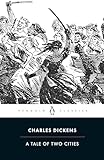
A Tale of Two Cities — Charles Dickens (1859)
“It was the best of times, it was the worst of times” — Dickens opens with his most famous sentence and his most dramatic setting: Paris during the French Revolution. The novel moves between London and Paris, using both cities as contrasting centres of order and chaos, safety and terror. The storming of the Bastille, the knitting women counting heads at the guillotine, Sydney Carton’s sacrifice at the novel’s close: Dickens renders the Terror with both historical accuracy and narrative intensity.
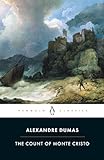
The Count of Monte Cristo — Alexandre Dumas (1844)
Paris is the stage for Edmond Dantès’s elaborate revenge after his escape from imprisonment and his acquisition of a fortune. Dumas renders Parisian high society of the 1830s — its balls, its politics, its corruption — with a novelist’s eye for detail and a storyteller’s instinct for pace. The novel is the foundational revenge narrative in Western literature, and the Paris sections, which take up more than half of its considerable length, are among the most pleasurable reading in nineteenth-century fiction.
Literary Paris: The Expatriate Memoirs
A Moveable Feast — Ernest Hemingway (1964)
Hemingway’s posthumous memoir of his years in Paris in the early 1920s — when he was young, married to Hadley, poor, and writing seriously for the first time. The Paris he describes — cafés, cheap wine, the Luxembourg Gardens, the races at Auteuil — became one of the defining literary images of the city. His portraits of Gertrude Stein, Ezra Pound, and Scott Fitzgerald are acute and occasionally cruel; his account of his own ambitions and his marriage’s eventual dissolution is rendered with the specific kind of retrospective honesty that comes from writing long after the fact.
The Sun Also Rises — Ernest Hemingway (1926)
Hemingway’s first major novel, opening in the cafés and restaurants of 1920s Paris before moving to Pamplona for the running of the bulls. The Paris sections — Jake Barnes and Brett Ashley’s circle of expatriates, the specific geography of Montparnasse — established an image of the Lost Generation in Paris that has shaped the city’s cultural mythology ever since. The novel’s prose style is the city as Hemingway wanted to see it: stripped of sentiment, precise in its detail, honest about what the war had done to a generation’s capacity for happiness.
Contemporary Paris
Down and Out in Paris and London — George Orwell (1933)
Orwell’s account of his years of poverty in Paris — washing dishes in restaurant kitchens, living in cheap hotels in the Latin Quarter — is the least romantic of all literary Paris accounts. Orwell describes the city’s underside with documentary precision: the hierarchy of the restaurant kitchen (with its French vocabulary of insults), the specific calculations involved in managing extreme poverty, the community among the city’s disposable workers. Essential counterweight to the Hemingway image.
The City of Myth and Imagination
No city has accumulated a richer mythology in the literary imagination than Paris, and to read the fiction set there is to encounter not merely a place but an idea — the Paris of romance, art, revolution, and bohemian freedom that exists as powerfully in the imagination as on any map, and that the literature both draws upon and perpetuates. Paris occupies a unique position in the cultural imagination of the world, a city freighted with associations and meanings that have accumulated over centuries: the capital of art and literature, the city of lovers and romance, the home of revolution and radical ideas, the haven of bohemians and artists, the very emblem of beauty, sophistication, and the cultivated life. This mythologized Paris, the Paris of the imagination, is itself a powerful presence in the fiction set there, for writers cannot approach the city innocent of its accumulated meanings, and the Paris of literature is always to some degree the Paris of myth, shaped by the vast accumulation of romance and significance that the city has gathered. The best fiction set in Paris engages knowingly with this mythology, sometimes affirming and sometimes complicating it, but always aware that to write about Paris is to write about an idea as much as a place, a city that exists in the imagination as a symbol of art, love, freedom, and beauty. For the reader, this mythic dimension is a large part of the appeal, the chance to enter the legendary Paris of the cultural imagination, to inhabit the city of romance and art and revolution that has captivated the world for centuries, and to experience, through fiction, the Paris that exists as much in dream as in reality. The literature set in Paris offers entry into this mythologized city, and the encounter with the Paris of imagination is among the distinctive pleasures it provides.
Beauty and Its Shadows
The richest literature set in Paris refuses to rest in the city’s celebrated beauty and romance, exploring instead the shadows beneath the glittering surface — the poverty, the suffering, the darkness and disillusionment that coexist with the splendor, and the gap between the mythic Paris of romance and the real city of struggle and hardship. For all its associations with beauty, art, and romance, Paris has always been also a city of stark contrasts, where wealth and poverty exist side by side, where the glamour of the celebrated districts gives way to the hardship of the forgotten ones, and where the romantic ideal of the city is shadowed by the harsh realities of those who struggle within it. The best fiction set in Paris attends to these shadows as well as to the light, refusing the sentimental version of the city in favor of a fuller and more honest portrait that encompasses its darkness as well as its beauty. This fiction explores the Paris of the poor and the struggling as well as the Paris of the privileged and the artistic, the disillusionment that can follow the romantic dream, the suffering that the glittering surface conceals, and the gap between the mythic city of the imagination and the real city of human struggle. This attention to the shadows gives the literature of Paris its depth and its honesty, lifting it above mere romance into a fuller engagement with the city’s complex reality, and revealing a Paris more interesting and more true than the simplified ideal of popular imagination. The contrast between beauty and its shadows, between the celebrated surface and the darker depths, is one of the city’s most powerful literary subjects, and the best fiction set in Paris explores it with a clarity that enriches and complicates the mythic city, offering a portrait that honors both the genuine beauty and the genuine hardship of one of the world’s most storied places.
A City Through Many Eyes
One of the distinctive features of the literature set in Paris, and a source of its particular richness, is the remarkable variety of perspectives from which the city has been seen and written — by natives and foreigners, by the privileged and the struggling, by writers of every nationality and sensibility drawn to the city across the centuries — so that the Paris of literature is a city refracted through countless different eyes, each revealing a different facet of an inexhaustible subject. Few cities have drawn so many writers from so many places, and the literature of Paris is consequently a literature of many perspectives, encompassing the intimate knowledge of those who call the city home and the heightened perception of the foreigners and expatriates who have flocked to it, the view from the celebrated districts and the view from the forgotten ones, and the visions of writers from every corner of the world who found in Paris a subject and an inspiration. This multiplicity of perspectives is one of the great strengths of the literature set in Paris, for the city is too vast and various to be captured from any single vantage, and the accumulation of so many different views produces a portrait of extraordinary richness and dimension. The expatriate writers, in particular, have contributed memorably to the literature of Paris, bringing to the city the heightened awareness of the outsider, the romance of the foreigner’s encounter with a legendary place, and the perspective of those for whom Paris represented liberation, inspiration, or escape. Reading across this literature, one encounters not a single Paris but many, the city seen and reimagined through countless different eyes, each revealing something the others miss, and together composing a portrait of a place that no single perspective could capture. This refraction of Paris through many eyes is among the deepest pleasures the literature of the city affords, offering the reader not one Paris but a multitude, and revealing the inexhaustible richness of a city that has captivated the imagination of the world.
Reading Order
Literary Paris: A Moveable Feast → Down and Out in Paris and London → The Sun Also Rises.
Historical Paris: A Tale of Two Cities → Les Misérables → The Count of Monte Cristo.
Comprehensive: Les Misérables → A Tale of Two Cities → The Count of Monte Cristo → A Moveable Feast.
Frequently Asked Questions
What is the best novel set in Paris?
Les Misérables by Victor Hugo is the greatest novel set in Paris — its use of Haussmann's Paris (the sewers, the barricades, the slums) is the most complete rendering of the city as a physical and social reality in literature. A Moveable Feast by Ernest Hemingway is the best memoir of literary Paris — the account of his years in 1920s Paris with Hadley, in the company of Gertrude Stein, Scott Fitzgerald, Ezra Pound, and the other expatriates who made the city a literary capital. A Tale of Two Cities uses Paris at its most historically charged — during the Revolution — to examine justice, sacrifice, and the violence of political extremity.
What is A Moveable Feast about?
A Moveable Feast (published posthumously in 1964) is Hemingway's memoir of his years in Paris in the early 1920s — when he was a young, poor journalist married to Hadley, writing fiction in cafés and sending it out to little magazines. It is also portraits of the other writers he knew: Gertrude Stein, Ezra Pound, Scott Fitzgerald (including the famous account of Fitzgerald's insecurity about his size), and others. The Paris it describes — cheap wine, good conversation, the Luxembourg Gardens, the races at Auteuil — is one of the most influential literary images of a city in the twentieth century.
What novels are set in Paris during World War II?
Suite Française by Irène Némirovsky is the most important novel set in occupied France — Némirovsky began it in 1940 and was arrested and deported to Auschwitz, where she died, before completing it. The manuscript was discovered by her daughter decades later. Down and Out in Paris and London by George Orwell is set in Paris in the years before WWII, among the dishwashers and homeless men of the city's underside. All Quiet on the Western Front, while set primarily in the trenches, includes passages in Paris that illuminate the war's specific geography.
What books about Paris should I read before visiting?
A Moveable Feast gives the richest literary sense of what Paris felt like in its great expatriate period. Les Misérables, despite its length, is worth reading for the specific geography it inhabits — many of its locations (the Place de la Bastille, the Luxembourg Gardens, the sewers) are still visitable. Down and Out in Paris and London by Orwell gives the least touristic view of the city. For contemporary Paris, The Paris Apartment by Lucy Foley is a stylish thriller that uses the city effectively.