Best Books About Ambition and the American Dream
The best books about ambition and the American Dream — from The Great Gatsby and Revolutionary Road to Babbitt and The Corrections. Essential reading on ambition and failure.
American literature is, more than any other national literature, obsessed with ambition and the Dream — the belief that self-invention is possible, that effort and will can produce any outcome, and the specific American catastrophe that results when the Dream fails or, worse, when it is achieved and found wanting. The novels below are the essential texts on ambition, success, failure, and what we sacrifice on the way to what we think we want.
The American Dream and Its Failure
The Great Gatsby — F. Scott Fitzgerald (1925)
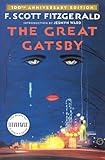
The essential text on American ambition — Jay Gatsby’s self-invention, his attempt to buy back the past, and his destruction by the very class he has tried to enter. Fitzgerald’s argument (the American Dream is founded on a fraudulent promise; those who believe it most completely are destroyed by it) is made in prose of extraordinary compression and beauty. At 180 pages, the most concentrated major American novel.
Babbitt — Sinclair Lewis (1922)
The satirical companion to Gatsby — George Babbitt has achieved what Gatsby wants (wealth, respectability, a comfortable position in his community), and Lewis’s portrait of what that achievement actually feels like from the inside is the most sustained critique of the American commercial dream. The novel gave the English language a word (‘babbitt’) for the conformist who has traded inner life for social acceptance.
Revolutionary Road — Richard Yates (1961)
The most devastating account of the gap between self-image and reality — Frank and April Wheeler believe they are superior to the life they are living, and that belief, without the substance to support it, destroys them. Yates’s argument is about the specific American delusion of exceptionalism: the conviction that you are different from the people around you, and what happens when the life around you turns out to be the life you’re actually living.
Ambition and Its Costs
The Corrections — Jonathan Franzen (2001)
Franzen’s portrait of three adult children each navigating the gap between their ambitions and their reality — the banker who is secretly miserable, the academic who has failed, the chef who is succeeding but at a cost she can’t yet calculate. The most contemporary novel in this list and the one that most directly addresses the specific version of the American gap between aspiration and achievement that exists in the early twenty-first century.
Sabbath’s Theater — Philip Roth (1995)
The most extreme novel in this list — Mickey Sabbath, a sixty-four-year-old puppeteer whose life has been a sustained assault on convention (sexual, professional, moral), confronting the consequences of a life spent in pursuit of freedom without accommodation. Roth’s novel asks what happens when you reject the ambitions of respectability — family, career, social position — entirely, and pursue only the life of the body and the theatre. The most challenging in this list; read after the others.
The Great American Subject
No theme is more central to American literature than ambition, and the reason is woven into the national myth itself. The American Dream promises what few cultures have dared to promise so explicitly: that anyone, through effort and will, can remake themselves into anything, that birth is not destiny and the self can be invented from scratch. This promise is intoxicating, and it is also a perfect engine for tragedy, because a culture that tells everyone they can have everything has no consolation to offer those who fail — and, more disturbingly, none to offer those who succeed and find the prize empty. The novels on this list are the great anatomies of this peculiarly American predicament. Gatsby believes the Dream completely and is destroyed by his belief; Babbitt achieves it fully and discovers the achievement is ash; the Wheelers of Revolutionary Road are destroyed not by failure but by the delusion of their own exceptionalism. What unites these books is their refusal of the comforting story. They take seriously the promise of self-invention precisely in order to expose its cost, and in doing so they have produced the most penetrating critique of American aspiration available anywhere. To read them together is to receive a sustained education in what the Dream demands and what it withholds.
Success as Tragedy
The most distinctive move these novels make — the thing that separates serious literature about ambition from motivational cliché — is their insistence that achievement is often more dangerous than failure. The conventional ambition narrative treats success as the happy ending; these books treat it as the beginning of the real catastrophe. Babbitt has everything he was supposed to want, and Lewis’s genius is to show how the having of it has hollowed him into a creature so conformist his very name became a word for the type. Franzen’s The Corrections dissects a family in which the markers of success — the banking career, the academic post, the rising chef — turn out to conceal misery, failure, and unsustainable cost. Even Gatsby’s tragedy is not that he fails to win Daisy but that the dream of her, the organizing fantasy of his entire self-invented life, cannot survive contact with the reality. This is the deep insight the tradition keeps circling: that ambition aimed at the wrong object, or pursued without examination of why, produces its bitterest fruit at the moment of apparent triumph. The books warn not against wanting, but against wanting the prescribed things without ever asking whether they are worth the self you spend to get them.
Reading the Tradition Across a Century
One of the pleasures of this particular list is watching a single national obsession evolve across nearly a hundred years, from the Jazz Age to the new millennium, each generation finding fresh forms for the same anxiety. Fitzgerald and Lewis write in the 1920s, when the modern American Dream of consumer prosperity and self-fashioning was taking its recognizable shape, and their novels capture both its seductive glamour and its early discontents. Yates, writing in 1961, relocates the drama to the postwar suburb, where material success has been achieved on a mass scale and the resulting spiritual emptiness becomes a new kind of subject — the conformist comfort that the counterculture would soon revolt against. Roth’s Sabbath’s Theater represents the most radical response, the total rejection of respectable ambition in favour of appetite and transgression, testing what is left of a life that refuses the entire bargain. And Franzen’s The Corrections brings the inquiry into the anxious, therapeutic, globalized early twenty-first century, where the gap between aspiration and reality has acquired its own contemporary textures. Read in sequence, the books form a continuous conversation across the American century, demonstrating that while the specific furniture of the Dream changes — the car, the suburb, the career, the curated self — the underlying tension between what we are promised and what we receive remains the country’s most durable literary theme.
Reading Order
Start accessible: The Great Gatsby → Babbitt → Revolutionary Road.
The full American critique: Babbitt → The Great Gatsby → Revolutionary Road → The Corrections.
Most demanding: The Great Gatsby → Revolutionary Road → Sabbath’s Theater.
Frequently Asked Questions
What is the best novel about ambition?
The Great Gatsby (1925) by F. Scott Fitzgerald is the most concentrated statement about American ambition and its limits — Jay Gatsby's attempt to recreate the past, to buy back the love of Daisy Buchanan through wealth, is the founding myth of American self-invention and its fraudulence. Revolutionary Road (1961) by Richard Yates is the most direct confrontation with the gap between who people believe themselves to be and who they actually are — Frank and April Wheeler's conviction of their own superiority to the suburban life they inhabit, and the catastrophe that follows. Both are essential for any reader interested in what ambition costs.
What is The Great Gatsby about?
The Great Gatsby (1925) by F. Scott Fitzgerald follows Jay Gatsby — who has reinvented himself from obscure poverty into fabulous wealth — and his attempt to recover his relationship with Daisy Buchanan, with whom he was in love before the war. Nick Carraway, Gatsby's neighbour and Daisy's cousin, observes the attempt and its failure. Fitzgerald's argument is about the American Dream: its seductiveness, its fraudulence, and the violence it conceals. The famous ending — 'So we beat on, boats against the current, borne back ceaselessly into the past' — is the most precise statement of the Dream's impossibility in American literature.
What is The Corrections about?
The Corrections (2001) by Jonathan Franzen follows three adult children of Alfred and Enid Lambert — Alfred's Parkinson's disease is advancing, Enid wants one last Christmas together, and the children (Gary, a banker; Chip, a failed academic; Denise, a chef) are each navigating their own versions of the gap between what they intended to be and what they have become. Franzen's novel is about the specifically American version of this gap: the belief that ambition and effort should be sufficient to produce the life you imagined, and the specific failure that results when they are not.
What does Babbitt say about American ambition?
Babbitt (1922) by Sinclair Lewis is the most sustained satirical portrait of American commercial ambition — George F. Babbitt, a real estate agent in Zenith, has achieved the success his culture defines as success (a house, a car, a club membership, a respected position), and is entirely miserable. Lewis's argument is that the American Dream, when achieved, reveals itself as a trap: the successful person is imprisoned by the social conformity that success requires. Babbitt is the original American novel about the emptiness at the heart of achieving what you were supposed to want.