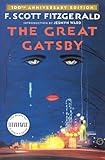
Editors Reads Verdict
In under 200 pages, Fitzgerald anatomises an era, a society, and a fundamental human illusion with prose that has never been equalled, making The Great Gatsby the most formally perfect American novel ever written.
What We Loved
- Prose of unmatched beauty and compression — every sentence earns its place
- The critique of the American Dream is more precise and devastating than any sociological study
- Nick Carraway is the perfect narrator — morally compromised but ultimately honest
Minor Drawbacks
- The characters are intentionally shallow — some readers want more psychological depth
- The Jazz Age specificity can feel distant to contemporary readers
Key Takeaways
- → The green light represents the perpetual American condition of yearning toward something just out of reach
- → Old money and new money are separated by a gulf that wealth alone cannot cross
- → The American Dream is both a genuine aspiration and a systematic deception
- → The past cannot be repeated — Gatsby's fatal error is believing otherwise
| Author | F. Scott Fitzgerald |
|---|---|
| Publisher | Scribner |
| Pages | 180 |
| Published | April 10, 1925 |
| Language | English |
| Genre | Classic Fiction, American Literature, Literary Fiction |
How The Great Gatsby Compares
The Great Gatsby at a glance against 3 similar books readers weigh alongside it.
| Book | Author | Rating | Best for |
|---|---|---|---|
| The Great Gatsby (this book) | F. Scott Fitzgerald | ★ 4.7 | Classic Fiction |
| Adventures of Huckleberry Finn | Mark Twain | ★ 4.7 | Classic Fiction |
| Little Women | Louisa May Alcott | ★ 4.8 | Classic Fiction |
| Moby-Dick | Herman Melville | ★ 4.6 | Classic Fiction |
The Great Gatsby Review
F. Scott Fitzgerald was twenty-eight years old when The Great Gatsby appeared in 1925. It sold modestly, was largely forgotten, and was rediscovered after his death. It is now widely considered the most formally perfect American novel ever written — and perhaps the most perfectly realised American fable.
In 180 pages, Fitzgerald captures the Jazz Age of the early 1920s, dissects the American Dream with surgical precision, and produces prose of such concentrated beauty that every sentence feels load-bearing. The brevity is not a limitation but an achievement. The novel contains precisely what it needs and nothing else.
The story is deceptively simple: James Gatz of North Dakota has reinvented himself as Jay Gatsby, master of a West Egg mansion, host of legendary parties, possessor of a mysterious fortune. His ambition narrows to a single point — Daisy Buchanan, his lost love across the water, old-money East Egg embodied. Nick Carraway, Daisy’s cousin and Gatsby’s neighbour, observes the attempt and its consequences.
Fitzgerald’s central symbol — the green light at the end of Daisy’s dock, visible from Gatsby’s lawn — is the most famous image in American literature: the perpetual yearning toward something perpetually just out of reach. Gatsby believes that sufficient wealth and will can close that distance. He is wrong. What separates old money from new is not the amount but the ease — the untested confidence of those who have always had it — and this is not purchasable.
Nick’s verdict on Tom and Daisy — “They were careless people… they smashed up things and creatures and then retreated back into their money” — is the novel’s most devastating sentence and its moral centre. The Great Gatsby entered the US public domain on January 1, 2021, and its critique of American aspiration remains as urgent as ever.
Fitzgerald’s Sentences
The reputation of The Great Gatsby rests as much on its prose as on its plot. Fitzgerald writes sentences of a lyric compression almost no American novelist has matched — the famous closing lines about boats borne back ceaselessly into the past, the green light, the “fresh, green breast of the new world.” He gives Nick a voice capable of both irony and rapture, able to puncture the Buchanans’ carelessness in one paragraph and ache with longing in the next. The brevity of the book is inseparable from this style: every image is doing symbolic work, every scene is weighted, nothing is inert. It is the rare novel in which one could quote almost any page as evidence of why it endures, and the rare American classic that is genuinely short enough to read in a sitting and dense enough to reward a lifetime of rereading.
The Valley of Ashes and the Eyes of God
Between the glittering Eggs and Manhattan lies the Valley of Ashes — a grey industrial wasteland presided over by the faded billboard eyes of Doctor T. J. Eckleburg, an oculist’s advertisement that the grieving George Wilson comes to mistake for the eyes of God. It is here, among the people the Jazz Age leaves behind, that the novel’s violence finally erupts. Fitzgerald uses the geography as moral diagram: the careless rich at the bright edges, the discarded poor in the ash heaps between, and a watching, abandoned deity who intervenes in nothing. The American Dream the novel anatomizes is revealed as a single machine that produces both Gatsby’s mansion and the valley in the same motion — the splendour and the waste are not opposites but products of the same engine.
Nick Carraway, Compromised Witness
Nick presents himself as honest, tolerant, and reserved — “one of the few honest people I have ever known” — and the novel quietly invites us to doubt him. He is charmed by Gatsby even as he disapproves; he is complicit in the affair he narrates; he judges the Buchanans’ carelessness while remaining, himself, a spectator who acts too late. This unreliability is the source of much of the book’s richness. The story we receive is filtered through a man with his own snobberies and evasions, and part of the pleasure of rereading is registering how much Nick’s admiration shapes — and possibly distorts — the legend of Gatsby he hands down to us. The “great” of the title is, finally, Nick’s word, and we are never entirely sure how much irony it carries.
Why It Endures
Largely ignored in Fitzgerald’s lifetime, The Great Gatsby was revived after his death — its distribution to American servicemen during the Second World War helped seed its reputation — and has since become perhaps the most taught novel in American schools and the subject of repeated film adaptation. Its entry into the public domain in 2021 has only multiplied its afterlives. The reason for its permanence is that its subject never dates: the gap between American promise and American reality, the seductive belief that the self can be remade through money, and the discovery that the past cannot be repeated, however hard one rows against the current.
The Jazz Age, Captured Whole
More than any other novel, The Great Gatsby fixed the popular image of the 1920s — the bootleg gin, the jazz, the reckless parties, the new money colliding with old. Fitzgerald, who coined the term “the Jazz Age,” wrote from inside the decade’s glamour and its disillusion at once. Gatsby’s parties, with their uninvited crowds and casual destruction, are rendered with a fascination that never quite hides the emptiness beneath; the morning after is always implied in the revelry. The novel’s genius is to make a specific historical moment — Prohibition-era America at the height of its boom, a few years before the crash that would expose the whole illusion — stand for something permanent about the country’s appetite for reinvention and its blindness to the human cost. The party and the hangover are the same story.
Our rating: 4.9/5 — The most formally perfect American novel: a brief, flawless fable of aspiration, class, and self-invention whose every sentence is load-bearing and whose critique of the American Dream has never lost its urgency.
Reading Guides
- Books Like The Great Gatsby: The American Dream, Class, and Longing
- Books Like Anna Karenina: Society, Passion, and the Cost of Following Your Heart
- Books Like Don Quixote: Idealism, Illusion, and the Madness of Literature
- Books Like Everything Is Illuminated: Memory, the Holocaust, and Comedy as a Vehicle for Horror
- Books Like Great Expectations: Class, Self-Invention, and the Education of Pip
- Books Like Interview with the Vampire: Gothic Horror, Immortality, and the Vampire
- Books Like Rebecca: Gothic Suspense, Obsession, and the Shadow of the Past
Frequently Asked Questions
What is "The Great Gatsby" about?
Jay Gatsby's lavish parties, his green light across the bay, and his impossible dream of recapturing the past define Fitzgerald's short, perfect novel about the American Dream's fatal beauty — the defining American novel of the twentieth century.
What are the key takeaways from "The Great Gatsby"?
The green light represents the perpetual American condition of yearning toward something just out of reach Old money and new money are separated by a gulf that wealth alone cannot cross The American Dream is both a genuine aspiration and a systematic deception The past cannot be repeated — Gatsby's fatal error is believing otherwise
Is "The Great Gatsby" worth reading?
In under 200 pages, Fitzgerald anatomises an era, a society, and a fundamental human illusion with prose that has never been equalled, making The Great Gatsby the most formally perfect American novel ever written.
Ready to Read The Great Gatsby?
Check the current price on Amazon.
Check Price on Amazon (paid link)Prices and availability are subject to change. See Amazon for current price.
Review last updated: