Best Books About Obsession: Novels of Fixation, Desire, and Compulsion
The best novels about obsession — from Moby-Dick to Lolita to Rebecca. Books that explore fixation, unrequited passion, and the minds that cannot let go.

Obsession is literature’s great engine: it drives characters past every reasonable limit, strips away the social compromises that conceal inner life, and generates the escalating pressure that makes narrative impossible to put down. The greatest novels of obsession — from Ahab’s pursuit of the white whale to Humbert Humbert’s ruin of a child to Heathcliff’s decades-long revenge on the world that separated him from Catherine — are not merely exciting but genuinely disturbing, because they show us minds from the inside that we would not choose to inhabit, and in doing so, make us ask what separates the obsessed from the merely passionate.
Moby-Dick — Herman Melville (1851)
The supreme novel of obsession — and one of the supreme novels, full stop. Captain Ahab of the whaling ship Pequod has lost his leg to the white whale Moby Dick and has reorganized his entire life, and the lives of his crew, around the single purpose of finding and killing it. The novel is simultaneously a sea adventure, an encyclopaedia of whaling, a philosophical poem about the nature of evil and the limits of human will, and a sustained portrait of what it means to consecrate a life to a single goal regardless of cost.
Ahab’s obsession is magnificent and terrible in equal measure — he is the most complete portrait in fiction of a man who has chosen an idea over a life.
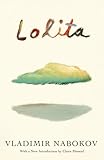
Lolita — Vladimir Nabokov (1955)
The most uncomfortable great novel in English — narrated by Humbert Humbert, a middle-aged European intellectual whose obsession with ‘nymphets’ (pre-adolescent girls) leads him to abuse, manipulate, and destroy Dolores Haze, the twelve-year-old American girl he calls Lolita. Nabokov gives Humbert the most beautiful prose voice in twentieth-century fiction and uses it to explore the gap between self-justifying aestheticism and moral reality. The obsessed narrator presents himself as a lover; the novel shows us what he is.
Not for everyone, and rightly so. For those who can read it: the most technically perfect novel in English, and the most disturbing.
Rebecca — Daphne du Maurier (1938)
The essential novel of obsession-with-the-dead: the unnamed narrator of Rebecca is haunted by Maxim de Winter’s first wife — beautiful, brilliant, universally adored — who has been dead for a year before the novel begins. The dead Rebecca possesses the living narrator, the housekeeper Mrs. Danvers, and the house Manderley itself. It is du Maurier’s great portrait of how fixation on what we cannot have (the dead cannot be competed with, cannot be surpassed) can destroy what we do have.
Equally a novel about how an obsessed person (Mrs. Danvers) can impose her obsession on others.
Wuthering Heights — Emily Brontë (1847)
The greatest novel of romantic obsession — and one of the strangest and most violent. Heathcliff’s love for Catherine Earnshaw is not dissolved by her death; it intensifies into a three-decade campaign of revenge against the families she preferred over him, destroying her daughter’s happiness and her nephew’s inheritance in pursuit of a settling of scores that can never be settled because Catherine is dead. Brontë does not romanticize what she depicts: Heathcliff’s obsession is also cruelty, and the novel’s frame narrative makes it impossible to see him simply as a romantic hero.
One of the most psychologically honest accounts of what unrequited obsessive love actually does to a person.
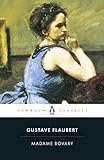
Madame Bovary — Gustave Flaubert (1857)
Emma Bovary’s obsession is with a life she cannot have — the romantic, passionate, aesthetically rich existence she absorbed from sentimental novels and which her actual life (a country doctor’s wife in provincial Normandy) denies her at every point. Her fixation on romance as an idea leads her to two affairs, ruinous debt, systematic deception of her husband, and ultimate self-destruction. Flaubert renders her interior with merciless precision, neither condemning her nor forgiving her, and makes her simultaneously ridiculous and sympathetic — which is his greatest achievement.
The foundational novel of literary realism, and the definitive account of how the books we read can colonize our desire.
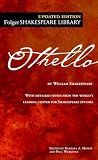
Othello — William Shakespeare (1603)
Shakespeare’s most concentrated portrait of jealousy as obsession: Iago plants the idea of Desdemona’s infidelity in Othello’s mind and then watches as the idea colonizes everything else — Othello’s love for Desdemona, his military reputation, his capacity for rational thought — until nothing remains but the demand to destroy what he has been taught to see as corrupt. The play is not really about jealousy; it is about the mind’s susceptibility to a compelling narrative, and how an obsessive idea, once admitted, restructures reality around itself.
The most claustrophobic of Shakespeare’s tragedies.
Perfume — Patrick Süskind (1985)
The most formally audacious obsession novel of the twentieth century: Jean-Baptiste Grenouille, born in eighteenth-century Paris with no body odour of his own, becomes a perfumer of transcendent genius and develops an obsession with capturing and preserving the scents of young women. The novel is a satire of Romanticism’s cult of the artist-genius that is also genuinely disturbing — Grenouille’s murders are described with the cold precision of a perfumer’s technical notes — and it poses the question of whether extraordinary aesthetic gifts can be separated from the psychology that accompanies them.
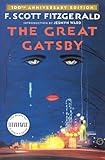
The Great Gatsby — F. Scott Fitzgerald (1925)
Gatsby’s obsession with Daisy Buchanan — more precisely, with the version of Daisy he has been constructing in his mind for five years — is the engine of one of the most efficient novels in American literature. Gatsby’s parties, his mansion across the bay, his green light, his extraordinary shirts: all are props in a performance designed to reconstitute a past moment that can never be reconstituted. Fitzgerald understands that Gatsby’s obsession is not really with Daisy at all but with what she represents: a self, a life, an American dream of permanent reinvention.
Notes from Underground — Fyodor Dostoevsky (1864)
Dostoevsky’s Underground Man is obsessed with resentment — with the injustice of a world that refuses to recognise his superiority, with the memory of humiliations that he replays and reinterprets endlessly, with the impossibility of acting cleanly in a world where every action can be undercut by self-consciousness. The novella is a portrait of a mind so fixated on itself that no external reality can reach it, and it is the foundational text of modern literary psychology — the source from which Kafka, Sartre, and Camus all drew.
Misery — Stephen King (1987)
The most literal and most terrifying novel of fan obsession: Paul Sheldon, a novelist, is rescued from a car crash in a snowstorm by Annie Wilkes — his number-one fan — and held captive in her farmhouse when she discovers that he has killed off the character she loves in his new book. King’s achievement is to make Annie completely comprehensible: her obsession with Paul’s fictional character is not qualitatively different from ordinary fan devotion, only more intense. The horror is recognizing what obsessive love, uncontrolled, actually looks like.
Reading Books About Obsession
The great obsession novels share a structural feature: the obsessed character perceives the world as organized around their single fixation, and the narrative follows the consequences of that perception to its ultimate limit. Reading them, we inhabit minds that are coherent — even beautiful — in their intensity, and we feel the pull of obsession as well as its destructiveness. These are not comfortable books; they are not meant to be.
Frequently Asked Questions
What is the best novel about obsession?
Moby-Dick (1851) is the most comprehensive fictional treatment of obsession ever written — Captain Ahab's pursuit of the white whale is simultaneously a sea adventure, a philosophical poem, and an anatomization of what it means to organize an entire life around a single all-consuming purpose. For psychological obsession with another person, Nabokov's Lolita and du Maurier's Rebecca are the essential texts; for romantic obsession, Wuthering Heights; for intellectual obsession, Flaubert's Madame Bovary.
Why do so many great novels feature obsessed protagonists?
Obsession is an ideal narrative engine because it generates sustained, escalating action: an obsessed character will pursue their fixation past every reasonable limit, which creates the tension of watching someone destroy themselves in slow motion. More importantly, obsession reveals character — what a person is obsessed with, and how they pursue it, discloses what they fundamentally value and what they fundamentally fear. The obsessed protagonist strips away the social compromises that conceal ordinary people's inner lives.
What are some dark novels about obsession?
The darkest obsession novels in the canon include Nabokov's Lolita (a paedophile's self-justifying account of his crimes), Patrick Süskind's Perfume (a man born without body odour who becomes obsessed with capturing and distilling the scent of young women), Dostoevsky's Notes from Underground (the narrator's obsessive resentment of the world), and Flaubert's Madame Bovary (Emma's obsessive pursuit of the romantic life she has absorbed from novels). All are deeply uncomfortable and extraordinarily well-written.
What are some contemporary novels about obsession?
Among contemporary and recent novels of obsession, Stephen King's Misery (a novelist held captive by his most dedicated fan) is the most literal and most terrifying; Donna Tartt's The Secret History deals with the obsessive aesthetic world-building of a group of Greek students who commit murder; Gillian Flynn's Gone Girl renders two people locked in mutual, destructive fixation. Hanya Yanagihara's A Little Life is a novel about the obsessive devotion that love can become when it is directed at someone in infinite pain.