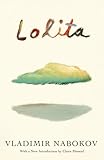
Editors Reads Verdict
Nabokov's most famous and most misread novel is not a love story but a study in how rhetorical brilliance is deployed in service of moral monstrosity. Humbert Humbert is literature's most eloquent unreliable narrator — his prose is dazzling and it is lying, simultaneously, throughout.
What We Loved
- Nabokov's prose is the most technically accomplished in postwar American fiction
- The novel's moral design — Humbert as unreliable narrator who inadvertently reveals his victim — is brilliantly executed
- Dolores Haze, when glimpsed through Humbert's distortions, is genuinely present as a person
- The parody of both European aestheticism and American kitsch is sustained with remarkable precision
Minor Drawbacks
- The novel has been systematically misread as endorsing Humbert's perspective — this misreading is the novel's greatest problem
- The aesthetic pleasure of the prose is in permanent tension with its subject — some readers cannot reconcile them
- Nabokov's games can feel cold — the aesthete's detachment from the human suffering he is depicting
Key Takeaways
- → Aesthetic beauty is not moral justification — the novel demonstrates this by making its arguments beautiful
- → The pedophile's self-description as romantic lover is the novel's central lie, visible to attentive readers
- → Dolores Haze's grief — glimpsed in a single paragraph in chapter 11 — is the novel's true centre
- → Language can be used to obscure reality rather than reveal it — Humbert's eloquence is a form of violence
- → The author's moral frame (the 'Foreword,' the editorial apparatus) signals how to read against the narrator
| Author | Vladimir Nabokov |
|---|---|
| Publisher | Vintage International |
| Pages | 336 |
| Published | September 15, 1955 |
| Language | English |
| Genre | Fiction, Classic Literature, Modernism |
| Difficulty | Advanced |
| Best For | Sophisticated readers who can engage with a morally complex text critically — and those who want to understand how the novel form can use an unreliable narrator to make a case against its own narrator. |
How Lolita Compares
Lolita at a glance against 3 similar books readers weigh alongside it.
| Book | Author | Rating | Best for |
|---|---|---|---|
| Lolita (this book) | Vladimir Nabokov | ★ 4.5 | Sophisticated readers who can engage with a morally complex text critically — |
| Pale Fire | Vladimir Nabokov | ★ 4.5 | Literary Fiction |
| Pnin | Vladimir Nabokov | ★ 4.3 | Literary Fiction |
| The Defense | Vladimir Nabokov | ★ 4.1 | Nabokov readers working through his early novels, and readers interested in |
The Most Misread Masterpiece
Vladimir Nabokov’s Lolita — published in Paris in 1955, in America in 1958 — is the most frequently misread important novel in the language. The misreading takes the form of taking Humbert Humbert at his word: accepting his presentation of his relationship with Dolores Haze as a great and tragic love story, being seduced by his prose, and failing to attend to the evidence of abuse that the same prose inadvertently provides.
Nabokov anticipated this misreading — the novel is full of signals directing the attentive reader away from Humbert’s self-serving narrative — but the signals require attention that the prose’s beauty can overwhelm. To read Lolita correctly is to be aware at every moment of the gap between Humbert’s account and what his account reveals in spite of itself.
Humbert Humbert’s Defense
Humbert is a European intellectual, cultured, witty, devastatingly self-aware, and a pedophile who abuses a twelve-year-old girl for three years. His memoir — the novel itself — is his attempt to aestheticise this abuse: to transmute Dolores Haze into “Lolita,” a nymphet of his own imaginative creation, and to present his relationship with her as a love story rather than a crime.
The prose he uses for this purpose is among the most beautiful in postwar fiction. It is also, as Nabokov intends, a demonstration of how beauty can be deployed in the service of lies. “Lo-lee-ta” — the famous opening — is not a girl but a performance of a girl, a girl shaped to Humbert’s specifications by the very language he uses to describe her.
Dolores Haze
The novel’s moral centre is a brief passage in Chapter 11 where Humbert, having abused Dolores for the first time, observes that “she would sob in the night — every night, every night — the moment I feigned sleep.” He reports this. He does not respond to it. He moves immediately back to his aestheticised account of his desires. But Nabokov has placed it there as evidence — testimony from the victim that the narrator inadvertently provides — and the reader who has been attending to it cannot continue to take Humbert’s perspective as authoritative.
The American Road
The novel is also a satire of 1950s America: the motels, the highways, the diners, the relentless commercial kitsch of Humbert’s cross-country journey. Nabokov, a Russian émigré with the outsider’s detachment, observes American culture with the precision of someone who has learned it rather than grown up in it.
Dolores Haze is, crucially, not a European nymphet but an American girl — she chews gum, reads movie magazines, loves pop music. The European aesthete’s destruction of this specific girl is also a comment on cultural imperialism.
The Publishing History
Lolita was rejected by four American publishers before Nabokov sent it to the Olympia Press in Paris, which published it in 1955 in its Travellers Companion series — a list that also included genuine pornography. The association with pornography was not entirely unfair to the novel’s surface, but it was entirely unfair to its moral design, and when the book became notorious in the British press in 1956 and then was published in the United States in 1958, the debate was immediately distorted by the question of whether it was obscene rather than by the question of what it was actually doing.
What it was actually doing — and Nabokov provided a detailed answer in the afterword to the American edition — was writing a novel about an unreliable narrator so skilled at self-presentation that readers could be seduced into taking his account at face value. The book’s danger, as Nabokov understood it, was not that it depicted abuse but that it depicted abuse in prose beautiful enough to make the reader complicit in Humbert’s aestheticisation of it. The novels that preceded it — Poe’s Annabel Lee, which Humbert explicitly invokes; the tradition of the European aesthete’s worship of unattainable beauty — provided Humbert with a library of justifications that his prose deploys with perfect fluency.
What Nabokov Built Into the Novel
Against Humbert’s fluency, Nabokov built a series of structures designed to direct the attentive reader. The fictional editor’s foreword — by the invented John Ray Jr., Ph.D. — establishes from the first page that this is the memoir of a man who has died in prison, that the girl he calls Lolita died in childbirth, that real suffering occurred. The editorial apparatus signals that what follows is testimony, not romance. Humbert’s own text contains the counter-evidence: the sobbing in the night, the moment late in the novel when he meets Dolores Haze as an adult and she tells him, quietly, what her childhood was actually like. The novel Nabokov wrote is not the novel Humbert thinks he is writing.
Stanley Kubrick’s 1962 film adaptation, and Adrian Lyne’s 1997 version, both struggled with this problem: how to film a story narrated by an eloquent pedophile without making his perspective the film’s perspective. Neither entirely succeeded, which is a measure of how precisely the novel’s moral design depends on the specific medium of prose.
The American Setting
One element of Lolita that is often underweighted is its function as a portrait of 1950s America. Humbert’s cross-country drive with Dolores — the motels, the diners, the highways, the television and the movie magazines — is among the most precise inventories of mid-century American commercial culture in the literature. Nabokov, arriving in America as an émigré in 1940 and becoming a citizen in 1945, observed the country with the alertness of someone for whom none of it was background. The specific texture of American kitsch — its visual cacophony, its cheerful vulgarity, its determined present-tense-ness — becomes, in the novel, the medium through which Humbert’s European aestheticism moves and which it cannot ultimately not be formed by. Dolores Haze is an American girl, and her Americanness is part of what Humbert cannot see and what the novel insists upon.
Nabokov as Lepidopterist
The novel reflects Nabokov’s characteristic attention to the particular. He was not only a novelist but a serious lepidopterist — a research fellow at Harvard’s Museum of Comparative Zoology who published technical papers on butterfly taxonomy. His entomological precision carries over into his prose: the descriptions of American motels, American food, American teenagers are not general or impressionistic but specific, observed with the patience of someone cataloguing specimens. This precision is part of what makes the novel so disturbing: the world Dolores inhabits is rendered in such detail that her absence from her own story — the way Humbert’s prose consistently converts her into Lolita, his creation rather than her own person — becomes visible as an act of violence performed on something real.
Our rating: 4.5/5 — The most technically accomplished postwar American novel — and the one that most demands critical engagement rather than aesthetic surrender.
Frequently Asked Questions
What is "Lolita" about?
Humbert Humbert's confession of his obsession with and abuse of twelve-year-old Dolores Haze — told in prose of devastating beauty by a narrator who is both brilliant and monstrous.
Who should read "Lolita"?
Sophisticated readers who can engage with a morally complex text critically — and those who want to understand how the novel form can use an unreliable narrator to make a case against its own narrator.
What are the key takeaways from "Lolita"?
Aesthetic beauty is not moral justification — the novel demonstrates this by making its arguments beautiful The pedophile's self-description as romantic lover is the novel's central lie, visible to attentive readers Dolores Haze's grief — glimpsed in a single paragraph in chapter 11 — is the novel's true centre Language can be used to obscure reality rather than reveal it — Humbert's eloquence is a form of violence The author's moral frame (the 'Foreword,' the editorial apparatus) signals how to read against the narrator
Is "Lolita" worth reading?
Nabokov's most famous and most misread novel is not a love story but a study in how rhetorical brilliance is deployed in service of moral monstrosity. Humbert Humbert is literature's most eloquent unreliable narrator — his prose is dazzling and it is lying, simultaneously, throughout.
Ready to Read Lolita?
Check the current price on Amazon.
Check Price on Amazon (paid link)Prices and availability are subject to change. See Amazon for current price.
Review last updated: