Most Banned Books of All Time: Why They Were Challenged and Why You Should Read Them
From Orwell to Rowling, the most banned books in history — what drew official objection, what the censors feared, and why every challenge increased readership.
Book banning is as old as writing. The Roman Emperor Diocletian ordered Christian scriptures burned in 303 AD. The Spanish Inquisition maintained an Index of Forbidden Books for over three centuries. The Nazi regime’s 1933 book burnings destroyed tens of thousands of volumes. And today, in the twenty-first century, formal challenges to books in American school libraries hit a sixty-year high in 2022 according to American Library Association data, with over 1,600 unique titles targeted.
The books that draw bans tend to share certain qualities. They are honest about power. They depict the interior lives of people whom the censoring authority prefers to keep abstract. They use language with enough precision to make comfortable readers uncomfortable. The list below covers the most challenged and banned books in modern history — what drew the official objection, what the censors were really afraid of, and why the books remain essential.
At a Glance: Banned and Challenged Books
| Title | Author | First Published | Challenged For | Status |
|---|---|---|---|---|
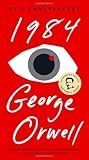
| 1984 | George Orwell | 1949 | Pro-communist content, sexual content | Banned in USSR; challenged in US schools |
| To Kill a Mockingbird | Harper Lee | 1960 | Racial slurs, portrayal of race, offensive content | Removed from multiple US school districts |
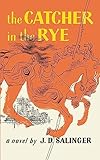
| The Catcher in the Rye | J.D. Salinger | 1951 | Profanity, sexual content, anti-authority sentiment | Among the most challenged books in US history |
| Beloved | Toni Morrison | 1987 | Graphic violence, sexual content, mature themes | Removed from US schools; Morrison defended it |
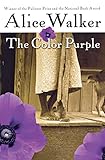
| The Color Purple | Alice Walker | 1982 | Sexual content, violence, anti-religious sentiment | Banned in multiple US school districts |
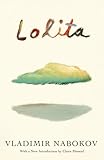
| Lolita | Vladimir Nabokov | 1955 | Paedophilia subject matter | Banned in France (briefly), UK, Argentina, New Zealand |
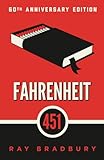
| Fahrenheit 451 | Ray Bradbury | 1953 | Profanity, references to burning the Bible | Challenged in the US; ironic given the novel’s subject |
| Lord of the Flies | William Golding | 1954 | Violence, anti-religious themes, disturbing content | Challenged in US and UK schools |
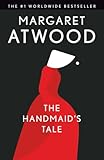
| The Handmaid’s Tale | Margaret Atwood | 1985 | Sexual content, profanity, religious viewpoints | Banned in some Canadian schools; widely challenged |
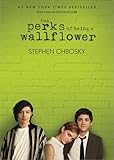
| The Perks of Being a Wallflower | Stephen Chbosky | 1999 | Sexual content, drug use, LGBTQ+ themes | One of the most challenged books of the 2000s |
| Brave New World | Aldous Huxley | 1932 | Sexual content, drug use, anti-family themes | Banned in Ireland; challenged in US schools |
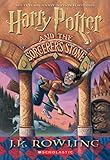
| Harry Potter and the Sorcerer’s Stone | J.K. Rowling | 1997 | Witchcraft, occult themes, anti-Christian content | Most challenged series of the 2000s decade |
The Books, One by One
1984 — George Orwell
1984 was banned in the Soviet Union for the obvious reason: it was a direct portrait of Soviet-style totalitarianism, complete with a fictional secret police, state surveillance, and the systematic falsification of history. But the novel has also been challenged in the United States — at times by school boards worried about its “pro-communist” content (a charge that requires reading the book in reverse) and at other times for its sexual content, specifically Winston and Julia’s affair. The recurring strangeness of American 1984 challenges is that they often target the most anti-authoritarian novel in English on grounds that could themselves come from the Ministry of Truth. It remains essential precisely because its warnings are not period pieces.
To Kill a Mockingbird — Harper Lee
To Kill a Mockingbird has been removed from school curricula and library shelves across the United States repeatedly since its publication in 1960, and the grounds shift in ways that reveal more about the challengers than the book. Early challenges cited racial content as inflammatory. Later challenges, particularly from the 1990s onward, cited the book’s repeated use of racial slurs — the same slurs that Lee deployed to accurately represent what a Black man accused of rape faced in 1930s Alabama. The objection to the book’s language often comes from the same reflex that produced the language: the discomfort of having it said plainly. The novel is an argument for moral courage. Banning it is an argument against it.
The Catcher in the Rye — J.D. Salinger
The Catcher in the Rye has been one of the most challenged books in American schools since the 1950s for a combination of reasons: profanity, sexual content, and an adolescent protagonist who holds adults in explicit contempt. The irony is that Holden Caulfield’s contempt for “phonies” is precisely what adolescent readers respond to — the book articulates the experience of feeling alienated from adult society with a precision that no other novel of its era matched. That it makes adults uncomfortable is the point. Salinger’s real crime, from the censor’s perspective, is that he took a teenager’s perspective seriously and found it largely justified.
Beloved — Toni Morrison
Beloved is the most decorated American novel of the twentieth century — Pulitzer Prize, later the Nobel committee’s implicit endorsement when Morrison won — and also one of the most challenged in schools. The objections cite graphic violence and sexual content, which is both technically accurate and entirely beside the point. Morrison’s novel deals graphically with the violence of slavery because that violence was graphic; to sanitise it would be to perform exactly the kind of historical falsification that the novel’s moral project opposes. When the novel was challenged in a Fairfax County, Virginia school district in 2016, Morrison herself wrote that the discomfort the book produces is “the discomfort of the truth.” She was right.
The Color Purple — Alice Walker
The Color Purple is set in rural Georgia in the 1930s and told through letters written by Celie, a Black woman who has endured rape, abuse, poverty, and the systematic erasure of her humanity by both white society and the Black men in her life. It has been challenged for sexual content, violence, and anti-religious sentiment — the last charge arising from Celie’s eventual rejection of a God she associates with her abusers and her arrival at a more immanent spiritual understanding. Walker’s novel is also a love story between two women, and that element has generated specific challenges from religious groups. The book won the Pulitzer Prize and the National Book Award. Its challengers have not won anything comparable.
Lolita — Vladimir Nabokov
Lolita is the most commonly misread book on this list. It was refused by four American publishers before being accepted by the Olympia Press in Paris in 1955, and it was briefly banned in France, the UK, Argentina, and New Zealand on grounds of obscenity. The subject matter — a middle-aged man’s obsession with and sexual abuse of a twelve-year-old girl — is genuinely disturbing. But Nabokov’s narrative architecture is designed precisely to make the reader aware of Humbert Humbert’s unreliability and self-serving aestheticisation of what is abuse. The novel is a trap for readers who allow themselves to be seduced by Humbert’s prose in the same way Humbert claims to be seduced by Dolores Haze. It is, in the end, one of the most morally serious novels ever written about predation.
Fahrenheit 451 — Ray Bradbury
Fahrenheit 451 is a novel about a society that burns books, and it has been challenged in schools — sometimes for profanity, sometimes for a scene in which a Bible is burned, sometimes for anti-religious content. The particular absurdity of attempting to remove from circulation a novel whose explicit subject is the removal of books from circulation has not been lost on Bradbury or on his defenders. The novel was also published in a censored version by Ballantine Books in 1967 — with 75 passages modified to remove profanity and a scene involving drunken adults — without Bradbury’s knowledge. When he discovered it a decade later, he demanded the restoration of the original text. The censored version had been the one used in American schools.
Lord of the Flies — William Golding
Lord of the Flies has been challenged in British and American schools for violence, disturbing content, and anti-religious or anti-authority themes. The novel’s argument — that civilisation is a thin veneer over barbarism, and that children left without adult authority will recreate the worst of adult society rather than transcend it — is unsettling to any ideology that believes in the natural innocence of children or the reliability of social order. Religious challengers have objected to the figure of Simon, whose death reads as a deliberate inversion of the Passion narrative. The book is uncomfortable because Golding means for it to be: he wrote it in the immediate aftermath of World War II as a direct response to the optimistic children’s adventure story tradition that preceded it.
The Handmaid’s Tale — Margaret Atwood
The Handmaid’s Tale was challenged in Canadian schools almost immediately after publication in 1985, and has been regularly targeted in the United States since. The official objections cite sexual content, profanity, and what some challengers describe as “anti-Christian” content — a charge Atwood addresses by noting that every theocratic practice depicted in the novel is drawn directly from historical precedent, most of it from Christian societies. The novel’s prescience has become impossible to ignore. When the American television adaptation aired in 2017, women protesting restrictions on reproductive rights wore the Handmaid’s red robes. The book was not predicting the future; it was describing the past and noting how easily it recurs.
The Perks of Being a Wallflower — Stephen Chbosky
The Perks of Being a Wallflower is among the most challenged books of the 2000s, with objections to drug use, underage drinking, homosexuality, sexual content, and what some challengers describe as “glorifying” self-destructive behaviour. The novel follows Charlie, a fourteen-year-old processing childhood trauma through his first year of high school, and it treats adolescent sexuality and mental health with unusual honesty. The “glorification” charge is worth examining: Chbosky does not pretend that drugs are harmless or that trauma resolves cleanly, but he does refuse to moralize at his characters, which some adults read as endorsement. It is the most honest novel on this list about what adolescence actually feels like for its most vulnerable participants.
Brave New World — Aldous Huxley
Brave New World was banned in Ireland at publication in 1932 and has been challenged in American schools for sexual content, drug use, and themes that challengers describe as anti-family and anti-Christian. Huxley’s dystopia is more sophisticated than most: it imagines a society where human beings are controlled not through fear and pain but through pleasure, conditioning, and the elimination of any experience that might produce genuine depth of feeling. The irony is that the book’s critique — that a society built on shallow pleasure and social conformity is a kind of soft totalitarianism — is precisely what its religious challengers ought to share, rather than resist.
Harry Potter and the Sorcerer’s Stone — J.K. Rowling
Harry Potter and the Sorcerer’s Stone and its sequels were the most challenged books of the 2000s decade according to the American Library Association, driven overwhelmingly by religious objections to the depiction of witchcraft and magic as benign or admirable. Several US school districts removed the series entirely from library shelves; at least one principal held a book-burning. The challenge is worth noting not because it is the most intellectually serious on this list — it isn’t — but because of what it reveals: that the category of “dangerous content” is always defined by whoever holds local power, and that a children’s series explicitly about the courage to resist authoritarian control was banned by people who believed their authority was being undermined.
Why Banning Books Always Backfires
The pattern across this entire list is consistent: every attempt to suppress a book produces more readers, more attention, and more cultural permanence for the targeted work than the book would have achieved if left alone. This is the Streisand Effect applied to literature, named for Barbara Streisand’s 2003 attempt to legally suppress an aerial photograph of her Malibu home, which resulted in the photo being viewed over 400,000 times in the following month.
When Salman Rushdie’s The Satanic Verses became the subject of a fatwa in 1989, it went from a literary novel with a modest readership to an international symbol of free expression that sold millions of copies. When Virginia school districts removed Toni Morrison from curricula, reported sales of her books increased. When the Pulitzer Prize committee awarded the prize to a challenged or controversial book — as it has to Beloved, The Color Purple, and others on this list — the award functions partly as a rebuke and partly as a permanent advertisement.
The censor’s fundamental miscalculation is the belief that ideas can be contained. They cannot. A book removed from a school library is available at the public library, at a bookstore, online, and in every home where a parent decided the challenge itself was recommendation enough. The act of banning converts a book from an object into an argument — and arguments, unlike objects, cannot be confiscated.
The books on this list have all survived their banning. Their challengers have not achieved comparable permanence.
Frequently Asked Questions
What is the difference between a 'challenged' book and a 'banned' book?
A challenge is a formal, documented request to remove or restrict a book from a library or school curriculum, typically filed by a parent, community group, or school board member. A ban is the actual removal or restriction that follows a successful challenge. The American Library Association tracks both, and its data consistently shows that most challenges target books in school libraries and K-12 classroom collections. The same book can be freely available in bookstores while being effectively banned from every school in a given district — which is why the school library is the primary battleground for most censorship disputes.
Which banned book has faced the most challenges in US schools?
According to American Library Association records, the most frequently challenged books over the past three decades include The Catcher in the Rye, The Color Purple, Of Mice and Men, and more recently Gender Queer and And Tango Makes Three. Among those on this list, To Kill a Mockingbird and Beloved have both appeared repeatedly at the top of annual challenged-books lists, and both have been the subject of formal removal proceedings in multiple school districts. The irony that two of the most morally serious American novels about racism are among the most challenged books is not lost on their defenders.
Does book banning actually reduce readership?
The evidence consistently says no. Sales of challenged books routinely spike after a ban is reported, a phenomenon sometimes called the Streisand Effect — the attempt to suppress information draws more attention to it than the information ever would have received on its own. When Virginia's Spotsylvania County school district removed Maia Kobabe's Gender Queer from school shelves in 2021, the book went from relative obscurity to a bestseller list. When American Psycho was refused by its original publisher and restricted in some countries, it became one of the defining controversial novels of the 1990s. Censors reliably underestimate this dynamic.
Should parents be able to remove books from school curricula on moral or religious grounds?
The legal position in the United States, established in Board of Education v. Pico (1982), is that school boards cannot remove books from libraries simply because they disagree with their ideas — though they retain broad discretion over curriculum. The more difficult question is whether a parent's objection to a specific book's content for their own child is the same as seeking to remove it for all children. Most librarians and educators draw a clear line: a parent can opt their child out of an assigned reading; they cannot opt every other child out of the library's collection. The right to read what you choose and the right to withhold that choice from others are not the same right.