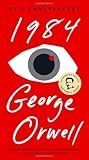
Editors Reads Verdict
One of the most important novels of the 20th century — and increasingly of the 21st. Orwell's vision of surveillance, doublethink, and the weaponisation of language against truth has proven more prophetic than anyone could have wished. Required reading.
What We Loved
- Prophecy disguised as fiction — more relevant today than in 1949
- Coined the terms now central to political discourse: doublethink, newspeak, Big Brother, thoughtcrime
- Orwell's prose is among the clearest and most powerful in the English language
- Short enough to read in a weekend; complex enough to think about for a lifetime
Minor Drawbacks
- The final third is bleak to the point of devastating — prepare emotionally
- The Appendix ('The Principles of Newspeak') interrupts narrative flow
- Some elements of Oceania's society feel dated in specific (though not essential) ways
Key Takeaways
- → Totalitarian power is maintained through control of language and information, not just force
- → Doublethink — holding two contradictory beliefs simultaneously — is how propaganda operates
- → History is rewritten constantly by those in power to justify present reality
- → Surveillance and the possibility of surveillance are equivalent in their effect on behaviour
- → The destruction of privacy is the destruction of the self
| Author | George Orwell |
|---|---|
| Publisher | Signet Classic |
| Pages | 328 |
| Published | June 8, 1949 |
| Language | English |
| Genre | Fiction, Dystopian, Classic Literature |
| Difficulty | Beginner |
| Best For | Every adult in a democracy. Essential for understanding how propaganda works, why freedom of the press matters, and what totalitarianism actually looks like from the inside. |
How 1984 Compares
1984 at a glance against 3 similar books readers weigh alongside it.
| Book | Author | Rating | Best for |
|---|---|---|---|
| 1984 (this book) | George Orwell | ★ 4.7 | Every adult in a democracy |
| Man's Search for Meaning | Viktor E. Frankl | ★ 4.8 | Anyone confronting meaninglessness, loss, suffering, or existential questions |
| Sapiens | Yuval Noah Harari | ★ 4.6 | Curious readers of all backgrounds who want to understand how Homo sapiens came |
| The Alchemist | Paulo Coelho | ★ 4.7 | Anyone at a crossroads, seeking purpose, or wondering whether their dreams are |
The Novel That Predicted Our World
George Orwell wrote 1984 in 1948 while dying of tuberculosis on a remote Scottish island, drawing on his experiences fighting fascism in Spain and observing Stalinist Russia. He switched the last two digits of the year to give the book its title.
He couldn’t have known how accurately he was describing the future.
The World of Oceania
Oceania is a totalitarian super-state ruled by “The Party” and its figurehead Big Brother. The Party controls everything — history, language, thought itself. The Ministry of Truth rewrites history to match the Party’s current position. The Ministry of Love practices torture. The Thought Police arrests people for crimes that don’t yet have names.
Winston Smith is a minor Party functionary whose job is literally to falsify historical records: to make the past consistent with the present, to make whoever the Party is currently at war with the enemy who has “always” been at war. He knows it’s lies. He is not supposed to know he knows.
Orwell’s Concepts That Entered the Language
The measure of 1984’s cultural penetration is the number of its invented terms that have entered ordinary discourse:
Big Brother — an ever-present, all-seeing authority figure (now used for everything from government surveillance to the TV show)
Doublethink — the ability to hold two contradictory beliefs simultaneously and believe both; the cognitive foundation of propaganda
Newspeak — a controlled language designed to make thoughtcrime literally impossible by eliminating the words needed to express it (“War is Peace; Freedom is Slavery; Ignorance is Strength”)
Thoughtcrime — a crime committed by holding unacceptable thoughts, independent of action
Memory hole — a mechanism for destroying inconvenient records (now used as a metaphor for censorship and gaslighting)
Unperson — someone erased from all records, as if they never existed
These terms are now used in political analysis worldwide because they describe real phenomena that existed before Orwell named them — and have only become more relevant.
The Surveillance Theme
The telescreens that watch every citizen of Oceania represent not just historical Soviet or Nazi surveillance but anticipate the digital panopticon we now inhabit. Orwell understood — writing decades before the internet — that the knowledge of being watched changes behaviour more powerfully than actual punishment. You don’t need to punish everyone; you only need everyone to believe punishment is possible.
Edward Snowden’s revelations in 2013 triggered a surge in 1984 sales. The same happened in 2017. The novel keeps finding new relevance.
Winston and Julia: A Human Story
At its core, 1984 is also a love story — and ultimately a story about what totalitarianism does to love. Winston and Julia’s relationship is an act of political rebellion: to feel genuine human emotion, to have a private self, to choose another person freely. The Party’s response to this is the most devastating element of the novel.
Why Read It Now?
1984 matters not as a prediction of things that might happen but as a precise anatomisation of things that have happened and do happen — in varying degrees in every political system. The mechanisms of control Orwell describes — rewriting history, controlling language, manufacturing enemies, survelling thought — are not science fiction. They are documented historical practice and present reality in multiple countries.
Our rating: 4.7/5 — Not merely a great novel but a manual for recognising tyranny. Should be re-read every decade.
Why the Language Is the Real Horror
It is tempting to remember 1984 mainly for its apparatus of surveillance — the telescreens, the Thought Police, Big Brother’s watching face — but Orwell’s deepest insight is about language, not cameras. Newspeak, the regime’s project to shrink the vocabulary until rebellious thought becomes literally unthinkable, is the novel’s most chilling idea, because it locates tyranny not in what the state can see but in what the mind can no longer formulate. Doublethink, the capacity to hold two contradictory beliefs at once and accept both, completes the trap. Winston’s diary, his furtive love for Julia, his memory of a vanished past — all are attempts to hold onto a reality the Party is actively rewriting, and the book’s despair comes from watching how thoroughly that reality can be unmade.
Why It Still Matters
The reason “Orwellian” became a permanent word is that the novel named mechanisms that outlived the totalitarian regimes it was written against: the manipulation of language, the rewriting of the record, the demand that citizens disbelieve the evidence of their own eyes. Readers today reach for it across the political spectrum, sometimes too loosely, but the core warning is precise and durable — that control of language is control of thought, and that a society loses its freedom first in what it can no longer say. It is a bleak book, and deliberately so; Orwell offers no comforting escape. That refusal is exactly what gives the novel its enduring moral force, and why it remains essential rather than merely dystopian entertainment. More than seventy years on, it is read less as a prophecy that came true than as a permanent set of warnings about power, language, and truth — which is why each new generation finds its own reflection in Winston’s doomed attempt to hold onto what is real.
Reading Guides
- 1984 vs Fahrenheit 451: Which to Read First
- Books Like 1984: 10 Dystopian Novels That Will Shake You to the Core
- Books Like Sapiens: 11 Mind-Expanding Reads for Big-Picture Thinkers
- Books Like Animal Farm: Political Allegory, Power, and How Revolutions Eat Themselves
- Books Like Brave New World: Dystopia, Pleasure, and the Price of Happiness
- Books Like Ender
- Books Like Fahrenheit 451: Censorship, Books, and the Rebellion of Reading
- Books Like Frankenstein: Creation, Responsibility, and the Ethics of Playing God
Frequently Asked Questions
What is "1984" about?
In the totalitarian super-state of Oceania, Winston Smith works for the Ministry of Truth, rewriting history to serve The Party. His secret rebellion — and its consequences — is one of the most important political novels ever written.
Who should read "1984"?
Every adult in a democracy. Essential for understanding how propaganda works, why freedom of the press matters, and what totalitarianism actually looks like from the inside.
What are the key takeaways from "1984"?
Totalitarian power is maintained through control of language and information, not just force Doublethink — holding two contradictory beliefs simultaneously — is how propaganda operates History is rewritten constantly by those in power to justify present reality Surveillance and the possibility of surveillance are equivalent in their effect on behaviour The destruction of privacy is the destruction of the self
Is "1984" worth reading?
One of the most important novels of the 20th century — and increasingly of the 21st. Orwell's vision of surveillance, doublethink, and the weaponisation of language against truth has proven more prophetic than anyone could have wished. Required reading.
Ready to Read 1984?
Check the current price on Amazon.
Check Price on Amazon (paid link)Prices and availability are subject to change. See Amazon for current price.
Review last updated: