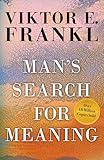
Editors Reads Verdict
Perhaps the most profound book ever written on how to endure suffering and find purpose. Frankl's observations — made in the most extreme human conditions imaginable — carry an authority that no self-help book written in comfort can match. Essential reading for every human being.
What We Loved
- Short (200 pages) — readable in a single sitting
- Absolute moral authority — born from the worst conditions humans can face
- The psychological framework (logotherapy) is both practical and profound
- Changes how you relate to your own suffering permanently
Minor Drawbacks
- The first half (Auschwitz memoir) is harrowing — emotionally difficult reading
- The second half (logotherapy) is denser and more academic
Key Takeaways
- → Everything can be taken from a man except the freedom to choose his response to circumstances
- → The primary human motivation is the will to meaning, not pleasure or power
- → Meaning can be found through work, love, or the attitude taken toward unavoidable suffering
- → Those who had a 'why' to live could bear almost any 'how'
- → Tragic optimism: affirming life even in the face of pain, guilt, and death
| Author | Viktor E. Frankl |
|---|---|
| Publisher | Beacon Press |
| Pages | 200 |
| Published | January 1, 1946 |
| Language | English |
| Genre | Psychology, Philosophy, Memoir |
| Difficulty | Beginner |
| Best For | Anyone confronting meaninglessness, loss, suffering, or existential questions about purpose — or anyone who wants to understand the psychology of resilience at its absolute limits. |
How Man's Search for Meaning Compares
Man's Search for Meaning at a glance against 3 similar books readers weigh alongside it.
| Book | Author | Rating | Best for |
|---|---|---|---|
| Man's Search for Meaning (this book) | Viktor E. Frankl | ★ 4.8 | Anyone confronting meaninglessness, loss, suffering, or existential questions |
| Meditations | Marcus Aurelius | ★ 4.8 | Anyone seeking practical philosophical guidance for living with integrity under |
| Night | Elie Wiesel | ★ 4.8 | Everyone |
| The Power of Now | Eckhart Tolle | ★ 4.6 | Anyone struggling with anxiety, overthinking, or searching for a practical |
Written in nine days in 1945 shortly after his liberation from Nazi concentration camps, Man’s Search for Meaning has sold over sixteen million copies and been listed among the ten most influential books in America. Viktor Frankl was a trained psychiatrist before the war; what the camps gave him was psychological data of a kind no laboratory could provide. He watched, even as he suffered across Auschwitz, Dachau, and Kaufering, how human beings respond to extreme deprivation and impending death. His central finding — that it was not the fittest or the strongest who survived, but those who had found a reason to live — forms the book’s opening claim and the entire foundation of what follows.
The first half of the book is Frankl’s memoir of the camps, and it is harrowing in ways that feel necessary rather than gratuitous. He describes prisoners who gave away their last piece of bread not from weakness but from a profound inner freedom that the SS could not strip from them. He describes a man who kept himself alive until a particular date because he believed he would be liberated by then, who died two days after that date passed when his hopes were not realised — not from wounds or disease, but from the withdrawal of meaning. The book’s most famous line earns its authority completely in this context: everything can be taken from a man but one thing — the last of the human freedoms, to choose one’s attitude in any given set of circumstances, to choose one’s own way.
The second half explains the therapeutic system Frankl developed from his observations: logotherapy, from the Greek logos meaning purpose. Where Freud placed pleasure at the centre of human motivation and Adler placed power, Frankl places meaning — the will to find or create a reason for one’s existence. When meaning is absent, the result is what he calls the existential vacuum, the Sunday-afternoon emptiness that arrives when the week’s distractions fall away. He identifies three paths to meaning: through work and what we create, through love and whom we encounter, and through the attitude we take toward unavoidable suffering. The third is the most difficult and the most important. Frankl is not recommending suffering — he is observing that when suffering cannot be avoided, meaning can still be chosen.
Man’s Search for Meaning is a 200-page book written eighty years ago about circumstances most readers will never face. And yet it addresses questions that are perfectly contemporary: why do I feel empty despite having everything? How do I endure difficulty? What am I here for? The concept of tragic optimism — the ability to affirm life in spite of pain, guilt, and death — is not naive positivity but a hard-won philosophical stance that Frankl earned through the worst conditions a human being can experience. The answers he provides carry an authority that no comfortable book about purpose can match, and the book remains one of the great works of the twentieth century.
Why It Still Speaks to Readers Who Have Suffered Nothing Like the Camps
Part of the book’s strange power is that it refuses to make suffering noble. Frankl is precise that he is not recommending pain, only observing that when pain cannot be avoided, the one freedom that remains is the attitude we take toward it. This is why the book travels so far beyond its origin. The reader facing illness, bereavement, a stalled career, or simply the Sunday-afternoon emptiness Frankl names the existential vacuum recognises the same underlying question: not “how do I escape this?” but “what is this for?” Logotherapy’s answer — that meaning is found rather than given, through work, through love, and through the stance we take toward unavoidable hardship — has the authority of a man who tested it under the worst conditions imaginable and found it held.
How to Read It
It is a short book, often finished in a sitting, but it rewards slow reading and rereading at different stages of life; what registers as abstract at twenty can land very differently after one’s own losses. The first, memoir half and the second, more clinical half on logotherapy serve different purposes — the first earns the authority that the second spends — and readers impatient with the theory should still not skip it, because the therapeutic claims only make sense against the evidence of the camps. Frankl’s tragic optimism, the capacity to say yes to life in spite of everything, is not positive thinking; it is a hard, earned philosophy, and it is the reason the book remains one of the essential works of the twentieth century.
A Book for the Whole of a Life
Few books reward returning quite like this one. Read in youth, it can feel like a moving historical document and an inspiring idea; read after one’s own encounters with loss, illness, or futility, it becomes something closer to a companion. Frankl’s insistence that meaning is not something the world owes us but something we are responsible for finding, even in circumstances we did not choose and cannot change, is the kind of claim that can only be tested over time. That it has held up for millions of readers across eighty years, in conditions utterly unlike the camps, is the strongest argument for its enduring place among the essential books about how to live.
Reading Guides
Frequently Asked Questions
What is "Man's Search for Meaning" about?
Psychiatrist Viktor Frankl's harrowing account of surviving Auschwitz forms the foundation of logotherapy — the idea that the primary human drive is not pleasure but the pursuit of meaning. One of the most important psychological texts of the 20th century.
Who should read "Man's Search for Meaning"?
Anyone confronting meaninglessness, loss, suffering, or existential questions about purpose — or anyone who wants to understand the psychology of resilience at its absolute limits.
What are the key takeaways from "Man's Search for Meaning"?
Everything can be taken from a man except the freedom to choose his response to circumstances The primary human motivation is the will to meaning, not pleasure or power Meaning can be found through work, love, or the attitude taken toward unavoidable suffering Those who had a 'why' to live could bear almost any 'how' Tragic optimism: affirming life even in the face of pain, guilt, and death
Is "Man's Search for Meaning" worth reading?
Perhaps the most profound book ever written on how to endure suffering and find purpose. Frankl's observations — made in the most extreme human conditions imaginable — carry an authority that no self-help book written in comfort can match. Essential reading for every human being.
Ready to Read Man's Search for Meaning?
Check the current price on Amazon.
Check Price on Amazon (paid link)Prices and availability are subject to change. See Amazon for current price.
Review last updated: