Science & Natural HistoryWorld HistoryBiography & MemoirPhilosophy of Science
Elena Marsh
146 books reviewed12 articles written
Science & History Editor, Editors Reads
Dr. Elena Marsh brings a background in the history of science to her role as Science & History Editor at Editors Reads, where she reviews books spanning natural history, physics, evolutionary biology, world history, and narrative biography. She is particularly drawn to writers who make complex ideas accessible without sacrificing rigour, and to historians who illuminate the present by illuminating the past. Elena believes the best science and history books do what great fiction does — they change the way you see the world around you.
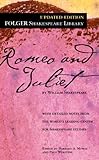
Prince Hamlet of Denmark, confronted by his murdered father's ghost, hesitates on the path of revenge — generating centuries of analysis about the nature of action, consciousness, and death.
Art Spiegelman's Pulitzer Prize–winning graphic memoir tells the story of his father Vladek's survival of Auschwitz, drawn with Jews as mice and Nazis as cats — a harrowing Holocaust narrative braided with the fraught present-day relationship between an aging survivor and his son.
The definitive life of J. Robert Oppenheimer — the theoretical physicist who directed the Manhattan Project, witnessed the first atomic detonation at Trinity, and was subsequently destroyed by the McCarthyite security apparatus he had helped to empower. Twenty-five years in the making, it won the 2006 Pulitzer Prize for Biography.
The deeply personal memoir of the former First Lady of the United States — from her childhood on the South Side of Chicago to the White House and beyond.
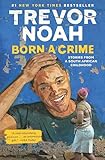
The memoir of The Daily Show host Trevor Noah, born in apartheid South Africa to a Black mother and white father — an act that was literally a crime under apartheid law.
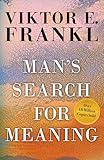
Psychiatrist Viktor Frankl's harrowing account of surviving Auschwitz forms the foundation of logotherapy — the idea that the primary human drive is not pleasure but the pursuit of meaning. One of the most important psychological texts of the 20th century.
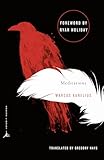
The private philosophical notebook of the Roman Emperor Marcus Aurelius — written for himself, never intended for publication — containing his Stoic practice across twelve books of thought.
Elie Wiesel's memoir of his experiences as a fifteen-year-old Jewish boy deported from Sighet, Transylvania to Auschwitz and then Buchenwald. One of the foundational documents of Holocaust testimony — a first-person account of the camps, the death marches, and the systematic destruction of faith, family, and identity.
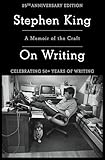
Part memoir, part writing guide, Stephen King reflects on his life, his near-fatal accident, and the craft principles that have made him one of the most productive writers in American literature.
Nike founder Phil Knight's memoir of building one of the world's most iconic brands — from $50 borrowed from his father and a handshake deal for Japanese running shoes to a multi-billion dollar empire. Brutally honest and compulsively readable.
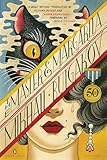
Satan visits Stalinist Moscow, accompanied by a giant black cat, a hitman, and a naked witch — exposing Soviet bureaucracy's absurdities while a novelist's story of Pontius Pilate and Jesus unfolds within the novel.
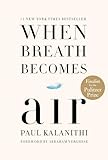
A neurosurgeon diagnosed with terminal lung cancer at 36 confronts the questions he spent his career preparing to face — and writes a book about mortality, meaning, and what makes a life worth living.
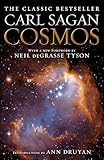
Carl Sagan's companion to his landmark PBS series explores the history of science, the nature of the universe, and humanity's place in the cosmos with breathtaking scope and lyrical prose.
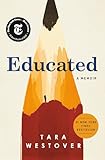
Tara Westover's memoir of growing up in the mountains of Idaho without formal education, in a survivalist family, and her journey to Cambridge and Harvard.
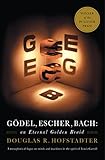
A Pulitzer Prize-winning exploration of how consciousness, self-reference, and meaning emerge from formal systems, through the intertwined work of a mathematician, an artist, and a composer.
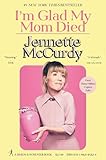
Former child actress Jennette McCurdy's unflinching memoir about her mother's emotional abuse, the exploitation of the child acting industry, and her path to recovery from eating disorders and trauma.
Known publicly as 'Emily Doe,' Chanel Miller reclaims her full identity and tells the complete story of the assault, trial, and aftermath of the Brock Turner case.
Nelson Mandela's autobiography traces his journey from a Transkei village through law, activism, 27 years of imprisonment, and his emergence to lead South Africa's democratic transition.
One of the most important American autobiographies ever written, chronicling Malcolm X's transformation from street criminal to international civil rights icon.
A Pulitzer Prize-winning history of cancer — its origins, treatments, and future — told through the stories of patients, scientists, and physicians across centuries.
Bill Bryson's quest to understand everything that has ever happened, from the Big Bang to the rise of civilisation — written with his characteristic wit and warmth.
A comprehensive exploration of the biological underpinnings of human behaviour — from the neural firing a second before an act to the evolutionary pressures that shaped our species over millions of years.