Where to Start with Carlo Rovelli: A Reading Guide
Where to start with Carlo Rovelli — how to approach The Order of Time, his essential meditation on physics and time. A complete reading guide to the Italian physicist.
By Elena Marsh
Carlo Rovelli (born 1956) is an Italian theoretical physicist who works on quantum gravity — specifically the loop quantum gravity approach, which attempts to reconcile general relativity and quantum mechanics without requiring string theory’s extra dimensions. Since the mid-2010s, Rovelli has become the most widely read popular science writer in Europe, with Seven Brief Lessons on Physics (2014) selling over a million copies in Italy alone and The Order of Time (2018) becoming an international bestseller. His work is distinctive for combining rigorous physics with literary sensibility — he writes with the cadence of an essayist and draws readily on philosophy, poetry, and the history of ideas.
Where to Start: The Order of Time (2018)
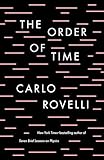
The essential Rovelli — and the most intellectually and aesthetically satisfying popular physics book of recent years. The Order of Time begins from a simple but disorienting fact: if you slow time near mass and at high speed, and if at the quantum level of spacetime there is no defined “before” and “after,” then what is time? The answer Rovelli constructs across the book’s three parts is careful, beautiful, and genuinely strange.
The first section dismantles what we think we know. Time passes at different speeds in different places — this is not speculation but measured fact, precise enough that GPS satellites require corrections for relativistic time dilation. The direction of time (past to future) is not encoded in the fundamental equations of physics, which are symmetric — the distinction between past and future emerges only from thermodynamics, from entropy’s statistical tendency to increase. And at the Planck scale — the smallest meaningful unit of spacetime — the variable we call time disappears from the equations entirely. “There is no time variable in the fundamental equations of quantum gravity,” Rovelli writes, with the calm of someone describing a view from a window.
The second section asks what survives: what is time if it is not universal, not directional at the fundamental level, and not present in the most basic physics? Rovelli’s answer turns to the thermal time hypothesis and the relational structure of events — time as a product of the relations between things rather than a container in which things occur.
The third section is the most philosophically ambitious: what does physics tell us about our experience of time? The passage of time, the feeling of the present, memory and anticipation — Rovelli suggests these are features of our particular vantage point as thermal systems embedded in an entropic universe, not features of time itself. The book ends with Proust, with mortality, with the strangeness of being a creature for whom time is the most intimate experience and also, perhaps, the most illusory.
Rovelli writes like a physicist who has read everything else: the prose is precise but not dry, the analogies are illuminating rather than reductive, and the wonder at the strangeness of physical reality is genuine and contagious.
Why The Order of Time Is an Ideal First Book
For a reader new to Carlo Rovelli, The Order of Time is an ideal first book because it is among his most celebrated works and a fine expression of his distinctive gift, the rendering of profound and difficult physics into lyrical, accessible, and philosophically rich prose. The Order of Time explores the nature of time, drawing on modern physics to overturn our intuitions and to reveal how strange, fluid, and surprising time really is, all in Rovelli’s poetic and contemplative style. As an entry point it is ideal, for it captures his signature strengths, the deep physics made accessible, the philosophical depth, and the beauty of his writing, around a subject of universal fascination. It welcomes the newcomer with its fascinating subject, its clarity, and its poetic, meditative voice, drawing the reader into the deep questions of modern physics. It is among his best-known and most beloved books, so the new reader encounters Rovelli at his most characteristic. For the newcomer, then, The Order of Time is an excellent starting point.
What to Expect as a New Reader
As a new reader, you can expect The Order of Time to be a lyrical, accessible, and philosophically rich exploration of physics. You can expect a fascinating subject, for Rovelli explores the nature of time, drawing on modern physics to show how strange, fluid, and counterintuitive it really is. You can expect deep physics made accessible, for Rovelli explains difficult ideas about relativity, quantum mechanics, and the nature of reality with remarkable clarity. You can expect a poetic, contemplative style, for Rovelli writes with unusual beauty and a meditative, almost philosophical sensibility rare in science writing. You can expect philosophical depth, for the book reaches beyond physics into questions of memory, perception, and meaning. You can expect a short, elegant, and thought-provoking book. Expect, in short, a lyrical, accessible, and philosophically rich exploration of physics, a beautiful introduction to Rovelli’s gifts.
Going Deeper After Your First Book
Once The Order of Time has introduced you to Rovelli’s gifts, the reader who wishes to go deeper can explore his other books, which continue his lyrical, accessible, and philosophically rich approach to physics and its deepest questions. His widely loved short introduction offers a brief, beautiful tour of the great ideas of modern physics, perfect for absorbing his style, while his other works explore quantum theory and the nature of reality with the same clarity and elegance. Reading these after The Order of Time deepens your appreciation of Rovelli’s distinctive gifts, the deep physics made accessible, the philosophical depth, and the beauty of his writing. His characteristic qualities run through his work, and the reader who has enjoyed The Order of Time will find them across his books. Building your reading journey through Rovelli is a matter of following his physics from The Order of Time into his other books. The reader who begins here and continues will find one of the most lyrical and philosophically rich popular writers on physics.
Reading Carlo Rovelli
Begin with The Order of Time — it is his most accomplished book. Seven Brief Lessons on Physics (2014) is his shorter, lighter introduction and works well as a companion or precursor. Both standalone.
For the full Carlo Rovelli bibliography, reviews, and biography, visit the Carlo Rovelli author page on Editors Reads.
Affiliate disclosure: Links to Amazon on this page are affiliate links. We earn a small commission at no extra cost to you.
Frequently Asked Questions
Where should I start with Carlo Rovelli?
The Order of Time (2018) is the most accessible and literarily accomplished of Rovelli's popular science books — a meditation on what physics reveals about the nature of time, why it appears to flow in one direction, and what concepts like 'now' and 'past' actually mean at the deepest level of physical reality. Short, beautifully written, and philosophically rich; the ideal entry point to Rovelli's work.
What is The Order of Time about?
The Order of Time begins from the counterintuitive finding that time is not uniform — it passes more slowly near mass and at speed, and at the quantum level of spacetime the very concept of a universal 'now' dissolves. Rovelli traces what remains once these familiar notions are removed: why entropy explains time's direction, what the experience of time's passage reveals about our minds, and how physics has transformed — and should transform — our understanding of what time is.
Do you need physics knowledge to read Rovelli?
The Order of Time requires no prior physics knowledge — Rovelli builds from intuitive observations and explains technical concepts through analogy and philosophy rather than mathematics. His writing is explicitly literary, drawing on Horace, Proust, and classical poetry as well as physics. Readers who enjoy books at the intersection of science and philosophy will find his approach more congenial than readers looking for technical depth. Seven Brief Lessons on Physics, his shorter earlier book, is even more accessible and works as an introduction.
What should I read after The Order of Time?
After The Order of Time, Rovelli's Seven Brief Lessons on Physics (2014) — originally published in Italian as a newspaper column — is his shorter, more introductory popular science book and a natural companion. Brian Greene's The Elegant Universe covers the quest for a unified theory with more technical depth. For the philosophical dimensions of physics and time, Lee Smolin's Time Reborn argues a position complementary to Rovelli's. Stephen Hawking's A Brief History of Time remains the classic popular introduction to cosmology and time.