Where to Start with Douglas Hofstadter: A Reading Guide
Where to start with Douglas Hofstadter — how to approach Gödel, Escher, Bach, the Pulitzer Prize-winning meditation on consciousness and self-reference. A complete reading guide.
By Elena Marsh
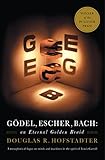
Douglas Hofstadter (born 1945) is an American cognitive scientist, professor at Indiana University, and author whose Gödel, Escher, Bach: An Eternal Golden Braid (1979) won the Pulitzer Prize for General Nonfiction and became one of the most celebrated works of intellectual nonfiction of the twentieth century. Hofstadter has since published extensively on consciousness, analogy, and translation — but Gödel, Escher, Bach remains his defining achievement, a book that has no real category and no real predecessor.
Where to Start: Gödel, Escher, Bach: An Eternal Golden Braid (1979)
The essential Hofstadter — and one of the most original intellectual works ever written. Gödel, Escher, Bach begins with one of the deepest questions in intellectual life: how does meaning arise from meaningless symbols? How does mind emerge from matter? How can consciousness — the experience of being a self — be generated by physical processes that are not themselves conscious? Hofstadter’s answer, developed through 777 pages that are simultaneously rigorous, playful, profound, and endlessly inventive, is that the key is self-reference: the strange loop that occurs when a system becomes complex enough to represent and talk about itself.
The book’s central conceit is a three-way parallel between three figures who created works with self-referential structures. Kurt Gödel proved, in his 1931 incompleteness theorems, that any sufficiently powerful formal mathematical system contains true statements that the system cannot prove — and that this unprovability is a consequence of the system being able to make statements about itself. M.C. Escher created lithographs in which hands draw each other into existence, staircases ascend forever back to their starting points, and figures emerge from the background to become the foreground — visual encodings of the same logical structure. J.S. Bach wrote fugues and canons in which themes transform, invert, and fold back on themselves in structures that mirror Gödel’s theorems in sound.
Hofstadter insists that this parallel is not decorative metaphor but a genuine philosophical argument: the same underlying structure — a system that produces meaning by looping back and talking about itself — appears in mathematics, visual art, and music, and it is the same structure that generates consciousness in a brain complex enough to represent its own states.
The book’s formal dialogues — interleaved between chapters, featuring Achilles and the Tortoise in elaborate philosophical conversations that enact each chapter’s ideas in narrative form — are among the most inventive pieces of philosophical writing of the twentieth century. Each dialogue embodies in playful story the logical concept the surrounding chapter explains formally. The dialogue on records that play themselves, the one that is its own commentary, the one on Zen koans and the limits of formal systems — these are genuinely funny, which is rarer in philosophy than it should be.
Gödel, Escher, Bach is advanced reading — Hofstadter has acknowledged that not every reader reaches the end and considers this acceptable. But for readers who commit to it, the experience is transformative in ways that few books of any kind achieve.
Why Gödel, Escher, Bach Is the Ideal First Book
For a reader new to Douglas Hofstadter, Gödel, Escher, Bach: An Eternal Golden Braid is the ideal first book because it is his magnum opus, a Pulitzer Prize-winning classic, and the fullest expression of his distinctive gifts, the dazzling interdisciplinary imagination and the playful exploration of minds, machines, and meaning. Gödel, Escher, Bach weaves together the mathematics of Kurt Gödel, the art of M.C. Escher, and the music of J.S. Bach to explore how self-reference and pattern give rise to consciousness, intelligence, and meaning. As an entry point it is the natural place to begin, for it is his defining work and the fullest expression of the ideas and the playful brilliance for which he is known. It welcomes the newcomer with its dazzling connections, its puzzles and dialogues, and its profound questions, drawing the reader into one of the most original books of ideas of its era. It is his most celebrated work, so the new reader encounters Hofstadter at his most ambitious. For the newcomer, then, Gödel, Escher, Bach is the natural and ideal starting point, though it is a demanding and substantial book.
What to Expect as a New Reader
As a new reader, you can expect Gödel, Escher, Bach to be a dazzling, playful, and intellectually ambitious exploration of minds, machines, and meaning. You can expect interdisciplinary brilliance, for Hofstadter weaves together mathematics, art, music, logic, computer science, and philosophy into a single grand braid. You can expect a central theme of self-reference, for the book explores how loops, patterns, and self-reference give rise to consciousness and intelligence. You can expect playfulness, for Hofstadter delights in puzzles, wordplay, and witty imagined dialogues that illustrate his ideas. You can expect profound questions about the nature of mind, meaning, and what it means to be an I. You can expect a long, challenging, and richly rewarding book that asks for genuine effort. You should be prepared to read it slowly and enjoy the journey. Expect, in short, a dazzling, playful, and intellectually ambitious exploration of minds and meaning, a remarkable introduction to Hofstadter’s gifts.
Going Deeper After Your First Book
Once Gödel, Escher, Bach has introduced you to Hofstadter’s thinking, the reader who wishes to go deeper can explore his other books, which continue his exploration of minds, analogy, self-reference, and the nature of thought. His later work returns to the central question of the self and consciousness, arguing that the I is a kind of strange loop, while his other writings explore analogy as the core of cognition, the workings of creativity, and the playful connections between ideas that mark all his work. Reading these after Gödel, Escher, Bach deepens your appreciation of Hofstadter’s distinctive gifts, the interdisciplinary imagination and the playful, profound exploration of mind and meaning. His characteristic preoccupations run through his work. Building your reading journey through Hofstadter is a matter of following his exploration of mind from Gödel, Escher, Bach into his later books. The reader who begins here and continues will find one of the most original and playful thinkers on consciousness, intelligence, and meaning.
Reading Douglas Hofstadter
Gödel, Escher, Bach is Hofstadter’s essential book. I Am a Strange Loop (2007) revisits the same central ideas in a more accessible form.
For the full Douglas Hofstadter bibliography, reviews, and biography, visit the Douglas Hofstadter author page on Editors Reads.
Affiliate disclosure: Links to Amazon on this page are affiliate links. We earn a small commission at no extra cost to you.
Frequently Asked Questions
Where should I start with Douglas Hofstadter?
Gödel, Escher, Bach: An Eternal Golden Braid (1979) is Hofstadter's essential and most celebrated work — a Pulitzer Prize-winning meditation on consciousness, self-reference, and how meaning emerges from formal systems, explored through the parallel work of a mathematician (Gödel), an artist (Escher), and a composer (Bach). A once-in-a-generation intellectual achievement. Advanced difficulty — rewards patient, committed readers.
What is Gödel, Escher, Bach about?
Gödel, Escher, Bach asks how meaning and consciousness can arise from meaningless symbols and mechanical processes. Hofstadter argues that the key is self-reference: the strange loop that occurs when a system becomes complex enough to represent and talk about itself. He develops this argument through a sustained three-way parallel between Gödel's incompleteness theorems, Escher's self-referential lithographs, and Bach's fugues — and through interleaved philosophical dialogues of extraordinary wit.
Is Gödel, Escher, Bach very difficult to read?
Gödel, Escher, Bach is rated advanced — at 777 pages with dense mathematical and logical content, it requires patience, mathematical tolerance, and a willingness to be constructively confused for extended periods. Hofstadter himself has said not every reader reaches the end, and he considers this acceptable. The philosophical dialogues between chapters (between Achilles and the Tortoise) are more accessible than the formal chapters and can be read as standalone pieces. Readers who commit fully will find the experience genuinely transformative.
What should I read after Gödel, Escher, Bach?
After Gödel, Escher, Bach, Hofstadter's I Am a Strange Loop (2007) is a more accessible later work that revisits the book's central ideas about consciousness and self-reference with thirty years of additional thought. Roger Penrose's The Emperor's New Mind covers the relationship between consciousness and computation from a more technical angle. For Gödel's theorems specifically, Ernest Nagel and James Newman's Gödel's Proof is the clearest short account available.


