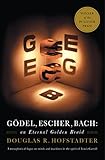
Editors Reads Verdict
Gödel, Escher, Bach is a once-in-a-generation intellectual achievement — a playful, profound, and endlessly inventive meditation on mind, meaning, and mathematics that rewards patient readers with a genuinely transformed understanding of consciousness.
What We Loved
- Pulitzer Prize winner representing one of the most original works of intellectual nonfiction ever written
- The dialogues between Achilles and the Tortoise are masterpieces of philosophical wit and precision
- Tackles consciousness, artificial intelligence, and self-reference with depth unmatched in popular science
Minor Drawbacks
- At 777 pages with dense mathematical and logical content, it demands significant time and concentration
- The sheer scope means some sections feel more digressive than others — not every reader reaches the end
Key Takeaways
- → Self-referential loops — strange loops — are the key mechanism by which consciousness and meaning emerge
- → Gödel's incompleteness theorems reveal fundamental limits in any sufficiently powerful formal system
- → The same pattern — a system that loops back and talks about itself — appears in music, art, and mathematics
| Author | Douglas Hofstadter |
|---|---|
| Published | January 1, 1979 |
| Language | English |
| Genre | Science, Philosophy, Mathematics |
| Difficulty | Advanced |
| Best For | Intellectually adventurous readers with patience for dense, playful, interdisciplinary ideas spanning logic, music, art, and the nature of mind. |
How Gödel, Escher, Bach: An Eternal Golden Braid Compares
Gödel, Escher, Bach: An Eternal Golden Braid at a glance against 3 similar books readers weigh alongside it.
| Book | Author | Rating | Best for |
|---|---|---|---|
| Gödel, Escher, Bach: An Eternal Golden Braid (this book) | Douglas Hofstadter | ★ 4.7 | Intellectually adventurous readers with patience for dense, playful, |
| 21 Lessons for the 21st Century | Yuval Noah Harari | ★ 4.1 | Readers already familiar with Harari's work who want his take on contemporary |
| A Brief History of Time | Stephen Hawking | ★ 4.5 | General readers curious about the universe, cosmology, and the nature of space |
| A Return to Love | Marianne Williamson | ★ 4.3 | Spiritually curious readers, especially those going through major transitions, |
Douglas Hofstadter published Gödel, Escher, Bach in 1979, won the Pulitzer Prize for General Nonfiction, and produced something that has no real category: part philosophy, part mathematics, part cognitive science, part extended literary game, part meditation on what it means to be conscious. The book’s central question is one of the deepest in all of intellectual life — how does meaning arise from meaningless symbols? How does mind emerge from matter? And its answer, developed through 777 dazzling, exhausting, exhilarating pages, is that the key is self-reference: the strange loop that occurs when a system becomes complex enough to represent and talk about itself.
Hofstadter’s three-way parallel between Kurt Gödel (who proved that any sufficiently powerful mathematical system contains true statements it cannot prove — and that this is a consequence of self-reference), M.C. Escher (whose lithographs of hands drawing hands and staircases ascending forever encode the same logical structure visually), and J.S. Bach (whose fugues and canons embed self-referential musical structures that mirror Gödel’s theorems in sound) is simultaneously a playful conceit and a genuinely profound philosophical argument. The parallel is not metaphorical decoration; Hofstadter means it seriously, and the book spends 700 pages making the case.
The book’s formal dialogues — interleaved between chapters, featuring Achilles, the Tortoise, a Crab, and various other characters — are philosophical thought experiments written with extraordinary wit. Each dialogue enacts in playful narrative form the logical concept the surrounding chapter explains in more formal terms. The dialogue on Zen koans and strange loops, the one on records that play themselves, the one that is its own commentary — these are among the most inventive pieces of philosophical writing of the 20th century. They are also genuinely funny, which is rarer in philosophy than it should be.
Gödel, Escher, Bach is not a book for everyone, and Hofstadter would be the first to say so. It requires patience, mathematical tolerance, and a willingness to be playfully confused for extended periods. But for readers who commit to it, the experience is genuinely transformative. By the final chapters — where Hofstadter connects strange loops to the emergence of consciousness and anticipates questions that became central to AI research decades later — you are seeing the world differently. Few books of any kind achieve that. This one does.
The Strange Loop
The single idea that unifies Gödel, Escher, Bach’s sprawling material is the “strange loop” — a structure that arises when, moving through the levels of a hierarchical system, you unexpectedly find yourself back where you started. Hofstadter sees this paradoxical figure everywhere: in Gödel’s self-referential mathematical statements that talk about their own unprovability, in Escher’s hands that draw each other into existence, in Bach’s canons that modulate upward until they return to their opening key. His audacious claim is that the human self — consciousness, the sense of “I” — is itself a strange loop, a pattern that emerges when a brain becomes complex enough to model and refer to itself. The book is, beneath its play, a single sustained attempt to explain how a meaningful, self-aware mind could arise from meaningless, mindless components, and the strange loop is Hofstadter’s proposed answer to that ancient mystery.
The Dialogues and the Form
What keeps a 700-page treatise on logic, recursion, and consciousness not merely readable but delightful is its remarkable form. Hofstadter alternates expository chapters with whimsical dialogues — featuring Achilles, the Tortoise, and a rotating cast borrowed from Lewis Carroll and Zeno — that dramatize in playful narrative the very concepts the chapters explain formally. These dialogues are themselves structured according to the ideas they discuss: one is a musical canon in prose, another is its own commentary, another loops back on itself, so that the book’s form continually enacts its content. This unity of style and substance is Hofstadter’s deepest pedagogical achievement and the reason the book is so much more than a popularization. Reading it, one does not merely learn about self-reference and recursion; one experiences them on the page, which is precisely the point.
A Singular Achievement
Gödel, Escher, Bach: An Eternal Golden Braid won the Pulitzer Prize for General Nonfiction in 1980 and has become one of the most beloved and influential intellectual books of its era, a touchstone for generations of mathematicians, computer scientists, cognitive researchers, and curious general readers. It belongs to no genre because it invents its own, fusing mathematics, art, music, philosophy, molecular biology, and artificial intelligence into a single braided argument about how minds emerge from matter. It is undeniably demanding — long, digressive, and unafraid to leave the reader puzzling — and not every reader will reach the end. But for those willing to meet it on its terms, it offers an intellectual experience with few equals: the rare book that genuinely changes how one thinks about thinking, and that decades later still feels prophetic about the questions of consciousness and machine intelligence now at the center of our age.
Decades of Influence
More than forty years after its publication, Gödel, Escher, Bach continues to occupy a singular place in intellectual culture, a perennial recommendation among programmers, mathematicians, philosophers, and cognitive scientists, and a formative book for many who went on to work in artificial intelligence. Hofstadter himself has expressed some frustration that readers fixate on its surface dazzle — the wordplay, the puzzles, the Escher prints — rather than its central thesis about consciousness, which he returned to and clarified in his later book I Am a Strange Loop. But the richness that permits such varied readings is part of what makes the book endure: it is a work one can return to at different stages of life and find new things in, and its prophetic engagement with self-reference, formal systems, and machine intelligence has only grown more relevant as those questions move to the center of our technological age. Few books so demanding have been so durably loved.
Our rating: 4.6/5 — A singular, Pulitzer-winning fusion of mathematics, art, music, and philosophy that braids Gödel, Escher, and Bach into a profound meditation on self-reference and the emergence of mind — demanding, playful, and genuinely transformative for the reader who commits to it.
Frequently Asked Questions
What is "Gödel, Escher, Bach: An Eternal Golden Braid" about?
A Pulitzer Prize-winning exploration of how consciousness, self-reference, and meaning emerge from formal systems, through the intertwined work of a mathematician, an artist, and a composer.
Who should read "Gödel, Escher, Bach: An Eternal Golden Braid"?
Intellectually adventurous readers with patience for dense, playful, interdisciplinary ideas spanning logic, music, art, and the nature of mind.
What are the key takeaways from "Gödel, Escher, Bach: An Eternal Golden Braid"?
Self-referential loops — strange loops — are the key mechanism by which consciousness and meaning emerge Gödel's incompleteness theorems reveal fundamental limits in any sufficiently powerful formal system The same pattern — a system that loops back and talks about itself — appears in music, art, and mathematics
Is "Gödel, Escher, Bach: An Eternal Golden Braid" worth reading?
Gödel, Escher, Bach is a once-in-a-generation intellectual achievement — a playful, profound, and endlessly inventive meditation on mind, meaning, and mathematics that rewards patient readers with a genuinely transformed understanding of consciousness.
Ready to Read Gödel, Escher, Bach: An Eternal Golden Braid?
Check the current price on Amazon.
Check Price on Amazon (paid link)Prices and availability are subject to change. See Amazon for current price.
Review last updated: