Philosophy's best books are not abstract — they are tools. Stoicism gives you a framework for adversity. Ethics gives you language for decisions. The examined life, as Socrates said, is the one worth living. These books help you live it.
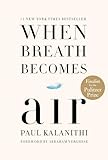
A neurosurgeon diagnosed with terminal lung cancer at 36 confronts the questions he spent his career preparing to face — and writes a book about mortality, meaning, and what makes a life worth living.
A record of a week-long conversation between the Dalai Lama and Archbishop Desmond Tutu on the occasion of the Dalai Lama's eightieth birthday — two of the world's most joyful people discussing how to find lasting happiness despite suffering, ageing, and loss.
A medieval monastery: Narcissus the ascetic scholar and Goldmund the passionate wanderer are the closest of friends. Goldmund leaves the cloister to seek the Mother, art, love, and experience. Narcissus stays and seeks God through the mind. When they meet again, each has found what the other never will—and both understand what they sacrificed.
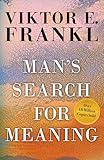
Psychiatrist Viktor Frankl's harrowing account of surviving Auschwitz forms the foundation of logotherapy — the idea that the primary human drive is not pleasure but the pursuit of meaning. One of the most important psychological texts of the 20th century.
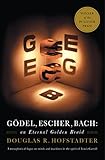
A Pulitzer Prize-winning exploration of how consciousness, self-reference, and meaning emerge from formal systems, through the intertwined work of a mathematician, an artist, and a composer.
A curated collection of Charlie Munger's speeches, talks, and aphorisms covering his mental models framework, investment philosophy, and worldview — edited by Peter Kaufman and long considered one of the most important books in serious investor and intellectual circles.
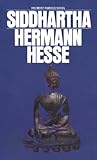
Hermann Hesse's spiritual classic follows a young Brahmin's journey to enlightenment through renunciation, pleasure, commerce, and finally the unity of all things found at the river.
A writer and researcher examines the central technical challenge of AI development: ensuring that AI systems do what we actually want them to do rather than what we literally told them to do — a problem that grows in complexity as systems grow in capability.
A successful judge who has lived a conventional, comfortable life falls ill and, in the process of dying, confronts the question of whether his life has been good — and discovers that it has not.
A prose-poetry masterpiece in which the prophet Almustafa offers wisdom on love, marriage, children, work, freedom, death, and the nature of good and evil before departing on a ship — one of the bestselling books of the twentieth century.
Josef K. is arrested one morning without explanation, prosecuted by an opaque authority for an unnamed crime, and gradually consumed by a legal process he can never understand.
Steven Pinker's comprehensive argument that the Enlightenment values of reason, science, humanism, and progress have dramatically improved the human condition — and why we should defend them.
A spiteful, self-contradicting underground man addresses us from his Petersburg apartment — a novella that inaugurated modern psychological fiction and anticipated existentialism by seventy years.
A dinner party in Athens, 416 BCE: Socrates, Aristophanes, Alcibiades, and others deliver speeches in praise of Love (Eros). Each speech offers a different theory; the climax is Socrates's account of what the priestess Diotima taught him — that Eros is the ascent from beautiful bodies to beauty itself.
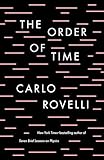
A theoretical physicist's meditation on the nature of time — what it is, why it flows in one direction, and what physics reveals about its deepest structure.
A self-help book organised around Marcel Proust's In Search of Lost Time — using Proust's life and work to address questions about how to be happy, how to pay attention, and how to suffer productively.
Socrates and his interlocutors ask what justice is — and end up designing an ideal city, debating the nature of the soul, defining the philosopher-king, arguing for the immortality of the soul, banning poets from the ideal state, and constructing the allegory of the cave. The most influential philosophical text in the Western tradition.
An intellectual writer goes to Crete to manage a mine and encounters Zorba — a broad-chested, life-devouring man who teaches him what it means to live fully and without fear.
A series of linked essays on the value of getting lost — geographically, psychologically, historically. Solnit ranges across landscape, memory, art, and personal experience to argue that losing one's way is not a failure but a condition for discovery.
Lucretius's philosophical poem expounding Epicurean atomism — the argument that the universe consists of atoms and void, that the soul dissolves at death, that the gods do not intervene in human affairs, and that therefore the fear of death is irrational. Written in Latin hexameters of great beauty, c. 60 BCE.
Jean-Baptiste Clamence, a former Paris lawyer who helped the poor, drinks in an Amsterdam bar and delivers a lengthy monologue to a stranger. His confession: years earlier he did nothing when a woman jumped from a bridge, and the guilt has transformed him into a 'judge-penitent' who confesses in order to accuse others. Camus's darkest and most ironically complex novel.
Set in a future utopian province dedicated to the life of the mind, the novel follows Joseph Knecht, who rises to become Magister Ludi—master of the Glass Bead Game, a synthesis of all human knowledge and art. The novel for which Hesse received the 1946 Nobel Prize.
The follow-up to Behave makes the full case that free will is an illusion — that every decision we make is the product of biology, environment, and history we did not choose. Sapolsky argues this should change not just our self-understanding but the moral and legal frameworks we use to judge human behavior.
Marcus Aurelius's Meditations, Plato's Republic (Allegory of the Cave at minimum), and Bertrand Russell's The Problems of Philosophy are widely recommended entry points. For immediate practical application, Stoic philosophy via Meditations or Seneca's Letters is the most accessible starting place.
Stoicism is an ancient Greek philosophy (later Roman) teaching that the path to a good life lies in accepting what you cannot control and taking rational action on what you can. Key texts are Marcus Aurelius's Meditations, Seneca's Letters from a Stoic, and Epictetus's Enchiridion.
No. The most widely read philosophy texts — Meditations, the Enchiridion, Plato's dialogues — were written for general educated audiences. Start with Marcus Aurelius or Plato and read an accessible introduction like Sophie's World alongside if you want historical context.
Disclosure: Amazon links on this page are affiliate links. If you purchase through them we earn a small commission at no extra cost to you.
We use cookies to understand how visitors use our site (Google Analytics). No data is collected until you accept.
Privacy Policy