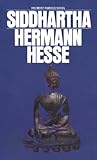
Editors Reads Verdict
A luminous novella that distils the core of Buddhist and Hindu philosophy into a universal quest story. Brief, beautiful, and perennially meaningful — particularly for readers at turning points in their lives.
What We Loved
- Brief enough to read in an afternoon — no excuse not to
- The language is spare and luminous — Hesse's prose is perfectly suited to the subject
- The river as metaphor for time and unity is among literature's most beautiful extended symbols
- Has introduced millions of Western readers to Eastern philosophical traditions
Minor Drawbacks
- The novella's brevity means some phases of Siddhartha's journey are compressed
- Some readers want more specific engagement with Buddhist doctrine
- The ending can feel abrupt for those expecting traditional narrative resolution
Key Takeaways
- → Wisdom cannot be transmitted — it must be directly experienced
- → All phases of life — pleasure, commerce, asceticism — contribute to the full understanding of what is
- → The river contains all of time simultaneously — past, present, and future are one
- → The self must be both fully experienced and ultimately transcended
- → Love and acceptance of the world as it is, including its suffering, is the path to peace
| Author | Hermann Hesse |
|---|---|
| Publisher | Bantam Books |
| Pages | 152 |
| Published | January 1, 1922 |
| Language | English |
| Genre | Fiction, Philosophy, Spiritual Literature |
| Difficulty | Beginner |
| Best For | Anyone at a turning point in their life or curious about Eastern philosophy, spiritual seeking, and the nature of wisdom. |
How Siddhartha Compares
Siddhartha at a glance against 3 similar books readers weigh alongside it.
| Book | Author | Rating | Best for |
|---|---|---|---|
| Siddhartha (this book) | Hermann Hesse | ★ 4.6 | Anyone at a turning point in their life or curious about Eastern philosophy, |
| One Hundred Years of Solitude | Gabriel García Márquez | ★ 4.6 | Readers of literary fiction interested in the most celebrated novel in Spanish, |
| The Alchemist | Paulo Coelho | ★ 4.7 | Anyone at a crossroads, seeking purpose, or wondering whether their dreams are |
| The Power of Now | Eckhart Tolle | ★ 4.6 | Anyone struggling with anxiety, overthinking, or searching for a practical |
The Simplest Profound Book
Hermann Hesse wrote Siddhartha in 1922, after years studying Indian philosophy following a visit to Ceylon and India. The novella is the result of that immersion: a distillation of Hindu and Buddhist philosophy into a narrative so spare and universal that it reads less like a novel than like a parable.
The story follows Siddhartha — not the historical Gautama Buddha, but a Brahmin’s son who encounters the Buddha and chooses to find his own path to enlightenment rather than follow another’s teaching. Through asceticism, through the pursuit of sensual pleasure, through commercial success and spiritual emptiness, and finally through the wisdom of the river, Siddhartha arrives at a peace that encompasses all the contradictions of his journey.
The Structure of the Journey
Hesse structures Siddhartha’s journey in three phases that correspond to different approaches to the fundamental question of how to live. First, renunciation: the ascetic life of the Samanas, fasting and stripping the self down to nothing. Second, indulgence: Kamala, the courtesan, and the merchant life that brings wealth, pleasure, and ultimate spiritual bankruptcy. Third, the river: the phase of listening, of presence, of accepting the world as it is.
The insight this structure embodies is itself the book’s philosophical core: wisdom cannot be found by rejecting the world (asceticism) or by immersing in it (indulgence) but by transcending the distinction between acceptance and rejection — by loving the world as it is, including its suffering.
The River
Hesse’s most powerful symbol is the river where Siddhartha spends his final years as a ferryman. The river contains all of time simultaneously: the water that flows past him has flowed before and will flow again; all moments are present in it at once. This is Hesse’s rendering of the Buddhist understanding of time — the eternal present that underlies the apparent flow of past, present, and future.
Listening to the river, Siddhartha hears the Om — the sacred syllable — in the sound of all voices simultaneously: the voices of joy and suffering, life and death, all sounding together as a single perfect chord.
Wisdom That Cannot Be Taught
The deepest paradox at the heart of Siddhartha is its insistence that genuine wisdom cannot be transmitted through teaching — a remarkable claim for a book that is itself a form of instruction. Siddhartha encounters the Buddha himself, recognizes the perfection of his enlightenment, and yet declines to become his follower, reasoning that enlightenment is an experience that must be lived rather than a doctrine that can be received. This conviction shapes the entire novel: Siddhartha must pass through asceticism, sensuality, wealth, despair, and near-suicide not because these are wrong turns but because the knowledge he seeks can only be earned by living through them. Hesse’s point, drawn from his immersion in Eastern philosophy, is that truth communicated in words is always incomplete, and that the gap between intellectual understanding and lived realization is the gap every seeker must cross alone. It is a humbling argument about the limits of all teaching, including the book’s own.
The Failure of Fatherhood
One of the novel’s most affecting and least discussed movements is its treatment of Siddhartha as a father. Late in the book, having achieved a measure of peace, Siddhartha is confronted with a son who rejects him utterly — willful, ungrateful, contemptuous of his father’s serenity — and discovers that all his hard-won wisdom is powerless to spare him the ordinary agony of loving a child who will not love him back. The episode is a deliberate humbling: it shows that enlightenment does not exempt a person from suffering but changes their relationship to it, and that the wise man must learn to let his son make his own mistakes just as he once insisted on making his. This thread gives the abstract spiritual narrative a grounding in recognizable human pain, and it is among the clearest signs that Hesse intended the book not as a tidy parable of attainment but as a portrait of a whole, fallible life.
A Synthesis of East and West
Siddhartha occupies a singular place as a bridge between Eastern spiritual traditions and the Western literary imagination, and understanding its origins illuminates its enduring appeal. Hermann Hesse, a German novelist steeped in both European Romanticism and the Indian philosophy he encountered through his missionary family and his own travels, wrote the book during a period of personal crisis as an attempt to reconcile the two. The result filters Hindu and Buddhist concepts — samsara, the unity of all things, the eternal present — through the form of the European bildungsroman, producing something that belongs fully to neither tradition. This synthesis is precisely why the book found such resonance in the West, particularly during the 1960s counterculture, when it became a touchstone for a generation seeking spiritual alternatives to materialism. It made the wisdom of the East accessible to readers who would never have approached a religious text, and it remains one of the most widely read introductions to that wisdom.
The Companion of the Journey
A figure easy to overlook but central to the novel’s meaning is Govinda, Siddhartha’s childhood friend and lifelong shadow, whose path forms a quiet counterpoint to the hero’s. Govinda is the devoted seeker who does everything right by conventional measures — he follows the Samanas, becomes a disciple of the Buddha, submits himself faithfully to teachers and doctrines — and yet, at the novel’s close, he has not found the peace that Siddhartha, the wanderer who refused every teacher, has attained. Through Govinda, Hesse sharpens his central argument: that the earnest pursuit of wisdom through borrowed systems and external authority can become its own obstacle, a way of avoiding the harder work of direct experience. The novel’s final scene, in which the still-searching Govinda receives a wordless transmission from the enlightened Siddhartha, is among its most moving, suggesting that what cannot be taught may yet, in a moment of love and openness, be shared. Govinda’s gentle, unfulfilled faithfulness gives the book its tender awareness that not every sincere seeker arrives, and that the path is lonelier and stranger than doctrine admits.
Final Verdict
Siddhartha is one of the most beautiful short novels ever written. At 150 pages, there is no reason not to read it — and it contains more genuine wisdom than most thousand-page books.
Our rating: 4.6/5 — Perfect. Read it slowly, with a quiet mind, and let it do what it is designed to do.
Reading Guides
- Books Like Siddhartha: Spiritual Journeys and the Search for Enlightenment
- Books Like Don Quixote: Idealism, Illusion, and the Madness of Literature
- Books Like Man
- Books Like The Stranger: Existentialist Fiction and the Absurd
- The Alchemist vs Siddhartha: Which Philosophical Novel Should You Read First?
Frequently Asked Questions
What is "Siddhartha" about?
Hermann Hesse's spiritual classic follows a young Brahmin's journey to enlightenment through renunciation, pleasure, commerce, and finally the unity of all things found at the river.
Who should read "Siddhartha"?
Anyone at a turning point in their life or curious about Eastern philosophy, spiritual seeking, and the nature of wisdom.
What are the key takeaways from "Siddhartha"?
Wisdom cannot be transmitted — it must be directly experienced All phases of life — pleasure, commerce, asceticism — contribute to the full understanding of what is The river contains all of time simultaneously — past, present, and future are one The self must be both fully experienced and ultimately transcended Love and acceptance of the world as it is, including its suffering, is the path to peace
Is "Siddhartha" worth reading?
A luminous novella that distils the core of Buddhist and Hindu philosophy into a universal quest story. Brief, beautiful, and perennially meaningful — particularly for readers at turning points in their lives.
Ready to Read Siddhartha?
Check the current price on Amazon.
Check Price on Amazon (paid link)Prices and availability are subject to change. See Amazon for current price.
Review last updated: