Best Short Novels: Essential Reads Under 200 Pages
The best short novels — from The Stranger and Animal Farm to The Old Man and the Sea and Siddhartha. Great literature you can read in an afternoon.
Some of the greatest works in literature are also some of the shortest. The novels below are the ones that accomplish, in 100 to 200 pages, what most authors cannot achieve in 500 — where the brevity is a formal achievement rather than a limitation, and where the compression intensifies rather than reduces what the work is doing.
All of these can be read in a single afternoon. Most should be.
The Essential Short Novels
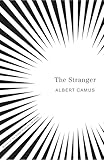
The Stranger — Albert Camus (1942) — ~150 pages
The most celebrated philosophical novel of the twentieth century, at one of its most accessible lengths. Meursault’s affectless narration — his failure to grieve for his mother, his shooting of an Arab on a beach, his indifference at his own trial — demonstrates Camus’s Absurdist thesis: that the universe is indifferent to human meaning, and that the authentic response to this is clear-eyed acceptance rather than bad faith. Read it in one sitting if possible — the prose rhythm and the flat affect are the novel’s argument.
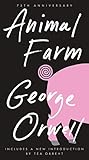
Animal Farm — George Orwell (1945) — ~100 pages
The most perfectly achieved political allegory in English literature. The animals of Manor Farm overthrow their human farmer and establish a socialist animal republic; the pigs gradually monopolise power, rewrite the rules, and become indistinguishable from the humans they replaced. Orwell’s fable is simultaneously a specific critique of Stalinist USSR and a general account of how revolutionary movements become the thing they overthrew. The famous final image — the pigs and humans playing cards, the other animals unable to tell them apart — is one of the most effective endings in twentieth-century fiction.
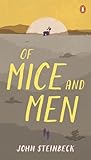
Of Mice and Men — John Steinbeck (1937) — ~100 pages
The most concentrated of Steinbeck’s tragedies. George and Lennie — the intelligent, protective friend and the intellectually disabled, enormously strong companion — dream of owning their own land and being their own bosses. Steinbeck establishes the structure in his first pages: the dream is beautiful and impossible, and the reader knows before the characters do that it cannot survive contact with the world as it is. The ending is among the most devastating in American fiction.
The Classic Novellas
The Old Man and the Sea — Ernest Hemingway (1952) — ~130 pages
The novella that won Hemingway the Nobel Prize and that he considered his finest work. Santiago, an old Cuban fisherman who has gone eighty-four days without catching a fish, hooks a great marlin far out in the Gulf Stream and fights it alone for three days. The novella is simultaneously a fishing story, a meditation on aging and endurance, and an allegory (Santiago as Christ figure) that the prose both supports and resists. Hemingway’s restraint — what is left unsaid is what the story is about — is at its most complete here.
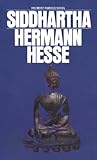
Siddhartha — Hermann Hesse (1922) — ~150 pages
The most beloved short novel about spiritual seeking. Hesse’s Siddhartha rejects the path of the historical Buddha, argues that enlightenment cannot be taught, and spends his life seeking it through asceticism, sensual pleasure, and commerce before finding it in the simplest possible way. The novel has been read by millions as a guide to the relationship between seeking and finding, between teachers and individual experience, and between attachment and liberation. It is the most accessible of the great twentieth-century spiritual novels.
The Alchemist — Paulo Coelho (1988) — ~180 pages
The most widely read short novel of the last forty years. Santiago, an Andalusian shepherd boy, travels to Egypt in pursuit of a dream about treasure, and the journey is the novel’s argument: that following your Personal Legend — the thing you were meant to do — is the purpose of life, and that the universe conspires to help those who pursue it. The novel’s simplicity has been both its greatest strength (it has sold 65 million copies) and its chief criticism. It is best read as a fable.
The Great Gatsby as Short Novel
The Great Gatsby — F. Scott Fitzgerald (1925) — ~180 pages
The most perfect American novel and one of the shortest. Fitzgerald’s portrait of Jay Gatsby — the self-made man, the green light, the parties, the shirts, the lost Daisy — is an examination of the American Dream’s specific relationship to the past. You can read it in four hours; most serious readers have read it three or four times.
The Art of Compression
The short novel is not merely a long story or a truncated novel but a distinct literary form with its own particular art, and the special achievement of the finest short novels lies in compression — in the capacity to achieve, within a brief compass, the depth, resonance, and impact that the full-length novel reaches through accumulation and expanse. Where the long novel works through breadth, building its effects gradually across hundreds of pages, through the slow development of character, the accumulation of detail, and the patient construction of an entire world, the short novel must achieve comparable power through concentration, distilling its material to its essence and making every word, scene, and image carry maximum weight. This demands a particular kind of mastery, a discipline of selection and a precision of execution that the more capacious form does not require, for the short novel has no room for the digressions, the leisurely development, or the abundance of detail that the long novel can afford, and must instead achieve its effects through economy, suggestion, and the perfect choice of what to include and what to leave out. The greatest short novels demonstrate that brevity, far from being a limitation, can be a source of extraordinary power, that a story compressed to its essence can strike with an intensity and a clarity that a longer work might dissipate, and that the discipline of compression can produce works of remarkable perfection and force. The art of the short novel is the art of saying much in little, of achieving depth through concentration rather than expanse, and of wielding the power of suggestion and economy to create effects as profound as any that the long novel achieves. In the hands of a master, this art yields works of a particular and concentrated brilliance, perfectly formed and unforgettably intense.
The Pleasures of the Complete Experience
Among the distinctive satisfactions that the short novel offers, and a significant part of its appeal, is the pleasure of the complete experience — the ability to read an entire work in a single sitting or over a day or two, to take in a whole novel as a unified and continuous experience rather than across the weeks that a long book may require, and to grasp the work’s complete shape and design in a way that extended reading makes difficult. There is a particular and underappreciated pleasure in consuming a novel whole, in entering its world and emerging from it within a single concentrated period, in experiencing the entire arc of the work without the interruptions, the forgettings, and the loss of momentum that the reading of a long novel over many sittings inevitably involves. This completeness allows the reader to perceive the work’s unity and design with a clarity that fragmented reading obscures, to hold the entire structure in mind, to appreciate how the parts relate to the whole, and to experience the full intended effect as the author conceived it. In an age of fragmented attention and limited time, this capacity to offer a complete and unified literary experience within a manageable compass is a genuine virtue, allowing readers to experience the depth and richness of the novel form without the substantial commitment of time that the long novel demands, and to enjoy the satisfaction of finishing, of taking in a complete work, that the unfinished long novel so often denies. The short novel thus offers not a lesser version of the novel experience but a different and in some ways purer one, the experience of a complete and unified work taken in whole, and this distinctive pleasure is among the form’s particular rewards. For the reader seeking the depth of the novel within the compass of a single absorbing experience, the short novel offers an ideal and too-often-overlooked satisfaction.
Perfect Introductions and Lasting Rewards
The short novel occupies a valuable dual position in the life of a reader, serving at once as an ideal introduction to great writers and serious literature for those daunted by lengthy works, and as a source of lasting reward that the most sophisticated readers return to throughout their lives. For readers intimidated by the prospect of a long and demanding novel, or uncertain whether a particular author or kind of literature will reward the investment, the short novel offers a perfect point of entry, a way of encountering a great writer’s art and a challenging literary work within a manageable compass that does not demand an overwhelming commitment of time or effort. Many of the finest short novels serve as ideal introductions in exactly this way, allowing readers to experience an author’s genius, to sample a literary tradition, or to test their appetite for serious fiction without the daunting investment that a long novel requires, and thereby to discover writers and kinds of literature they might otherwise never have approached. Yet the short novel is far more than a mere stepping-stone or a beginner’s option, for the form has produced some of the most perfect and profound works in all of literature, works that reward the most sophisticated reading and that experienced readers return to again and again throughout their lives. The brevity of these works often invites and rewards rereading in a way that long novels do not, allowing the reader to experience the complete work repeatedly, to discover new depths with each encounter, and to appreciate the perfection of the form’s compression and design. The short novel thus offers both an accessible introduction for the hesitant and a lasting source of reward for the experienced, serving the beginning reader and the sophisticated one alike, and proving that the most concentrated works can hold depths that a lifetime of rereading does not exhaust. In this dual capacity, as perfect introduction and as lasting reward, the short novel earns its place as one of literature’s most valuable and versatile forms.
Reading Order
Literary ambition: The Stranger → Animal Farm → Of Mice and Men.
Spiritual: Siddhartha → The Alchemist → The Old Man and the Sea.
American classics: The Great Gatsby → Of Mice and Men → Breakfast at Tiffany’s.
Frequently Asked Questions
What are the best short novels to read?
The Stranger by Camus (150 pages), Animal Farm by Orwell (100 pages), and Of Mice and Men by Steinbeck (100 pages) are the three most celebrated short novels in twentieth-century literature — each saying something essential in a form you can read in an afternoon. Siddhartha by Hesse and The Alchemist by Coelho are the most beloved short novels about spiritual seeking. The Great Gatsby (180 pages) is the most celebrated short American novel and the most complete. The Old Man and the Sea (130 pages) is the Hemingway novel that won the Nobel Prize.
Can short novels be as good as long ones?
Some of the greatest novels ever written are short. The Stranger is 150 pages and it changed twentieth-century philosophy. Animal Farm is 100 pages and it remains one of the most effective political allegories ever written. Of Mice and Men is 100 pages and it is the most devastating account of the American Dream's failure available. Brevity is not a limitation — it is a formal choice, and the constraint of short form often produces the highest concentration of literary power. The question is not whether a novel is long or short but whether it achieves what it sets out to achieve.
What is the shortest classic novel?
Among the most celebrated classic short novels: Animal Farm (Orwell, 1945) is approximately 30,000 words — you can read it in two to three hours. The Pearl (Steinbeck, 1947) is similar in length. The Stranger (Camus, 1942) is about 35,000 words. Of Mice and Men (Steinbeck, 1937) is about 30,000 words. Siddhartha (Hesse, 1922) is about 35,000 words. The Great Gatsby (Fitzgerald, 1925) is about 47,000 words — longer than the others but still readily readable in a day.
What is The Stranger about?
The Stranger by Albert Camus (1942) follows Meursault, an Algerian French man who kills an Arab on a beach — apparently without motive, without feeling, and without remorse. The novel's first part describes his life before the killing with a flat, affectless prose; the second part is his trial, in which the prosecutor builds a case against him based not on the killing but on his failure to grieve properly at his mother's funeral. Camus uses Meursault to demonstrate the Absurdist philosophical position: that the universe is indifferent to human meaning, and that the only authentic response is to accept this without despair.