Editors Reads Verdict
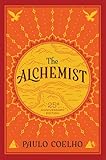
A short, luminous fable that has sold 65 million copies for a reason. The Alchemist is less a novel than a meditation on dreams, destiny, and the courage to pursue what your soul desires. Best read slowly, in a quiet hour.
What We Loved
- One of the best-selling novels of all time — resonates across all ages and cultures
- Short (208 pages) — readable in a single sitting
- Timeless wisdom delivered through story rather than instruction
- Beautiful, simple prose that translates well across languages
Minor Drawbacks
- Some readers find the allegory too thin and the philosophy too surface-level
- The fatalistic 'universe conspires' message isn't for everyone
- Those seeking plot complexity will be disappointed
Key Takeaways
- → Everyone has a 'Personal Legend' — a dream they must pursue
- → The universe conspires to help those who truly follow their dreams
- → The journey toward your dream is more valuable than the destination
- → Fear of failure is the greatest obstacle to pursuing what you love
- → Everything in the universe is connected — listen to the 'Soul of the World'
| Author | Paulo Coelho |
|---|---|
| Publisher | HarperOne |
| Pages | 208 |
| Published | January 1, 1988 |
| Language | English |
| Genre | Fiction, Philosophy, Self-Help |
| Difficulty | Beginner |
| Best For | Anyone at a crossroads, seeking purpose, or wondering whether their dreams are worth pursuing. Universal across ages and cultures. |
How The Alchemist Compares
The Alchemist at a glance against 2 similar books readers weigh alongside it.
| Book | Author | Rating | Best for |
|---|---|---|---|
| The Alchemist (this book) | Paulo Coelho | ★ 4.7 | Anyone at a crossroads, seeking purpose, or wondering whether their dreams are |
| Essentialism | Greg McKeown | ★ 4.5 | Professionals who feel spread too thin, are constantly busy but rarely |
| Man's Search for Meaning | Viktor E. Frankl | ★ 4.8 | Anyone confronting meaninglessness, loss, suffering, or existential questions |
The World’s Most Translated Novel
The Alchemist was rejected by every publisher Paulo Coelho approached. When finally published by a small Brazilian press in 1988, the first edition sold just 900 copies — the publisher declined to reprint. Coelho found a larger publisher, and within a decade the book had sold millions of copies in dozens of languages.
By 2023 it had sold over 65 million copies, been translated into 80 languages, and set the Guinness World Record for most translated book by a living author. The story of its publication is itself an advertisement for the book’s central message: pursue your dream past failure.
The Story
Santiago is a young Andalusian shepherd who has a recurring dream about treasure buried near the Egyptian pyramids. Following the advice of an old king he meets, he sells his flock and travels to Tangier, is robbed immediately, earns his way back through work, falls in love, learns alchemy from a mysterious figure, crosses the Sahara, and eventually finds… something other than what he expected.
The narrative is deliberately simple — it’s an allegory, not a realist novel. The plot exists to carry the philosophical weight.
The Philosophy of the Personal Legend
Coelho’s central concept — the Personal Legend — is the dream each person is born with, the calling that makes them feel most alive. The book argues that:
- Everyone has a Personal Legend
- When you truly desire something, the universe conspires to help you achieve it
- The greatest failure is not pursuing it at all
Whether you accept this literally or as a useful metaphor, the book uses Santiago’s journey to dramatise the psychological reality that the pursuit of meaningful goals transforms a person — regardless of whether the specific goal is achieved.
The Alchemist’s Core Lessons
The various guides Santiago meets each teach him something essential:
The old King introduces the concept of the Personal Legend and the “beginner’s luck” that comes when you first pursue your dream — to demonstrate possibility.
The Crystal Merchant represents the person who knows their Personal Legend but is too afraid to pursue it — who prefers the comfort of dreaming to the risk of trying.
The Englishman represents the academic who seeks wisdom through books rather than direct experience — who reads about alchemy rather than living it.
The Alchemist himself teaches Santiago to listen to the “Soul of the World” — to trust intuition, read omens, and understand that everything in the universe is an expression of the same creative force.
A Book for Particular Moments
The Alchemist is not universally praised. Literary critics note that its prose is simple, its philosophy unsophisticated, and its plot thin. All of this is true.
But the book isn’t trying to be War and Peace. It is trying to say one thing clearly and beautifully: your dream is worth pursuing, and the fear that stops you is the only real obstacle. For readers who encounter it at the right moment in their lives, this message lands with the force of revelation.
Millions of readers report reading it when facing a life decision, and finding in it the courage to act.
Our rating: 4.7/5 — A fable, not a novel. Judge it as what it is: a beautifully told story about the courage to pursue your life’s calling.
Reading Guides
- Books Like The Alchemist: 11 Philosophical Fables and Spiritual Journeys
- Books Like Sapiens: 11 Mind-Expanding Reads for Big-Picture Thinkers
- Books Like Don Quixote: Idealism, Illusion, and the Madness of Literature
- Books Like Into the Wild: Escape, Nature, and the American Wilderness
- Books Like Man
- Books Like Piranesi: Labyrinthine Worlds, Mystery, and the Strangeness of Reality
- Books Like Siddhartha: Spiritual Journeys and the Search for Enlightenment
The Publication Story
The story of The Alchemist’s publication is one of the more remarkable in modern literary history, and it is entirely consistent with the book’s own argument. Coelho completed the manuscript in 1987, following his walk on the Camino de Santiago — a journey he had documented in The Pilgrimage — and found a small Brazilian publisher willing to take it. The first print run sold 900 copies. The publisher declined to issue a second edition.
Rather than abandon the book, Coelho found a larger Brazilian publisher, Rocco, who had faith in the manuscript. Within six months the book had sold enough copies to attract international attention. A French publisher acquired the rights; then publishers across Europe; then Warner Books in the United States. By the mid-1990s The Alchemist was a genuine international phenomenon — a book travelling on word of mouth and personal recommendation across cultures and languages, generating the kind of devoted readership that cannot be manufactured through marketing.
By 2023 it had sold over 65 million copies in more than 80 languages, and Coelho held the Guinness World Record for most translated book by a living author. The book took two weeks to write. It was rejected. It succeeded anyway. This is exactly what it says will happen if you pursue your Personal Legend past failure.
The Novel’s Reception History
The literary critical establishment has never been entirely comfortable with The Alchemist. The complaint — that its philosophy is unsophisticated, its plot thin, its allegorical machinery too simple for adult fiction — is not wrong as a description. The book does not claim to be doing what literary fiction does. It claims to be doing what fables do: to say one true thing, clearly, in a form that can be understood and remembered.
The readers who have embraced it most fervently tend to be those who encountered it at a specific moment of decision or crisis — at the point where the ordinary arguments for safety and caution were losing their force, and where a story about the cost of not pursuing your dream arrived with the force of permission. This mode of reading — the book as catalyst rather than aesthetic object — is not one that literary criticism is equipped to evaluate, and the enormous readership of The Alchemist is, in part, a record of all the moments when that catalytic function has worked.
Coelho and His World Readership
Coelho’s global readership — particularly strong in Brazil, Portugal, the Arab world, Russia, Japan, and across Latin America — reflects something about the book’s specific argument that is easy to miss in Anglo-American literary culture. The Personal Legend concept, the idea that the universe cooperates with those who pursue their calling, the integration of magical realism and spiritual instruction — these elements resonate differently in traditions with strong pre-modern spiritual frameworks than they do in cultures where secular irony is the dominant literary register. The Alchemist is not a book for every reader. But the readers it is for number in the tens of millions, and they are spread across every culture on earth.
Frequently Asked Questions
What is "The Alchemist" about?
A young Andalusian shepherd boy travels from Spain to the Egyptian desert in search of treasure. Along the way he meets a series of guides who teach him that the real treasure is found in pursuing your 'Personal Legend' — your dream.
Who should read "The Alchemist"?
Anyone at a crossroads, seeking purpose, or wondering whether their dreams are worth pursuing. Universal across ages and cultures.
What are the key takeaways from "The Alchemist"?
Everyone has a 'Personal Legend' — a dream they must pursue The universe conspires to help those who truly follow their dreams The journey toward your dream is more valuable than the destination Fear of failure is the greatest obstacle to pursuing what you love Everything in the universe is connected — listen to the 'Soul of the World'
Is "The Alchemist" worth reading?
A short, luminous fable that has sold 65 million copies for a reason. The Alchemist is less a novel than a meditation on dreams, destiny, and the courage to pursue what your soul desires. Best read slowly, in a quiet hour.
Ready to Read The Alchemist?
Check the current price on Amazon.
Check Price on Amazon (paid link)Prices and availability are subject to change. See Amazon for current price.
Review last updated: