Best Books About Religion: Essential Reading on Faith and Belief
The best books about religion — from The God Delusion and Man's Search for Meaning to The Book of Joy and The Alchemist. Faith, doubt, and the search for meaning.
By Aisha Patel
The best books about religion range from defences of faith and critiques of belief to meditations on meaning, suffering, and the spiritual dimensions of ordinary life. The list below includes works from multiple traditions and perspectives — because the most useful reading on religion is not reading that confirms what you already believe.
The Search for Meaning
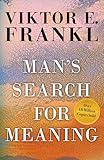
Man’s Search for Meaning — Viktor Frankl (1946)
The most important book about meaning — which is ultimately what religion addresses — and one of the most widely read books of the twentieth century. Frankl, a psychiatrist who survived Auschwitz, Dachau, and two other camps, writes about what he observed about human survival: those who retained a sense of meaning (a person to return to, a task to finish, a future to envision) survived conditions that killed others. The second part outlines logotherapy — his therapeutic approach based on the primacy of the will to meaning.
Not explicitly religious, but the argument is deeply relevant to any understanding of what faith provides and why human beings need it.
Interfaith Dialogue and Joy
The Book of Joy — Dalai Lama XIV and Desmond Tutu (2016)
A week of conversations between two of the world’s most admired spiritual leaders — the fourteenth Dalai Lama and Archbishop Desmond Tutu — about the nature of joy and how to sustain it in the face of suffering, loss, and the knowledge of death. Both men speak from experience of political oppression and exile; their affection for each other and their different traditions (Tibetan Buddhism and African Christianity) make the dialogue both practically useful and unexpectedly moving.
Criticism of Religion
The God Delusion — Richard Dawkins (2006)
The most widely read argument against religious belief — a systematic case that the hypothesis of God is scientifically untenable and that religion causes specific social harms. Dawkins argues with the confidence of a scientist certain he has the evidence on his side, and the book is a useful account of the strongest case against religious belief, whatever one’s own position.
Best read alongside serious theological responses rather than in isolation.
Fiction and Spiritual Quest
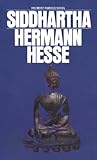
Siddhartha — Hermann Hesse (1922)
A German novelist’s imaginative account of a contemporary of the Buddha who does not become his disciple but seeks enlightenment through his own path — through sensual experience, wealth, love, and asceticism, before arriving at a kind of peace beside a river in old age. Hesse’s Siddhartha is not Buddhism as doctrine but Buddhism as sensibility — the novel works as an introduction to the ideas of impermanence, the middle path, and the insufficiency of doctrine, accessible to readers with no background in Buddhist thought.
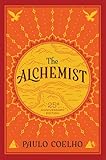
The Alchemist — Paulo Coelho (1988)
The most widely read contemporary spiritual fable — the story of a Spanish shepherd boy who travels to the Egyptian pyramids in search of treasure and finds that the journey itself is the destination. Coelho’s novel draws on Sufi mysticism and the concept of the Personal Legend (the life each person is meant to live). It has sold over 65 million copies and is the most popular expression of the idea that the universe conspires to help those who pursue their deepest desires.
Reading Across the Divide
The guiding principle behind this list — that the most valuable reading on religion is not reading that confirms what you already believe — deserves emphasis, because it runs against a powerful natural tendency. Most people approach the subject of religion seeking confirmation: believers read works that deepen their faith, skeptics read works that fortify their doubt, and each camp grows more certain and less curious. The deliberate range here, from Dawkins’s systematic case against belief to the Dalai Lama and Tutu’s joyful interfaith dialogue to Frankl’s secular meditation on meaning forged in a concentration camp, is designed to resist that comfortable sorting. There is genuine value in this discomfort. A believer who engages seriously with The God Delusion will either find their faith refined by confronting the strongest objections to it or discover that some of those objections deserve a response they had not previously considered; either outcome is preferable to untested certainty. A skeptic who reads Man’s Search for Meaning or The Book of Joy encounters the undeniable reality that religious and spiritual frameworks have helped human beings survive the unsurvivable and find joy amid suffering — a phenomenon that demands explanation rather than dismissal. The point is not to abandon one’s convictions but to hold them in honest contact with their alternatives. Religion addresses the largest questions human beings face — meaning, suffering, death, how to live — and these are precisely the questions on which intellectual humility and genuine engagement with opposing views are most valuable and most rare.
Many Paths to the Same Questions
What becomes clear when these books are read together is that the world’s religious and spiritual traditions, for all their genuine and important differences, converge remarkably on a shared set of human questions, even as they answer them differently. The list spans Buddhism, Christianity, secular psychology, Sufi-inflected fable, and scientific skepticism, and yet a common preoccupation runs beneath them all: how does a person find meaning and live well in the face of suffering, impermanence, and mortality? Frankl, writing as a secular psychiatrist, arrives at the centrality of meaning to human survival — a conclusion religious traditions reached by other routes. The Dalai Lama and Desmond Tutu, speaking from Tibetan Buddhism and African Christianity respectively, discover in their week of conversation how much their distinct traditions share in their understanding of joy, compassion, and the transformation of suffering. Hesse’s Siddhartha dramatizes the insight, central to several traditions, that wisdom cannot finally be transmitted as doctrine but must be lived and discovered for oneself. Even the conflict between Dawkins and the spiritual writers is a conflict over shared territory — both are wrestling with what, if anything, grounds meaning and morality. This convergence does not erase the real differences between traditions, nor does it imply that all answers are equally true. But it suggests that the questions religion addresses are universal features of the human condition, and that the various traditions are best understood not merely as competing claims to be adjudicated but as different, hard-won responses to the same inescapable human predicament.
Religion as a Lens on Being Human
Whatever one’s personal beliefs, there is a compelling case that engaging with the literature of religion is essential to understanding humanity itself, and this may be the deepest reason to read the books gathered here. Religion has been one of the most powerful forces in human history — shaping civilizations, inspiring both extraordinary compassion and terrible violence, producing much of the world’s greatest art, architecture, music, and moral philosophy, and giving billions of people across millennia their frameworks for meaning, community, and the conduct of a life. To be ignorant of religious thought is to be illiterate in a fundamental dimension of human experience, cut off from understanding both the past and the present, both other people and oneself. The books on this list offer entry points that serve believers and non-believers alike. For the religious reader, they deepen and challenge faith and open windows onto other traditions. For the secular reader, they provide indispensable understanding of forces that have shaped the world and continue to move billions of people, as well as access to genuine wisdom about meaning and suffering that need not be accepted on supernatural terms to be valuable — Frankl’s insights into meaning, the Buddhist understanding of impermanence, the contemplative traditions’ practices of attention and compassion all reward secular engagement. Approached with curiosity and humility rather than the desire for confirmation, the literature of religion becomes a profound resource for the universal human project of figuring out how to live, and a necessary education in the convictions that have animated the human story from its beginning.
Reading Order
For the search for meaning: Man’s Search for Meaning → The Book of Joy → Siddhartha.
For faith and doubt: The God Delusion → Man’s Search for Meaning → The Book of Joy.
Accessible fiction: The Alchemist → Siddhartha → Man’s Search for Meaning.
Frequently Asked Questions
What is the best book about religion?
Man's Search for Meaning by Viktor Frankl is the most important book about the search for meaning — written from inside a Nazi concentration camp, it argues that human beings can endure almost anything if they understand why. The Book of Joy by the Dalai Lama and Desmond Tutu is the best book about spiritual practice in the face of suffering. The God Delusion by Richard Dawkins is the most influential argument against religious belief from a scientific perspective. For fiction that engages with faith, Siddhartha by Hermann Hesse remains the most accessible literary exploration of Buddhist thought.
What is Man's Search for Meaning about?
Man's Search for Meaning (1946) by Viktor Frankl is a psychiatrist's account of surviving four Nazi concentration camps, followed by an exposition of logotherapy — his therapeutic approach centred on the idea that the primary human drive is the search for meaning, not pleasure or power. Frankl observed that prisoners who retained a sense of meaning — a task to complete, a person to return to, a future to envision — survived conditions that killed others. The book is simultaneously a memoir, a psychological theory, and an argument about what sustains human beings under extreme suffering.
What is The Book of Joy about?
The Book of Joy (2016) by the Dalai Lama and Archbishop Desmond Tutu records a week-long conversation between the two men in Dharamsala — two of the world's most prominent religious leaders, both survivors of political oppression and exile, discussing what joy is, where it comes from, and how to cultivate it. Their conversations cover suffering, impermanence, forgiveness, and gratitude, with scientific commentary woven throughout. The book is unusual in being simultaneously a work of interfaith dialogue, a practical guide to well-being, and an affectionate portrait of two remarkable friendships.
Is The God Delusion worth reading?
The God Delusion (2006) by Richard Dawkins is the most widely read argument against religious belief — a systematic case that belief in God is not just wrong but intellectually irresponsible, and that religion causes specific social harms. It is worth reading as the strongest version of the atheist argument, though critics note that Dawkins engages primarily with fundamentalist rather than sophisticated theology, and that his case against religion-as-such conflates very different kinds of religious practice. It is most useful in combination with a serious theist response.