Best Books About Spirituality and Mindfulness: Essential Reading List
The best books about spirituality and mindfulness — from The Power of Now and Siddhartha to Man's Search for Meaning and Meditations. Books that offer genuine frameworks for meaning rather than empty comfort.
By Lena Fischer

The books about spirituality and mindfulness that actually help are those that offer genuine frameworks for understanding the mind rather than empty comfort — books that engage honestly with difficulty, uncertainty, and the limits of what any framework can provide.
The list below is organised around a common question across different traditions: how do we live with full attention in the present moment, rather than in the mental projections of past regret and future anxiety that consume most of human consciousness?
The Essential Books
The Power of Now — Eckhart Tolle (1997)
The most widely read contemporary mindfulness book. Tolle’s central argument: the source of most psychological suffering is identification with the “pain body” — the accumulated emotional residue of the past — and with the constant mental activity of the “ego mind,” which lives in its stories about past and future rather than in the present moment itself. Liberation, in Tolle’s framework, is not an achievement but a recognition: noticing the gap between the mental narrative and the present experience, and resting in that gap.
The language is more spiritual than scientific, and some readers find it mystical to the point of vagueness. For readers who want the same insights in more grounded form, Jon Kabat-Zinn’s full-catastrophe living or the Stoic philosophers provide comparable frameworks with more empirical grounding. But The Power of Now reaches readers who would not approach either of those — which is its specific value.
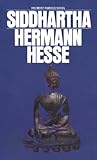
Siddhartha — Hermann Hesse (1922)
The most elegant presentation of the same insights in fictional form. Siddhartha, a young Brahmin, tries every path to enlightenment that his world offers — asceticism, the teachings of the Buddha, sensual pleasure, commercial success — and finds each insufficient. He eventually finds his peace as a ferryman on a river, listening. Hesse’s argument — that enlightenment cannot be taught or handed down, only directly experienced — is also an argument about the limits of self-help books, which gives it a useful humility.
At under 130 pages, Siddhartha is the most efficient and most literary presentation of Buddhist-influenced spiritual ideas available.
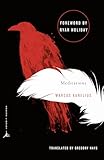
Meditations — Marcus Aurelius (c. 170–180 AD)
The Stoic tradition’s most direct expression of related ideas. Marcus Aurelius’s private journal — a Roman emperor reminding himself what matters and what doesn’t — focuses on the distinction between what is within our control (our own thoughts, judgments, and responses) and what is not (external events, other people’s behaviour, the course of the world). The practice of attending to this distinction daily — not as a cognitive exercise but as a discipline of attention — is structurally similar to mindfulness practice, despite the different cultural context.
Available free in multiple translations. The Gregory Hays translation (2002) is the most readable modern version.
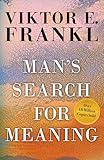
Man’s Search for Meaning — Viktor Frankl (1946)
Frankl’s account of survival in Auschwitz, filtered through his development of logotherapy — the argument that the primary human drive is meaning rather than pleasure or power, and that meaning can be found even in unavoidable suffering. The book functions as a spiritual framework for those who find conventional religious sources insufficient: it grounds the search for meaning not in theology but in the empirical observation of how people behave under extreme conditions.
Essential reading regardless of spiritual inclination.
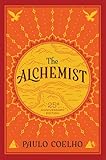
The Alchemist — Paulo Coelho (1988)
The most widely read of the spiritual fiction books on this list — 65 million copies in 80 languages. Coelho’s parable about following your Personal Legend (pursuing your authentic desire despite the obstacles the world places against it) resonates because it articulates a broadly felt experience: the sense of having a specific calling that external pressures discourage. Whether you read it as spiritual allegory, self-help parable, or both, the question it poses — what would you do if you stopped making compromises with your own desires — is genuinely useful.
More Essential Reading
A New Earth — Eckhart Tolle (2005)
Tolle’s follow-up to The Power of Now, more focused on the ego as the source of human conflict at both personal and collective scales. For readers who found The Power of Now helpful, A New Earth extends the framework into social and political dimensions.
The Untethered Soul — Michael A. Singer (2007)
Singer’s presentation of similar ideas through a different framework — the inner voice, the observer, the energy body — has reached millions of readers who found Tolle’s language either too abstract or too mystical. Less demanding and more practical than Tolle, and a useful companion volume.
Spirituality Beyond Religion
A defining feature of the modern literature of spirituality and mindfulness, and a key to understanding its widespread appeal, is its decoupling of spiritual practice and insight from organized religion — the recognition that the spiritual dimension of human life, the search for meaning, presence, and transcendence, can be pursued independently of religious doctrine and institution, and that the practices and wisdom traditionally housed within religion are available to anyone, believer or not. For much of history, spirituality was inseparable from religion, its practices and insights embedded within particular faiths and accessible primarily through religious belief and institution, but the modern literature of spirituality and mindfulness has increasingly separated the spiritual from the religious, presenting practices such as meditation and mindfulness, and insights about presence, meaning, and the nature of the self, as available to anyone regardless of religious belief. This decoupling has made spiritual practice accessible to the many who feel a spiritual hunger but cannot accept religious doctrine, who seek meaning, presence, and inner peace but find the traditional religious frameworks unbelievable or unappealing, and who want the fruits of spiritual practice without the requirements of religious faith. The best books in this vein offer the wisdom and practices of the spiritual traditions in a form accessible to the secular and the skeptical, presenting meditation, mindfulness, and contemplative insight not as religious obligations but as universally available practices for cultivating presence, peace, and meaning. This accessibility is a large part of the literature’s appeal and value, for it opens the riches of the contemplative traditions to a vast audience that the religious framing would exclude, and it demonstrates that the spiritual dimension of human life, the search for meaning and presence and transcendence, need not depend on religious belief but is available to anyone willing to undertake the practices and pursue the insights that the contemplative traditions have developed. Spirituality beyond religion is the characteristic mode of this modern literature, and it has brought the wisdom of the contemplative traditions to a secular age.
The Practice of Presence
At the heart of the literature of mindfulness lies a deceptively simple yet profoundly transformative insight: that most human suffering arises from the mind’s habitual flight from the present moment into the regrets of the past and the anxieties of the future, and that the cultivation of present-moment awareness — the practice of presence — is a path to peace, clarity, and a fuller experience of life. The human mind, the mindfulness traditions observe, is rarely present, perpetually distracted by rumination on what has been and worry about what may come, lost in a stream of thought that pulls attention away from the only moment that actually exists, the present one, and this chronic absence is a primary source of suffering, anxiety, and the sense of life slipping away unlived. The practice of mindfulness is the cultivation of present-moment awareness, the training of attention to rest in the here and now rather than wandering into past and future, and the literature presents this practice as a path to profound benefits: the reduction of anxiety and suffering, the experience of peace and clarity, and a fuller, richer engagement with the actual texture of life as it unfolds in the present. This emphasis on presence responds to a genuine and widespread affliction of modern life, the chronic distraction and anxiety that pull people out of the present moment and into perpetual rumination and worry, and it offers a practical remedy in the cultivation of present-moment awareness. The practice of presence, as the mindfulness literature presents it, is not merely a technique for stress reduction but a fundamental reorientation of one’s relationship to experience, a learning to inhabit the present moment fully rather than living perpetually in the imagined past and future, and a path to a more peaceful, clear, and fully experienced life. This insight, that peace and fullness of life are found in presence, and that present-moment awareness can be cultivated through practice, lies at the heart of the mindfulness traditions and accounts for much of their transformative power.
Inner Peace in an Age of Distraction
The remarkable contemporary appeal of the literature of spirituality and mindfulness is best understood as a response to the particular afflictions of modern life — the distraction, anxiety, restlessness, and spiritual emptiness that characterize an age of constant stimulation, relentless busyness, and material abundance without corresponding meaning — and the books on this list offer, against these afflictions, a path toward inner peace, presence, and a deeper sense of meaning. Modern life, for all its comforts and conveniences, has produced distinctive forms of suffering: a chronic distraction fostered by the constant stimulation of technology and media, a pervasive anxiety bred by the pace and pressure of contemporary existence, a restless dissatisfaction that material abundance fails to satisfy, and a spiritual emptiness that the secular, materialist culture does little to address. Against these afflictions, the literature of spirituality and mindfulness offers a counter-vision and a set of practices aimed at cultivating the inner peace, presence, and meaning that modern life so often lacks, and its widespread appeal testifies to how deeply these afflictions are felt and how earnestly their remedy is sought. The books on this list respond to a genuine hunger, the longing for peace amid anxiety, for presence amid distraction, for meaning amid emptiness, that pervades contemporary life, and they offer in response the wisdom and practices of the contemplative traditions, adapted for the modern reader and aimed at the specific afflictions of the age. This responsiveness to the genuine spiritual needs of modern life accounts for the enduring and growing appeal of the literature, for in an age of distraction and anxiety, the cultivation of inner peace and presence has become not a luxury but a necessity, and the wisdom these books offer addresses a hunger that the material abundance and constant stimulation of modern life have failed to satisfy and have in many ways intensified. In offering a path toward inner peace, presence, and meaning, the literature of spirituality and mindfulness answers one of the deepest needs of the contemporary age.
Reading Order
New to mindfulness: The Power of Now → Siddhartha → Meditations.
For meaning and suffering: Man’s Search for Meaning → Meditations → Siddhartha.
For accessible spirituality: The Alchemist → A New Earth → The Power of Now.
Frequently Asked Questions
What is the best mindfulness book for beginners?
The Power of Now by Eckhart Tolle is the most widely read mindfulness book in English — it presents the core insight of contemplative traditions (the source of most psychological suffering is mental activity about the past or future rather than the present moment itself) in accessible language. Siddhartha by Hermann Hesse presents the same insight as a short novel. For readers who prefer philosophy with historical grounding, Meditations by Marcus Aurelius is the Stoic tradition's most direct expression of related ideas.
Is The Power of Now worth reading if you're skeptical of self-help?
The Power of Now's core insight — that psychological suffering comes primarily from resistance to the present moment and identification with mental narratives about past and future — is empirically supported and practically useful regardless of its spiritual framing. Readers who find Tolle's language too religious or mystical often find the same ideas in more academically grounded form in Jon Kabat-Zinn's Full Catastrophe Living (the book that brought mindfulness into clinical medicine) or in Stoic philosophy.
What is the difference between mindfulness and spirituality?
Mindfulness, in its clinical form, is a set of attention practices — focusing on present-moment experience without judgment — derived from Buddhist meditation traditions and stripped of their religious context for secular use. Spirituality is broader: a sense of connection to something larger than the self, which may or may not involve religious belief. Many mindfulness books (The Power of Now, A New Earth) are also spiritual in Tolle's particular sense; others (Wherever You Go There You Are) are more secular. The distinction matters less than whether the framework helps.
Are there fiction books that offer spiritual insight without being explicitly religious?
Several. Siddhartha by Hermann Hesse is the classic example — a novel about the search for enlightenment that presents multiple paths and finds them all insufficient alone. The Alchemist by Paulo Coelho presents a spiritual framework (following your Personal Legend, the universe conspiring to help) as parable. Steppenwolf by Hesse and The Stranger by Camus examine the condition of the person without conventional spiritual resources and ask what they can substitute. For a more academic encounter, Man's Search for Meaning by Viktor Frankl is the closest non-fiction equivalent.