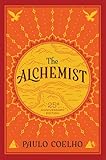
Paulo Coelho is a Brazilian novelist whose allegorical fable The Alchemist has sold over 65 million copies worldwide, making it one of the best-selling books in history, beloved for its message of personal destiny and spiritual purpose.
Paulo Coelho published The Alchemist in 1988, initially in Brazil, where it sold just 900 copies in its first year. Its subsequent rise — through word of mouth, translation, and eventually the endorsement of Bill Clinton — into one of the most widely read books in publishing history is itself a story that seems to validate its thesis. The novel follows Santiago, a young Andalusian shepherd who dreams of treasure and sets out across North Africa in pursuit of his “Personal Legend” — the idea that the universe conspires to help those who pursue their deepest desire.
The Alchemist is an allegory, and should be read as one. Its characters are deliberately archetypal rather than psychologically realized, its dialogue is aphoristic, and its philosophy is stated plainly rather than dramatized. Whether this represents simplicity of vision or simplicity of craft is a question that genuinely divides readers. Literary readers tend to find it shallow and its philosophy — the law of attraction dressed in spiritual language — facile. The book’s enormous popular audience finds it genuinely moving, consoling, and clarifying.
The honest position is somewhere between these poles. Coelho has a gift for the luminous sentence and for distilling universally recognizable longing into parable form. The Alchemist succeeds at what it sets out to do with more skill than it is often given credit for. Its worldview is optimistic to the point of ignoring structural constraint, and its rewards are emotional rather than intellectual. Readers who approach it on its own terms, rather than expecting a novel, are more likely to find something of value.
A Global Publishing Phenomenon
Paulo Coelho is one of the best-selling authors in the world, a Brazilian writer whose inspirational, allegorical novels have sold hundreds of millions of copies and been translated into more languages than almost any other living author. Best known for The Alchemist, Coelho writes simple, fable-like stories infused with spiritual and philosophical themes, exploring the search for meaning, the pursuit of one’s dreams, and the journey toward self-discovery. His enormous popularity reflects a deep and widespread appetite for accessible, uplifting fiction that speaks to readers’ longing for purpose and transcendence.
The Alchemist
Coelho’s defining work, The Alchemist, is a short allegorical novel about a young shepherd who journeys in search of treasure and discovers, along the way, lessons about following one’s “Personal Legend” and listening to one’s heart. With its simple parable structure and its uplifting message about destiny and the pursuit of dreams, the book became a worldwide phenomenon and one of the best-selling novels in history. For millions of readers it has been a source of inspiration and comfort, and its memorable maxims about the universe conspiring to help those who pursue their dreams have entered popular culture.
Spiritual and Inspirational Themes
The heart of Coelho’s appeal lies in his treatment of spiritual and inspirational themes. His novels are concerned with the search for meaning, the importance of following one’s dreams, the presence of the sacred in everyday life, and the lessons of the inner journey, drawing on a wide range of spiritual and mystical traditions. He writes in the mode of the fable or parable, offering wisdom and encouragement in accessible form, and his readers value his work for its hopeful, affirming vision and its invitation to reflect on life’s deeper purposes.
A Divisive Reception
Coelho’s work has always divided opinion, and readers should know that his enormous popular success has been accompanied by significant critical skepticism. Admirers find his books wise, uplifting, and spiritually nourishing, while critics argue that his simple parables can be vague, sentimental, or reductive, offering platitudes in place of genuine depth. This divide between mass devotion and critical reservation is a defining feature of his reputation, and approaching his work with an awareness of both responses allows readers to judge for themselves whether they find inspiration or oversimplification in his fables.
Simplicity and Accessibility
A key to Coelho’s vast reach is the simplicity and accessibility of his writing. His prose is clear and unadorned, his stories short and easy to follow, and his messages direct and encouraging, making his books welcoming to a huge range of readers, including many who do not typically read literary fiction. This accessibility is central to his appeal and to his role as a gateway to reading and reflection for countless people, even as it is the quality his critics most often question. For his admirers, the directness is a virtue, conveying meaning without obstruction.
A Life of Reinvention
Coelho’s own life informs the themes of his fiction. Before his literary success, he experienced a varied and unconventional path, including time as a songwriter and a transformative pilgrimage along the Camino de Santiago, which inspired his early book The Pilgrimage. This personal journey of searching and reinvention underlies the spiritual quests at the centre of his novels, and it lends his work an air of lived conviction. His emphasis on following one’s dreams and trusting the journey reflects the trajectory of his own life from uncertainty to global success.
The Paulo Coelho Legacy
Whatever the critical debates, Paulo Coelho’s impact as a popular author is undeniable, and his inspirational fables have reached and moved an enormous global audience. For newcomers, The Alchemist is the essential starting point and the purest distillation of his appeal, with The Pilgrimage and Brida offering further examples of his spiritual storytelling. For readers seeking accessible, uplifting fiction concerned with dreams, destiny, and the search for meaning — approached with openness to both its admirers’ enthusiasm and its critics’ reservations — Coelho remains one of the most widely read and influential storytellers of his time.
Reading Guides