Paulo Coelho Books in Order: Complete Bibliography & Reading Guide
Paulo Coelho's complete bibliography in order — from The Alchemist and Brida to Eleven Minutes and The Zahir. Best starting points and why he has sold over 225 million books.
Paulo Coelho is the most widely read Brazilian author in history and the most translated living author in the world. His books have sold over 225 million copies in 80 languages. The Alchemist alone has been in continuous print since 1988, has been recommended by Bill Clinton, Madonna, and Will Smith, and has become something approaching a modern scripture for millions of readers who might not describe themselves as religious but who find in Coelho’s framework a coherent account of how to live.
Understanding Coelho requires understanding his own history: a Brazilian who was institutionalised by his parents for his unconventional behaviour, who pursued a career as a songwriter, who made the pilgrimage to Santiago de Compostela in 1986 at the age of thirty-eight and published an account of it the following year. The Alchemist followed in 1988. His career — and its extraordinary reach — has been built entirely on the themes that pilgrimage established.
Where to Start
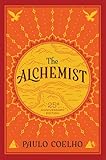
The Alchemist (1988)
The novel that made Coelho a global phenomenon. Santiago is an Andalusian shepherd boy who dreams of treasure near the Egyptian pyramids. He sells his flock, crosses into North Africa, and makes a journey that is also an interior one — learning to read omens, to listen to the world, to pursue his Personal Legend without allowing fear or comfort to stop him.
The allegorical structure is simple and the prose is deliberately transparent: Coelho is not trying to create complex literary fiction but to deliver a spiritual argument as clearly and as forcefully as possible. The argument — that the universe conspires to help those who pursue their authentic purpose, and that the cost of not pursuing it is a kind of death — has resonated with an extraordinary range of readers across an extraordinary range of cultures.
At under 200 pages, it reads in a single sitting. Whether you find it profound or schematic will tell you everything you need to know about whether to continue with Coelho.
Complete Bibliography in Order
Novels and Narratives
| Title | Year | Note |
|---|---|---|
| The Pilgrimage | 1987 | Autobiographical; Camino de Santiago |
| The Alchemist | 1988 | Essential; start here |
| Brida | 1990 | Witchcraft; past lives; Celtic mysticism |
| The Valkyries | 1992 | Autobiographical; California desert |
| By the River Piedra I Sat Down and Wept | 1994 | Romance; spiritual awakening |
| The Fifth Mountain | 1996 | Historical; prophet Elijah |
| Veronika Decides to Die | 1998 | Mental institution; will to live |
| The Devil and Miss Prym | 2000 | Moral fable; small village |
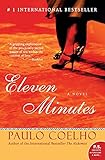
| Eleven Minutes | 2003 | Sexuality and love; Brazilian prostitute in Geneva |
| The Zahir | 2005 | Obsession; autobiography; philosophical |
| The Witch of Portobello | 2006 | Female spirituality; multiple narrators |
| The Valkyries | 1992 | |
| The Aleph | 2011 | Autobiography; journey with spiritual teacher |
| Manuscript Found in Accra | 2012 | Historical fable; Crusader Jerusalem |
| Adultery | 2014 | Contemporary; marriage and longing |
| The Spy | 2016 | Mata Hari; historical |
| The Archer | 2020 | Parable; archery metaphor |
The Essential Coelho
Beyond The Alchemist, the novels most often recommended:
Brida — Coelho’s second most popular novel, following a young Irish woman’s initiation into a tradition of witchcraft and her discovery that souls travel through multiple lives. More mystical and more feminine than The Alchemist, and the one most likely to appeal to readers interested in alternative spirituality.
Eleven Minutes — Coelho’s most controversial novel. Maria, a young Brazilian woman, goes to Geneva and eventually becomes a prostitute. The novel deals with sexuality, love, and the sacred — Coelho’s argument is that sexuality, approached with authenticity, is spiritual rather than merely physical. More literary and more nuanced than most of his work.
The Zahir — A philosophical novel about a famous author (clearly Coelho himself) whose wife disappears, and the obsession that follows. The Zahir of the title is the Sufi concept of something that once seen cannot be unseen, that consumes all thought. The most autobiographical of his fictional works.
A Storyteller of the Spiritual Journey
Paulo Coelho is one of the most popular and widely read storytellers of the spiritual journey, a writer whose simple, allegorical tales of self-discovery, dreams, and destiny have reached and inspired an enormous global readership. Coelho’s fiction takes the form of simple, allegorical, and inspirational tales of the spiritual journey, of self-discovery, the pursuit of dreams, and the search for meaning and destiny, and his work has reached and inspired a vast global readership. His celebrated allegorical tale of a shepherd’s journey in pursuit of his dream and his destiny exemplifies this storytelling of the spiritual journey, offering a simple, inspirational fable of self-discovery and the pursuit of one’s dreams. This storytelling of the spiritual journey is central to Coelho’s enormous appeal, for his simple, allegorical tales of self-discovery, dreams, and destiny have reached and inspired an enormous global readership. His inspirational fables of the spiritual journey speak to readers’ longing for meaning and self-discovery. For readers, Coelho offers a storyteller of the spiritual journey, simple, allegorical tales of self-discovery, dreams, and destiny. A storyteller of the spiritual journey, Coelho is one of the most popular and widely read writers of inspirational fiction, whose simple, allegorical tales of self-discovery, dreams, and destiny have reached and inspired an enormous global readership.
Dreams, Destiny, and the Personal Journey
A central theme of Paulo Coelho’s fiction is the pursuit of dreams and the fulfillment of one’s personal destiny, the inspirational message that each person has a unique calling and should pursue their dreams and listen to their heart. Coelho’s fiction is animated by the theme of dreams and destiny, by the inspirational message that each person has a unique calling or destiny, that they should pursue their dreams and follow their hearts, and that the universe conspires to help those who pursue their true path. His celebrated fable, in particular, develops this theme, following a journey in pursuit of a dream and affirming the importance of listening to one’s heart and pursuing one’s personal destiny. This theme of dreams, destiny, and the personal journey is central to Coelho’s fiction, for he affirms the inspirational message that each person has a unique calling and should pursue their dreams and listen to their heart. His inspirational message of pursuing one’s dreams and fulfilling one’s destiny speaks to readers’ aspirations and longings. For readers, Coelho offers an inspirational theme of dreams, destiny, and the personal journey, the message that each person should pursue their dreams and fulfill their unique calling. Dreams, destiny, and the personal journey are a central theme of Coelho’s fiction, the inspirational message that each person has a unique calling and should pursue their dreams and listen to their heart.
Simplicity and Inspirational Appeal
The distinctive quality of Paulo Coelho’s fiction is its simplicity and its inspirational appeal, the accessible, parable-like simplicity of his tales and their power to inspire and uplift a vast readership. Coelho’s fiction is marked by its simplicity and accessibility, by a clear, simple, parable-like style that renders its inspirational messages accessible to a vast and varied readership. This simplicity is central to its inspirational appeal, for the accessible, fable-like simplicity of his tales allows their messages of self-discovery, dreams, and destiny to reach and inspire readers around the world. The combination of simplicity and inspirational appeal is the distinctive quality of Coelho’s fiction, for the accessible, parable-like simplicity of his tales and their power to inspire and uplift have made them enormously popular. His simple and inspirational fiction speaks directly to readers’ longings for meaning, self-discovery, and the fulfillment of their dreams. For readers, Coelho offers simplicity and inspirational appeal, the accessible, parable-like simplicity of his tales and their power to inspire and uplift. Simplicity and inspirational appeal are the distinctive quality of Coelho’s fiction, the accessible, parable-like simplicity of his tales and their power to inspire and uplift a vast readership.
Reading Order Recommendations
New to Coelho: The Alchemist → Brida → Eleven Minutes. This covers his essential range from parable to mystical fiction to his most literary work.
Spiritual reader: The Pilgrimage → The Alchemist → The Zahir. The autobiographical journey that produced his framework, then the framework’s most accessible expression, then its most complex.
Complete reading: The Alchemist → Eleven Minutes → Brida → The Zahir → The Pilgrimage. No particular order is necessary — Coelho’s themes are consistent enough that any of his books will echo any other.
Frequently Asked Questions
What is the best Paulo Coelho book to start with?
The Alchemist is the obvious starting point — it is his most widely read and most representative work, a parabolic novel about a shepherd boy who follows an omen to Egypt to find treasure. It establishes all the themes Coelho returns to across his career: personal legend, the journey as self-discovery, omens and signs, the willingness to give up safety for a calling. At under 200 pages, it is also the most efficient introduction to his worldview.
How many books has Paulo Coelho sold?
Coelho has sold over 225 million copies of his books, making him the most translated living author in the world. The Alchemist alone has sold over 65 million copies and has been translated into 80 languages — it is the most translated book by a living author in history. These figures are remarkable for any author, let alone one writing in Brazilian Portuguese about spiritual and allegorical subjects.
Is Paulo Coelho considered literary fiction?
Coelho is more accurately categorised as spiritual or allegorical fiction. Academic literary critics tend to find his work schematic and his prose style simple compared to authors like García Márquez or Borges. His defenders argue that clarity and accessibility are virtues rather than defects, and that reaching 225 million readers with a consistent spiritual message constitutes a distinct kind of literary achievement. The debate matters less than the question of whether his books speak to you.
Do Paulo Coelho's books need to be read in order?
No — all are standalone. The only exception is that The Pilgrimage (his account of walking the Camino de Santiago) is autobiographical and was written before The Alchemist — understanding that Coelho's spiritual journey is autobiographical as well as fictional adds a layer to The Alchemist. Otherwise, start anywhere that interests you.
What is the difference between The Alchemist and Coelho's other books?
The Alchemist is a parable — a simple story with an explicit allegorical meaning (follow your Personal Legend; the universe conspires to help those who pursue their destiny). Coelho's other novels are more varied: Eleven Minutes deals with sexuality and love through the story of a Brazilian prostitute in Geneva; Brida is a fantasy about witchcraft and past lives; The Zahir is a philosophical novel about obsession and freedom. All share the same spiritual framework, but The Alchemist is the most universally accessible.