Gabriel García Márquez Books in Order: Complete Bibliography & Guide
García Márquez's complete bibliography in order — from One Hundred Years of Solitude and Love in the Time of Cholera to Chronicle of a Death Foretold. Best starting points for new readers.
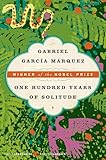
Gabriel García Márquez was awarded the Nobel Prize in Literature in 1982 “for his novels and short stories, in which the fantastic and the realistic are combined in a richly composed world of imagination, reflecting a continent’s life and conflicts.” The citation is accurate but understates: what García Márquez created was not just a fictional technique but a way of understanding how communities sustain themselves through story, how the past inhabits the present, and how political violence finds its way into everyday life by becoming ordinary.
He was born in Aracataca, Colombia, in 1927, and died in Mexico City in 2014. His essential work spans five decades and two continents.
Where to Start
One Hundred Years of Solitude (1967)
The novel that defined magical realism for an international readership and has never been surpassed within the genre. The Buendía family of Macondo — a fictional Colombian town modelled partly on Aracataca — is followed through seven generations from the town’s founding to its apocalyptic end. Magic pervades the narrative without explanation: a woman ascends to heaven while hanging laundry; a plague of insomnia causes the inhabitants to forget the names of things; ghosts are as present as the living.
The novel’s real subject is time — the way families repeat their patterns, the way history fails to progress, the way Macondo is both a specific place and a universal condition. García Márquez wrote it in a sustained burst after conceiving the opening sentence while driving toward a holiday: he turned his car around and spent eighteen months writing.
The Nobel committee called it “the great mythological novel of Latin America.” That remains accurate.
Chronicle of a Death Foretold (1981)
For new readers, the better starting point. Santiago Nasar is going to be killed — this is announced in the first sentence. The novel is the narrator’s investigation, thirty years later, of how the entire town knew the murder was coming and failed to prevent it. At under 120 pages, it reads with the pace of a thriller and demonstrates García Márquez’s essential technique — the matter-of-fact treatment of the inexplicable, the collective voice of the community, the way honour and fatalism combine to produce inevitability — in concentrated form.
Love in the Time of Cholera (1985)
The most accessible of his full-length novels and the most straightforwardly romantic. Florentino Ariza falls in love with Fermina Daza as a young man; she marries another. He waits fifty-one years, seven months, and eleven days. When her husband dies, he presents himself. The novel is a study of love across a lifespan — what it becomes, what it costs, whether it survives — set against the Colombian Caribbean city that García Márquez uses as a stand-in for a world in slow transformation.
Complete Bibliography in Order
Novels
| Title | Year | Note |
|---|---|---|
| Leaf Storm | 1955 | First novel; set in Macondo; minor |
| No One Writes to the Colonel | 1961 | Novella; essential; stoic dignity |
| In Evil Hour | 1962 | Political; Macondo setting |
| One Hundred Years of Solitude | 1967 | Essential; Nobel foundation |
| The Autumn of the Patriarch | 1975 | Dictator novel; demanding |
| Chronicle of a Death Foretold | 1981 | Best starting point |
| Love in the Time of Cholera | 1985 | Most accessible novel |
| The General in His Labyrinth | 1989 | Bolívar’s last journey; historical |
| Of Love and Other Demons | 1994 | Colonial Caribbean; shorter |
| Memories of My Melancholy Whores | 2004 | Final novel; controversial |
Short Story Collections
| Title | Year | Note |
|---|---|---|
| Eyes of a Blue Dog | 1947 | Early stories; minor |
| Big Mama’s Funeral | 1962 | |
| The Incredible and Sad Tale of Innocent Eréndira | 1972 | Essential stories |
| Collected Stories | 1984 | Best single-volume selection |
Memoir
| Title | Year | Note |
|---|---|---|
| Living to Tell the Tale | 2002 | Autobiography; covers early life |
What to Read After One Hundred Years
Shorter works: Chronicle of a Death Foretold → No One Writes to the Colonel. These demonstrate the same technique in under 150 pages each.
Longer works: Love in the Time of Cholera → The Autumn of the Patriarch. The second is his most formally demanding novel — one sentence per chapter, no paragraph breaks — and rewards readers already committed to his world.
Short fiction: Collected Stories. “A Very Old Man with Enormous Wings,” “The Handsomest Drowned Man in the World,” and “Death Constant Beyond Love” are the essential starting points.
The Master of Magical Realism
Gabriel García Márquez was the supreme master of magical realism, the writer whose fusion of the magical and the everyday created some of the most celebrated and beloved fiction of the twentieth century and brought Latin American literature to the center of world literature. García Márquez perfected the mode of magical realism, in which the magical, the miraculous, and the fantastic are woven seamlessly into the texture of everyday reality, treated as ordinary and natural rather than as exceptional or fantastical. His celebrated One Hundred Years of Solitude, in particular, exemplifies the magic of this mode, weaving the miraculous into the ordinary with a richness and beauty that have made it one of the most celebrated novels of the twentieth century. This mastery of magical realism is central to García Márquez’s achievement, for his seamless fusion of the magical and the everyday created some of the most celebrated and beloved fiction of his century, and his Nobel Prize recognized his supreme mastery of the mode. His magical realism brought Latin American literature to the center of world literature and influenced writers throughout the world. For readers, García Márquez offers the supreme art of magical realism, the seamless fusion of the magical and the everyday that created some of the most celebrated fiction of the twentieth century. The master of magical realism, García Márquez perfected the fusion of the magical and the everyday, creating some of the most celebrated and beloved fiction of the twentieth century and bringing Latin American literature to the center of world literature.
The Wonder of the Everyday
A defining quality of Gabriel García Márquez’s fiction is its sense of wonder, its capacity to render the everyday world as suffused with magic, beauty, and the miraculous, transforming the ordinary into something marvelous and enchanting. García Márquez’s fiction is suffused with a sense of wonder, a capacity to perceive and render the magic, beauty, and strangeness of the everyday world, transforming ordinary reality into something marvelous and enchanting. His magical realism is not mere fantasy but a way of perceiving and rendering the wonder, the strangeness, and the marvelous quality of reality itself, finding magic and beauty in the everyday and treating the miraculous as a natural part of the texture of life. This sense of wonder, this transformation of the everyday into the marvelous, gives García Márquez’s fiction its distinctive enchantment and its beauty, for he rendered the world as suffused with magic, wonder, and the miraculous. His fiction invites readers to perceive the wonder, beauty, and strangeness of reality, transforming the ordinary into the marvelous and enchanting. For readers, García Márquez offers the wonder of the everyday, the rendering of ordinary reality as suffused with magic, beauty, and the miraculous. The wonder of the everyday is a defining quality of García Márquez’s fiction, its capacity to render the everyday world as suffused with magic, beauty, and the miraculous, transforming the ordinary into something marvelous and enchanting.
Latin America, History, and Memory
Beneath its magic and wonder, Gabriel García Márquez’s fiction is deeply rooted in the reality, history, and memory of Latin America, illuminating the experience, the past, and the imagination of a continent. García Márquez’s fiction, for all its magic and wonder, is deeply rooted in the reality of Latin America, in its history, its society, its politics, and its collective memory and imagination. His magical realism is, in part, a way of capturing the extraordinary and often incredible reality of Latin American history and experience, a reality that exceeded the bounds of conventional realism, and his fiction illuminates the history, the experience, and the imagination of the continent. His celebrated One Hundred Years of Solitude, for instance, renders the history and experience of Latin America through the saga of a family and a town, weaving history, memory, and myth into a rich and resonant whole. This rootedness in Latin America, in its history and memory, gives García Márquez’s fiction its depth and its significance, for he illuminated the experience, the past, and the imagination of a continent, capturing a reality that conventional realism could not contain. For readers, García Márquez offers a profound illumination of Latin America, its history, memory, and imagination, rendered through the magic of his fiction. Latin America, history, and memory are deeply rooted in García Márquez’s fiction, which, beneath its magic and wonder, illuminates the experience, the past, and the imagination of a continent, capturing a reality that exceeded the bounds of conventional realism.
Reading Order Recommendations
New to García Márquez: Chronicle of a Death Foretold → Love in the Time of Cholera → One Hundred Years of Solitude.
Literary reader: One Hundred Years of Solitude → No One Writes to the Colonel → The Autumn of the Patriarch.
Complete reading: Leaf Storm → One Hundred Years of Solitude → The Autumn of the Patriarch → Chronicle of a Death Foretold → Love in the Time of Cholera → The General in His Labyrinth.
Frequently Asked Questions
What is the best García Márquez novel to start with?
One Hundred Years of Solitude is both his greatest work and the best introduction to his world — but it is also his densest and most demanding. New readers who find its pace challenging should try Chronicle of a Death Foretold first: it is under 120 pages, reads like a thriller, and demonstrates García Márquez's technique with the same precision as the major novels. Love in the Time of Cholera is the most accessible of his full-length novels.
Is One Hundred Years of Solitude hard to read?
It is dense rather than technically difficult. The main challenges are: the proliferating Buendía family (several characters share the same name across generations), the non-linear approach to time, and the matter-of-fact acceptance of magical events that require the reader to adjust their expectations. Many readers find it easier on a second reading. The first 50 pages are the hardest; after that, most readers find the novel propulsive. The key is not to try to keep track of every character — let the names blur and focus on the emotional arc.
What is magical realism, and did García Márquez invent it?
Magical realism is a literary mode in which magical or supernatural events are presented matter-of-factly within an otherwise realistic narrative, accepted by the characters without explanation or astonishment. García Márquez did not invent it — the term was first used by the Cuban writer Alejo Carpentier and earlier by the German critic Franz Roh — but he popularised it internationally through One Hundred Years of Solitude (1967), which became the genre's defining text. His technique drew on the Colombian oral storytelling tradition and the influence of William Faulkner.
Did García Márquez write in Spanish?
Yes — all his novels were written in Spanish. The standard English translations of One Hundred Years of Solitude (by Gregory Rabassa, 1970) and Love in the Time of Cholera (by Edith Grossman, 1988) are both highly regarded as translations in their own right. García Márquez famously said Rabassa's translation of One Hundred Years of Solitude was better than his original — a remark that should be treated as generous hyperbole rather than literal fact.
What is García Márquez's short fiction like?
His short stories are among the finest in the Spanish-language tradition. The collections No One Writes to the Colonel (technically a novella), Leaf Storm, and Collected Stories contain work as good as anything in his novels. 'A Very Old Man with Enormous Wings' and 'The Handsomest Drowned Man in the World' are frequently anthologised. For readers who find the novels' scale daunting, the short fiction is an excellent alternative entry point.